
Quick answer
A wet furnace filter means water is getting into the return-air side of the furnace, and there are three usual sources: a bypass humidifier leaking down the duct, condensate backing up from a clogged trap or cracked pan, or the air conditioner's coil pan overflowing above the furnace. Replace the filter instead of drying it, shut the humidifier water off, and trace the leak before it reaches the control board.
If your furnace filter is wet, treat it as a leak inside the furnace and not as a filter problem. The filter sits in the return air stream, a part of the system that should be dry all year. Water there has run down a duct wall or backed up from a drain, and in most upflow furnaces the same water is centimetres from the blower motor and the control board. Which source it is depends on the season and on what is mounted above the filter.
A leaking bypass humidifier is the usual cause in winter
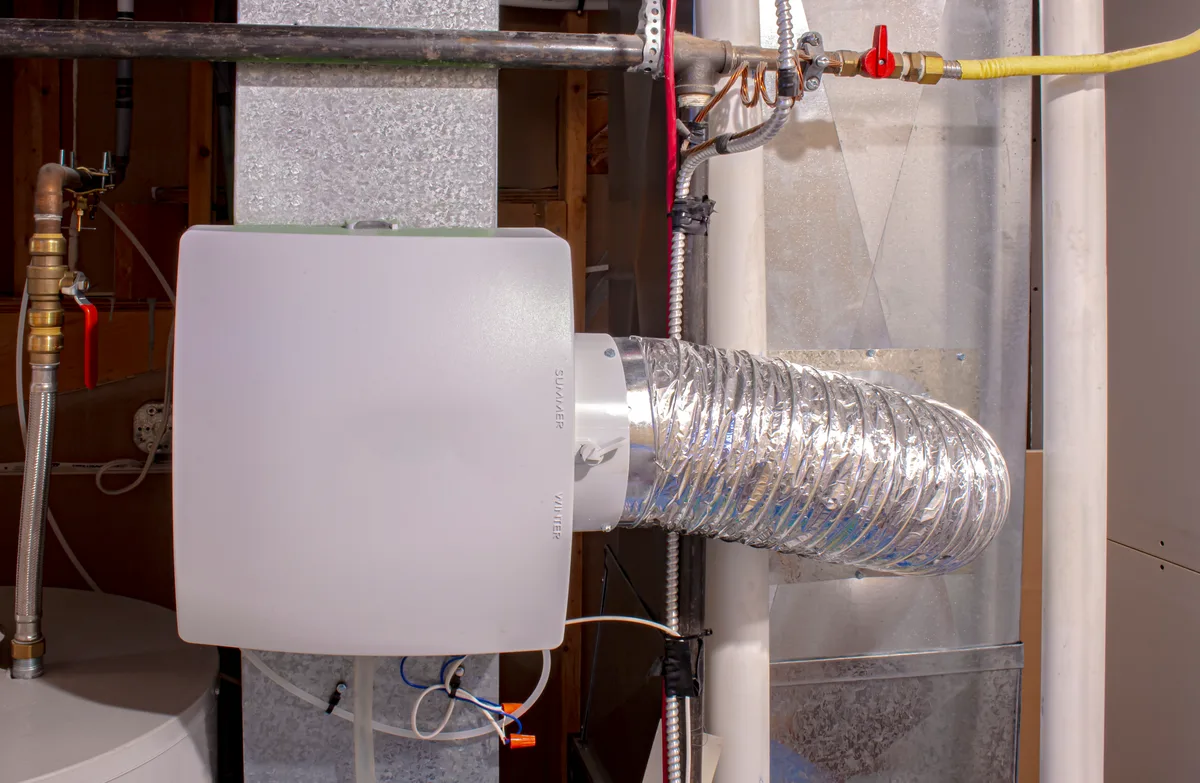
In heating season, look at the humidifier first. A bypass humidifier trickles water over a water panel (the evaporator pad) and sends the excess down a drain tube. When it is mounted on the return duct above the filter and any part of that path fails, water runs down the inside of the duct and collects at the lowest point, which is the filter rack.
- Stuck solenoid valve. The solenoid should open only when the furnace runs and the humidistat calls. Scale or a failed coil holds it open, and water flows around the clock, more than the drain can carry.
- Clogged water panel. Halton and Hamilton water is hard, and a panel left in for a second winter crusts over with mineral. Water sheets off the face of the pad instead of soaking through it and spills into the duct. A new panel is about $20–$40 and belongs in every fall.
- Blocked humidifier drain. The small drain spud and tube fill with scale and slime, the tray overflows, and the water takes the duct instead.
- A distribution tray knocked out of level, or a saddle valve weeping on the water line above the return.
Close the humidifier's water supply valve and turn the humidistat off. If the next filter stays dry, you have your answer, and why a furnace humidifier leaks goes through the repair.
Condensate backing up inside a high-efficiency furnace
A condensing furnace drains water from its secondary heat exchanger and its vent through a trap. When that trap clogs, the water level rises in the collector box and finds another way out, often down the inside of the cabinet into the blower compartment and onto the filter. A cracked inducer housing or collector box does the same thing with less warning.
Vent condensate is the other route. The plastic exhaust pipe is meant to slope back toward the furnace so the water it sheds returns to the drain. A sagging section, a joint that was never glued, or a pipe pitched the wrong way sends that water down the outside of the pipe and into the top of the cabinet. Rust trails on the cabinet and white mineral tracks below a pipe joint mark the path.
In summer, suspect the AC coil pan above the furnace
During cooling season the water comes from the evaporator coil sitting on top of the furnace. Its pan should carry condensate to the drain line. A plugged line, a cracked pan, or a coil so dirty that water blows off the fins lets it drip down through the heat exchanger and into the blower section. A wet filter in July with the AC running is nearly always this, and unclogging the AC drain line is the first step.
Two less obvious sources are worth ruling out. A fresh-air duct tied into the return, common in 2000s and newer builds, carries outdoor air cold enough to sweat and drip where it meets warm house air. A filter in a floor-level return will also wick water from a damp basement floor after a floor-drain backup or a water heater leak.
Why you replace a wet filter instead of drying it
A wet filter chokes airflow. Soaked media swells, the pleats collapse and the blower pulls the sagging filter toward the fan. The furnace then overheats and trips its high-limit switch, or in summer the coil freezes. Damp paper and dust at room temperature also grow mould in a day or two, and the blower carries the spores into every duct, so a filter that has been wet is finished.
What to check yourself, and when a wet filter needs a call
- Switch the furnace off at its power switch before you open the filter door or the blower door.
- Compare the top edge of the old filter with the bottom. Wet at the top or down one side means water running down the duct. Wet along the bottom means water pooling in the cabinet or on the floor.
- Look up the return duct above the filter for a humidifier, and for water tracks or rust below it.
- Open the lower door and look for standing water in the blower compartment. Do not touch the board.
- Check the furnace's drain tube and trap for sludge, and the condensate pump tank if there is one.
- Call now if there is water on the control board, the blower motor or the wiring, and leave the power off.
- Call now if the furnace is cycling off on its limit, showing a fault light, or giving off a hot electrical smell.
- Call now if black or green growth is visible on the filter or inside the return duct.
- It can wait for a booked visit if the humidifier was clearly the source, its water is off and the new filter is staying dry.
Condensate drain cleaning or trap replacement typically runs $150–$350, and the $90–$150 diagnostic visit goes toward the repair. Water that reaches the electronics is where the bill climbs: a control board is $500–$1,200. That is the reason to stop the water the day you find the filter wet.
ZK Mechanical traces the water to its source, clears or replaces the failed drain part and checks the board and blower for damage before the furnace goes back into service. Call (647) 801-1252 for furnace repair or humidifier repair, or book through the contact page. Water on the floor instead of on the filter is a different checklist: see why a furnace leaks water.