
Quick answer
To unclog an AC drain line, switch the cooling off, then put a wet/dry vacuum on the drain outlet or on the cleanout tee beside the furnace coil and run it for a minute or two to pull the blockage out. Follow with a cup of white vinegar and a water flush. Skip bleach: it attacks the coil and the condensate pump.
The way to unclog your AC drain line is suction, not pressure and not chemicals. The blockage is nearly always a plug of algae and dust slime sitting in the trap a short distance from the coil, and a wet/dry vacuum pulls it out in a minute or two. Before you start, turn cooling off at the thermostat so the coil stops making water.
Where the drain, P-trap and float switch sit on an upflow furnace
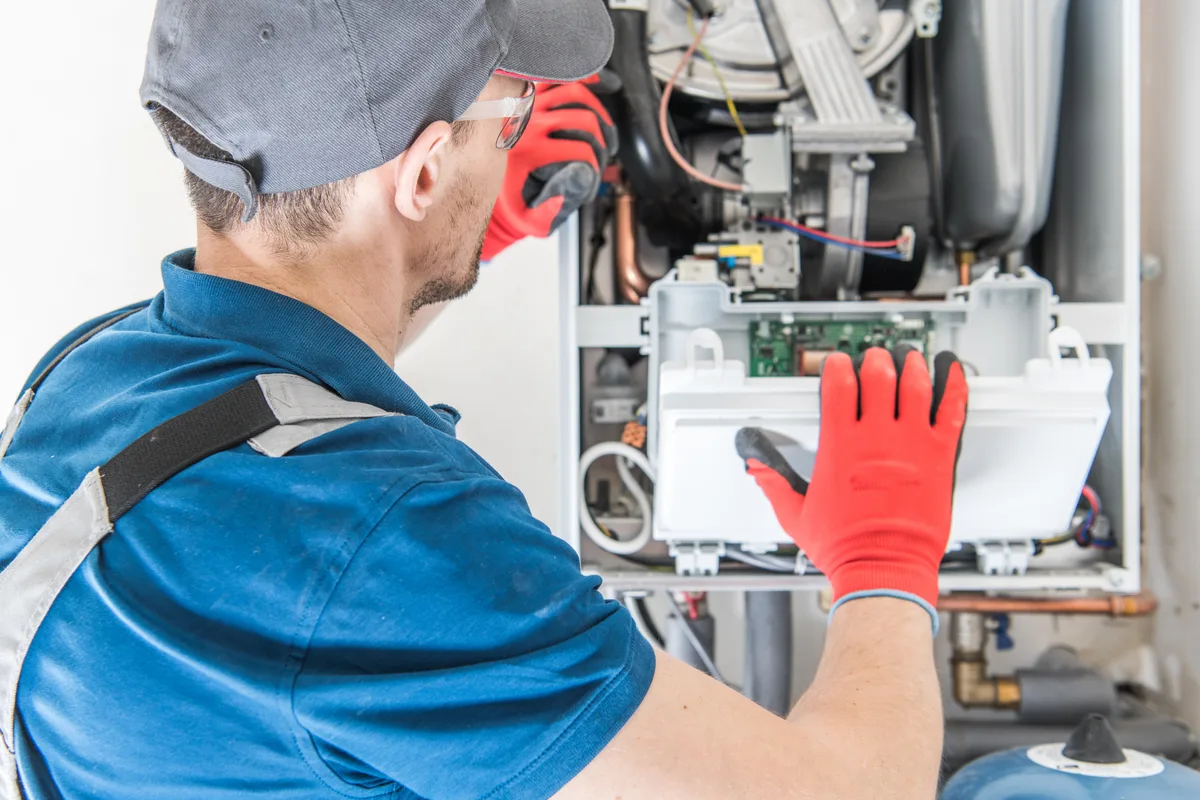
On the usual basement setup, an upflow furnace with a cased coil on top, the drain starts at a threaded port on the side of the coil case, just above the furnace. A 3/4-inch white PVC pipe leaves that port, drops through a P-trap and runs to a floor drain or to a condensate pump on the floor. Near the coil there is often a tee with a short vertical stub, capped or open: the cleanout.
The float switch is the small device with two thin wires, threaded into the second drain port on the coil case or set into the drain tee. When water backs up it opens the control circuit and stops the outdoor unit. An AC that shut itself off with water at the coil is that switch working.
Clearing the clog with a wet/dry vacuum
- Thermostat to Off. If there is water inside the furnace cabinet, switch the furnace power off too.
- Find the end of the drain at the floor drain, or pull the pipe out of the condensate pump inlet.
- Take the paper filter out of the vacuum, hold the hose over the pipe end and seal the gap with a rag or your hand.
- Run the vacuum for one to two minutes. A clog arrives as a slug of grey or brown jelly.
- No access to the outlet? Uncap the cleanout tee and vacuum from there, with a rag sealing the hose to the stub.
- Pour a litre of water slowly into the cleanout and watch it arrive at the outlet. Free flow means you are done; a backup means the clog is still there.
Do not blow compressed air or a pressurized drain gun toward the coil. It sprays slime into the pan and the furnace, and it can pop joints apart, because plenty of these drains are dry-fitted and not glued.
The vinegar flush, and why bleach stays out
Once the line runs, pour about a cup of plain white vinegar into the cleanout, leave it half an hour and follow it with water. Repeating that every month or two through the cooling season keeps the slime from re-forming.
Bleach is the common advice and the wrong one for this location. The cleanout sits centimetres from the evaporator coil, and chlorine fumes and splashes corrode aluminum fins and copper tubing. Where the line ends in a condensate pump, bleach sits in the reservoir against the float, the seals and the check valve. Vinegar is slower and carries none of those risks.
When it is not a clog, and how to protect the furnace control board
If the line runs freely and water still appears, the drain is not the problem.
- Cracked or rusted drain pan: water drips from under the coil case even with a clear drain. Plastic pans above a furnace turn brittle with age and heat, and the fix is a pan or coil replacement quoted in writing.
- Failed condensate pump: the reservoir is full and the pump is silent or humming. A new pump installed is $250–$450, and why a condensate pump overflows covers the checks.
- Frozen coil melting: a sudden large amount of water after weak airflow or ice on the copper line. That is a thaw, covered in how long a frozen AC takes to thaw.
- A drain that sags or slopes the wrong way, so water sits in the low spot and grows a new plug every few weeks.
The coil sits directly above the furnace, so an overflowing pan drains into the cabinet, onto the blower and the control board. If you see water at the furnace door seams or on the floor under it, switch the furnace off at its power switch and leave it off until the inside is dry. Water on a live board shorts it, and a replacement board runs $500–$1,200. A working float switch prevents all of this, so ask about adding one if your coil has none.
What professional drain cleaning costs, and when to call
A condensate drain cleaning or trap replacement typically runs $150–$350. Call for one when any of these apply.
- The vacuum pulls nothing and water will not pass.
- Water has reached the inside of the furnace.
- The float switch trips again a few days after you cleared the line.
- The pan itself is leaking.
ZK Mechanical clears and rebuilds drains as a stand-alone drain line cleaning or during AC repair visits in Burlington, Oakville, Milton, Hamilton and Mississauga. Phone (647) 801-1252 or send us the details, and mention whether the line ends at a floor drain or a pump. The cooling answers hub lists the related leak and smell questions.