
Quick answer
An AC leaks water inside the house when condensate from the evaporator coil cannot reach the drain. The usual causes are a clogged drain line or trap, a failed condensate pump, a rusted or cracked drain pan, or a coil that froze and is now thawing. Turn the cooling off, clear the water, and replace the filter. Most fixes are small and done in one visit.
When your AC is leaking water inside the house, the water is condensate: moisture pulled out of the indoor air by the cold evaporator coil sitting on top of your furnace. On a humid July day near Lake Ontario a central system can pull many litres out of the house, and all of it has to run through a pan, a trap and a drain line. Anything that blocks that path puts water on the basement floor.
Where the water comes from and where it should go
The evaporator coil, the A-shaped coil in the sheet-metal box above the furnace, runs colder than the dew point of the air passing through it. Water condenses on the fins and drips into a pan under the coil. From there a 3/4-inch PVC line, usually with a P-trap, carries it to a floor drain, a laundry standpipe or a condensate pump.
That is the whole system: pan, trap, line, drain. A leak means one of the four has failed, or the coil is producing more water than the pan can move, which is what happens when it ices up and then thaws all at once.
The five causes, most likely first
- Clogged drain line or trap. Algae, dust and biofilm build a slime plug in the trap every summer the line is not flushed. This is the cause most of the time, and it is a $150–$350 job to clear the line or replace the trap.
- Failed condensate pump. In finished basements where the furnace sits far from a floor drain, a small pump lifts the water to a standpipe. The float sticks or the motor dies, the reservoir overflows, and the water shows up beside the furnace. A new pump installed runs $250–$450.
- Frozen and thawing coil. A dirty filter, a closed-off return or low refrigerant lets the coil freeze into a block; when the system shuts off, the ice melts faster than the drain can take it. Our guide to why an AC freezes up covers the root causes.
- Rusted or cracked drain pan. Many older coils have galvanized steel pans that rust through after 15 or 20 summers. The pan is part of the coil assembly, so this is the one cause that can push you toward a coil or unit replacement.
- Disconnected or sagging line. Flexible tubing that was never strapped can drop below the drain, hold water and back up. A renovation that moved the laundry tub is a common trigger.
What to do right now: cooling off, fan on, filter out
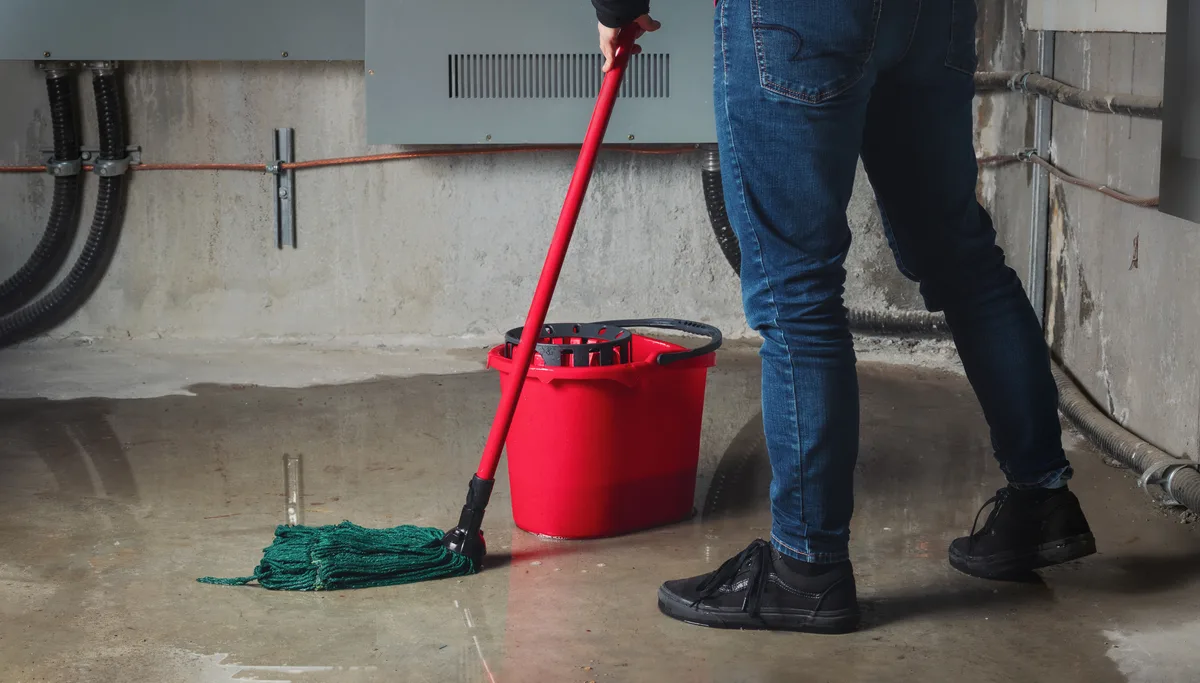
Switch the thermostat from Cool to Off and set the fan to On; warm air across a frozen coil thaws it in an hour or two instead of overnight. Put a pan or towels under the furnace while it melts, mop up the water and get anything cardboard or fabric off the floor; finished-basement drywall wicks water quickly. Pull the filter, and if it is grey and matted, replace it before running the system again.
If you can find the cleanout tee on the drain line, a wet-dry vacuum held over the open end for a minute clears most slime plugs. A cup of white vinegar poured down the line afterward slows the regrowth. Skip the bleach; if it backs up into the pan it attacks the coil and metal parts, and it is hard on a condensing furnace's own trap when the two drains share a line.
Why a shared drain matters with a high-efficiency furnace
Most furnaces installed in Ontario since about 2010 are condensing models with their own condensate trap, and the AC coil drain often ties into the same line. A clog in that shared run leaks in summer from the coil pan and in winter from the furnace. If you had water at the furnace last January as well, read why a furnace leaks water; the two problems are usually one clogged trap.
Condos and fan coils leak differently
In many downtown Burlington and Old Oakville condos the cooling comes from a fan coil unit in a closet, and its drain pan empties into a building riser. When that pan overflows, the water often appears in the suite below before it appears in yours. Building management typically owns the riser and you own the pan and fan coil; our condo HVAC service handles the unit side.
When the leak means something bigger
Water that keeps coming back after the line has been cleared points to a coil that is icing repeatedly, and a coil that ices with a clean filter and a working blower is usually low on refrigerant. That is a leak in the sealed system, not the drain, and it is priced differently; see what an AC refrigerant recharge costs. Persistent damp around the furnace also feeds mould and the musty smell homeowners notice at start-up, so it is worth fixing before the drywall starts to wick.
A diagnostic visit is $90–$150 and goes toward the repair when we do the work. ZK Mechanical handles air conditioner repair in Oakville, Burlington and Hamilton, and a drain-line leak is usually cleared in one visit; request a visit online or phone (647) 801-1252.