
Quick answer
A black furnace filter is usually household soot and fine dust: candles, a wood fireplace, cooking, or a filter left in too long. A filter that turns black in under 30 days points to return-duct leaks, an undersized filter or mould on damp media. Black filter plus soot at the registers, a yellow burner flame or a carbon monoxide alarm means a combustion and CO test now.
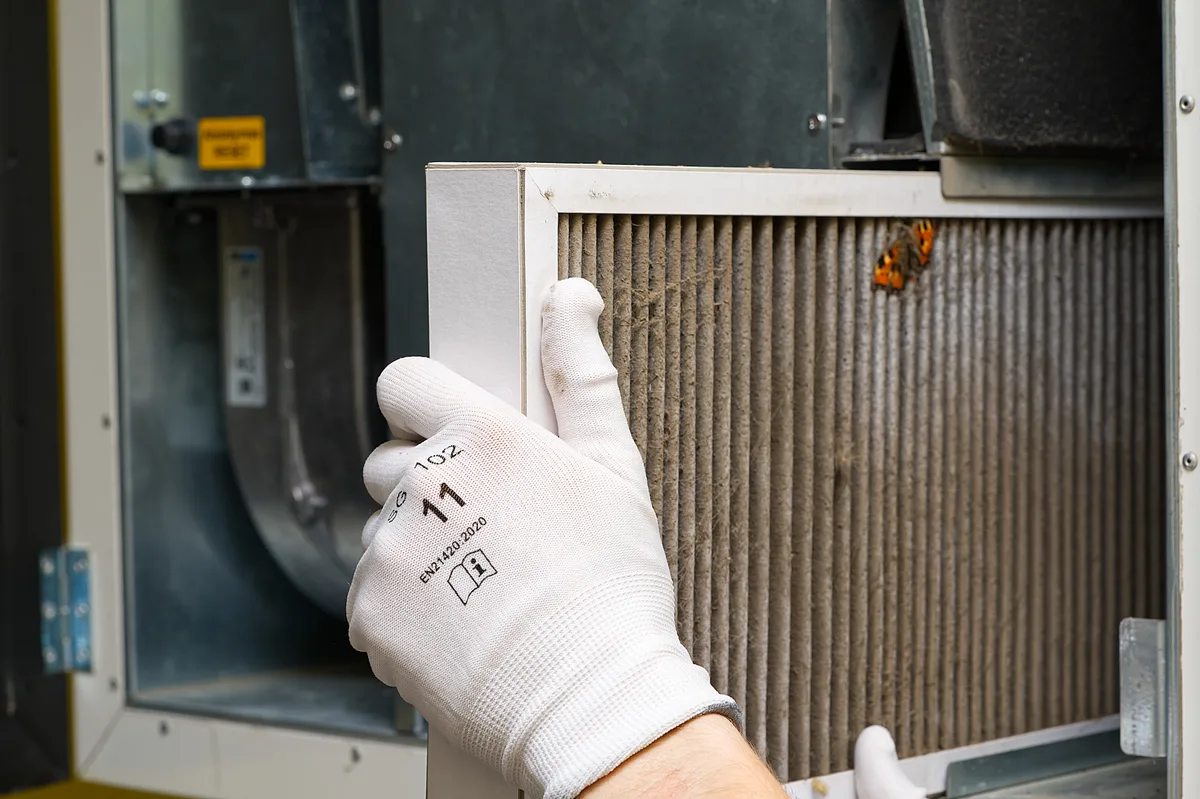
If your furnace filter is black instead of the usual grey, start with how fast it got that way and what the black looks like. A filter catches whatever is floating in the house, so its colour is a record of your indoor air. Grey fluff after two or three months is ordinary dust and lint. Jet black, greasy to the touch, or black in a few weeks is a different story, and one version of it involves carbon monoxide.
Household soot versus combustion soot: how to tell them apart
Most black filters come from soot made inside the living space. Scented and jar candles are the biggest source: a long or flickering wick throws fine carbon that the return air carries straight to the filter. Wood-burning fireplaces, incense, and frying or broiling at high heat add to it. Homes close to the QEW, the 403 or the 401 also take in fine dark road and diesel particulate when the windows are open.
Combustion soot from a furnace or water heater is rarer and more serious. Natural gas burned cleanly leaves almost no soot, so carbon from a gas appliance means it is starved of air or its flame is disturbed, and the same incomplete burn produces carbon monoxide. The usual route to the filter is back-drafting: a natural-draft water heater or older mid-efficiency furnace spills exhaust into the basement, and leaky return ducts pick it up.
- Rub test: household dust is grey and brushes off dry. Soot is black, smears like pencil lead and leaves a greasy mark on your finger.
- Pattern: even black across the whole face is airborne soot. Black spots or patches with a musty smell on a filter that feels damp are mould.
- Location clues: black streaks on the wall above candles, or along the carpet edge at the baseboards, point to a source in the rooms. Soot or scorch marks around the draft hood on top of the water heater point to back-drafting, and how to tell if a water heater is backdrafting shows what to look for.
Why a furnace filter turns black in under 30 days
A one-inch filter should last one to three months in most houses. If a new one is black in less than 30 days and nobody is burning candles, the furnace is pulling in air it should not.
- Return-duct leaks. In 1950s–60s bungalows and many 1970s–90s subdivision homes, the return path is a joist bay capped with sheet metal. The gaps draw in basement dust and laundry lint, and in a storey-and-a-half house, attic insulation fibres. The filter loads up with air that never came from the rooms.
- An undersized filter. A single one-inch filter on a furnace that needs twice the area sees high air speed, loads fast and bows in its rack. A 4- or 5-inch media cabinet fixes that.
- A filter that does not fit. Gaps around a filter that is too small let dust past to the blower, and what it does catch is concentrated on part of the face.
- Mould on a damp filter. A leaking humidifier or a backed-up drain wets the media and it blackens in patches. Water is the cause, and why a furnace filter gets wet traces it.
- Renovation or drywall dust, a new carpet shedding fibre, or a dryer venting into the basement.
The decision rule: when a black filter means a CO test now
A black filter on its own, in a house with candles or a fireplace, is a housekeeping issue. A black filter combined with any one of the following is a combustion problem until a test proves otherwise.
- Soot streaks at the supply registers, or on the furnace cabinet around the burner door.
- A burner flame that is yellow or orange and lazy instead of steady blue.
- A carbon monoxide alarm that has sounded, even once, even if it stopped.
- Headaches, nausea or drowsiness that ease when you leave the house.
- Soot or rust flakes at the water heater's draft hood, or a damp, exhaust-like smell in the furnace room.
If an alarm is sounding now, get everyone out and call 911 from outside. Otherwise shut the furnace off, open a window and book a combustion analysis and CO test for the same day. The technician measures carbon monoxide in the flue gas and in the room air, checks the draft at each appliance and inspects the heat exchanger. Ontario's Hawkins-Gignac Act requires working CO alarms in any home with a fuel-burning appliance, a fireplace or an attached garage, so replace any alarm past the date on its label.
What to check yourself when the filter keeps going black
- Write the install date on the new filter's frame so you know exactly how long the next one takes to darken.
- Stop burning candles for one filter cycle and compare the two.
- Check that the size printed on the frame matches the rack with no gaps, and that the arrow points toward the furnace.
- With the fan running, hold a tissue near the seams of the return duct in the basement. If it is pulled toward a gap, that leak is feeding the filter.
- Watch the burner flame through the sight glass during a heat cycle.
A furnace tune-up runs $120–$250 and is the right visit when the flame looks off but nothing is alarming. A diagnostic call for suspected back-drafting is $90–$150, put toward the repair if work is needed. Sealing return ducts or adding a media filter cabinet is quoted in writing after a look at the ductwork.
ZK Mechanical's technicians hold TSSA gas licences, so a suspect filter gets a measured answer and not a guess. Book carbon monoxide testing or furnace repair at (647) 801-1252, or send us the details with a photo of the filter. Soot on the walls and ceilings instead of the filter is its own question: see black soot around heating vents.