
Quick answer
Black soot around heating vents is most often ghosting: candle soot and dust filtered out of the air where it leaks past registers and carpet edges. It is ugly but harmless. The dangerous cause is combustion soot from a badly burning furnace, a back-drafting water heater or a sooting gas fireplace, which comes with carbon monoxide. A combustion analysis and a CO reading tell them apart in one visit.
Black soot around your heating vents has two possible sources, and one of them matters far more than the other. Either the house is making fine black particles and the moving air is depositing them at the registers, or a gas or oil appliance is burning badly and its soot is reaching the air you breathe. Start with the common one, and rule out the dangerous one properly.
Ghosting: the common, harmless cause of black marks at registers
Ghosting is soot and dust filtered out of moving air. Wherever air squeezes through a gap, the particles it carries stick to the edges: the ceiling or wall around a supply register that is not sealed to its duct boot, the carpet along baseboards and under closed doors, the outline of studs and joists on cold exterior surfaces. The marks are grey to black, feathered at the edges and follow the path of the air.
The particles usually come from inside the house. Scented jar candles are the leading source, because a long wick in a deep jar burns rich and sheds soot too fine to see in the air; incense, oil lamps, a wood fireplace, heavy pan-frying and tobacco add to it. The furnace fan then carries it everywhere, which is why the stains appear at the vents and the furnace gets the blame.
- Dark lines on light carpet at the baseboards and under doors, as well as at the registers.
- Stains at several vents on different floors, worst in the rooms where candles are burned.
- A smear test: candle soot wipes off greasy and black, while ordinary dust comes away dry and grey.
- A filter that loads up dark within weeks; see why a furnace filter turns black.
- No soot at the furnace burners, the water heater draft hood or the fireplace glass.
The cure is at the source and at the gaps. Trim candle wicks to about 6 mm or stop burning them, seal each register boot to the drywall or subfloor with caulk or foil tape, change a pleated filter on schedule and leave bedroom doors open so return air is not dragged under the carpet edge.
Combustion soot: the dangerous cause
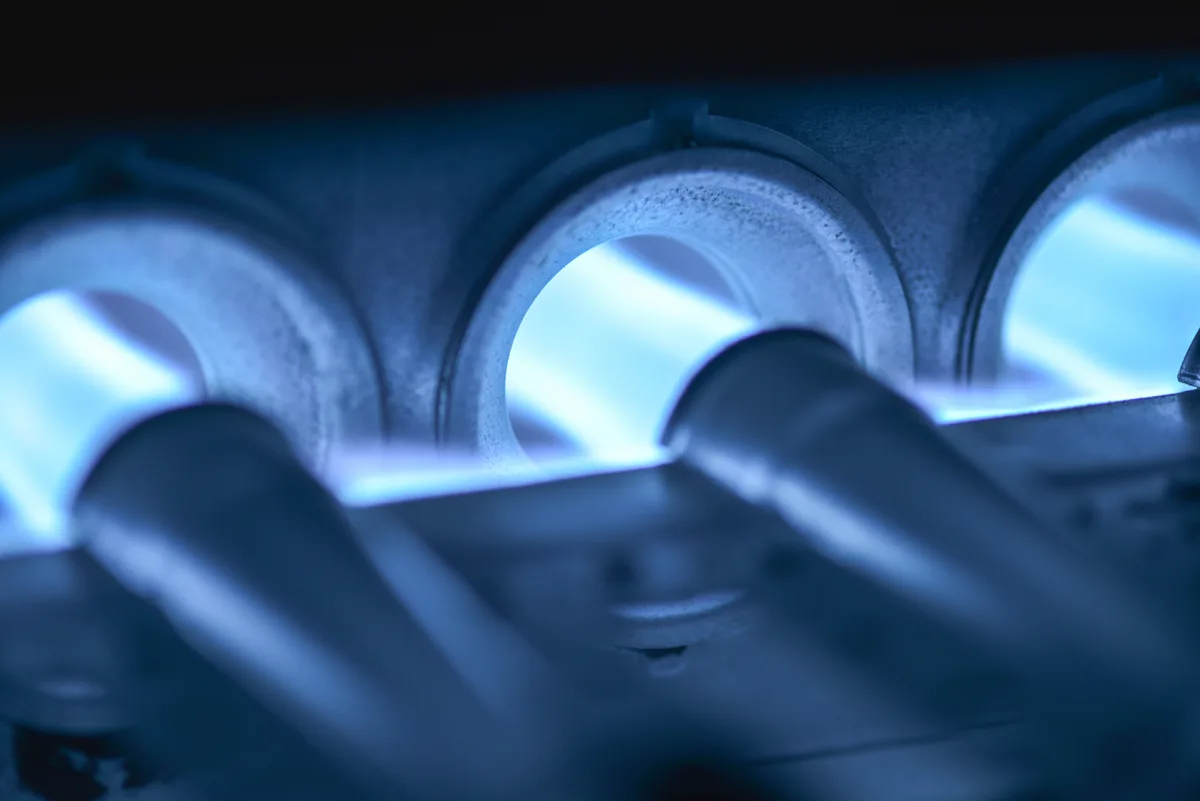
A gas flame that is burning properly is blue and makes almost no soot. Soot means incomplete combustion, and incomplete combustion makes carbon monoxide. In a forced-air furnace the flame and the house air are kept apart by the heat exchanger, so combustion soot at the registers means that separation has failed or exhaust is being drawn into the return air.
- A poorly burning furnace: dirty or misaligned burners, wrong gas pressure or a plugged heat exchanger make soot inside the burner compartment, and a cracked exchanger lets it reach the airstream. A yellow furnace flame is the early sign.
- A back-drafting water heater: when a tight house, a running dryer or a kitchen range hood pulls the chimney backwards, exhaust spills from the draft hood beside the furnace and the return duct picks it up. Look for scorching or melted plastic on top of the tank.
- A sooting gas fireplace: misplaced logs or a blocked vent blacken the glass, a leaking gasket lets the soot into the room, and the nearest return grille collects it.
- An oil furnace puffback: on rural properties still heated with oil, a delayed ignition can blow oily black soot through the whole duct system in one event. It smells of fuel oil, coats every room at once and calls for a burner service before the furnace runs again.
How a technician tells ghosting from combustion soot
The difference is settled with instruments, not by looking at the stain. A technician asked about soot at the vents should do all of the following:
- Combustion analysis on the furnace and every other vented appliance: oxygen, carbon monoxide and stack temperature in the flue gas, compared with the manufacturer's range.
- Ambient CO readings in the furnace room, at a supply register and in the living space, with everything running.
- Burner and heat-exchanger inspection: flame colour and shape, soot inside the burner box, a camera into the exchanger cells, and whether the flame moves when the blower starts.
- A draft test at the water heater with the dryer, bath fans and range hood all on, which is the worst case for a chimney.
- A look at the filter, the return duct joints and the register boots for the air leaks that cause ghosting.
If every reading is clean and no appliance shows soot, the stains are ghosting, and nothing needs repair beyond sealing and filtration.
Call now, book a visit, or leave it for the next tune-up
- Call now and shut the appliance off: soot together with a CO alarm, headaches or nausea that ease when you leave the house, scorch marks on the furnace or water heater, or a smell of exhaust or fuel oil.
- Book a visit this week: new stains that appeared in a single heating season with no candles in the house, a filter that blackens unusually fast, a yellow or lifting burner flame.
- Leave it for the next tune-up: old stains in a house where candles are burned often, with working CO alarms on every storey.
A furnace tune-up runs $120–$250, and a diagnostic visit for a suspected fault is $90–$150, credited toward the repair. Homes in the 1970s–90s subdivisions of Burlington, Oakville and Mississauga often have wall-to-wall carpet and unsealed register boots, the two conditions ghosting needs, but that is a conclusion to reach with an analyzer in hand. For furnace repair or a combustion check, call ZK Mechanical at (647) 801-1252 or book through the contact page.