
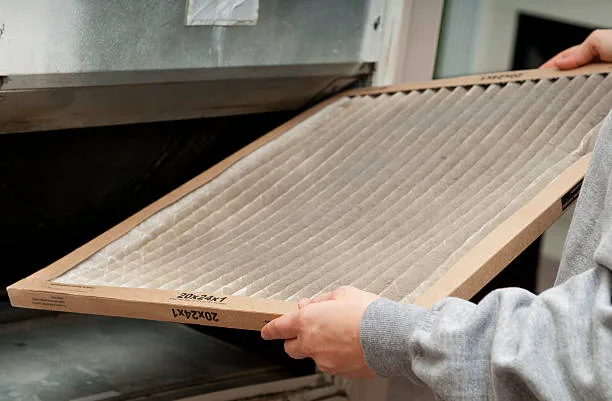
Change a 1-inch furnace filter every one to three months, and a 4-inch or 5-inch media filter every six to 12 months. Those intervals assume an average house; pets, a renovation or a new-build subdivision cut them roughly in half. The filter is the cheapest part in the whole system and the one that decides whether the blower, the heat exchanger and the evaporator coil get to live out their design life.
How Often to Change Each Type of Filter
Thickness matters more than brand. A thicker filter holds far more dust at a lower pressure drop, which is why the intervals stretch so far apart:
- 1-inch fibreglass panel (MERV 1–4): every 30 days. It protects the blower from lint and little else — it is a machine guard, not an air cleaner
- 1-inch pleated (MERV 8–11): every 60–90 days in an average house, every 30–60 with a shedding dog or cat
- 4-inch or 5-inch media cabinet (MERV 11–13): every six to 12 months, and closer to six if the fan runs on low continuously
- Washable electrostatic: rinse monthly, and let it dry fully before it goes back — a damp filter grows exactly what you are trying to catch
- Whole-home HEPA bypass units: per the manufacturer's schedule, typically annually, with the pre-filter changed more often
- Electronic air cleaner cells: wash the collector cells every one to three months; they stop collecting long before they look dirty
The Two-Minute Check That Beats a Calendar
Slide the filter out and look at the upstream face — the side the arrow points away from. New pleats are white or off-white right down into the folds. When the peaks have gone grey and the valleys are packed, the filter is past its useful life regardless of what the box promised.
A dark, even coating usually means ordinary house dust and a normal interval. Black soot-like deposits point to candles, a wood stove or a nearby gas appliance burning poorly. Fine white powder in a house under three years old is drywall dust still working its way out of the ductwork, common in newer builds around Alton Village and Waterdown.
What Makes a GTA Filter Load Up Faster
- Pets — long-haired dogs and cats can halve the interval on a 1-inch pleated filter
- Renovation dust, especially drywall sanding, which is fine enough to pass a MERV 8 and coat the evaporator coil instead
- A basement or crawlspace return that is pulling unfiltered air through gaps in the return trunk, so the filter loads on the wrong side
- Running the blower continuously for air mixing or filtration, which triples the air passing through the media compared with AUTO
- Ragweed and cottonwood in late summer, plus the first two weeks of every heating season when settled dust gets stirred out of the ducts
- An oversized system that short-cycles, since every start pulls a surge of air and dust through the media
MERV: Higher Is Not Automatically Better
MERV 8 to 11 is the right range for most GTA homes. It captures dust, pollen and pet dander without choking a blower that was designed around a 1-inch panel. MERV 13 is the practical ceiling in a residential system, and only where the filter area is large enough to carry it.
Free quotes, written pricing.
The number that actually decides this is total external static pressure, measured across the furnace with a manometer. Most residential air handlers are rated for about 0.5 inches of water column, and plenty of 1970s–90s houses with a single undersized return are already close to that limit with a clean filter in place. Drop a MERV 13 into that system and the blower gives up airflow rather than the filter giving up dirt.
The way out is area, not restriction. A 4-inch or 5-inch media cabinet spreads the same MERV 13 rating over several times the surface, so the pressure drop stays low and the interval stretches to a year. If allergies are the reason you want better filtration, pair that cabinet with the other measures in our guide to improving indoor air quality in a GTA home.
What a Clogged Filter Actually Breaks
In heating, restricted airflow lets the heat exchanger run hotter than design. The high-limit switch cuts the burner, the blower keeps running, and you feel cold air from the registers — the most common non-fault we get called out for, covered in why a furnace blows cold air. Repeated overheating cycles are also what work-harden a heat exchanger into cracking, and that is a $1,500–$3,000 job on a furnace usually old enough that replacement is the better spend.
In cooling, a starved evaporator coil drops below freezing and turns into a block of ice, which stops airflow entirely and can send liquid refrigerant back to the compressor — see why an AC freezes up. And in both seasons the blower motor works against the restriction: a failed ECM blower runs $500–$1,500 to replace.
Fitting It Right: Direction, Size and the Gaps
- The airflow arrow points toward the blower and the furnace, never toward the return duct
- Filter sizes are nominal, not actual — a '16x25x1' measures closer to 15.5 by 24.5 inches, so a filter that slides in with visible side gaps is the wrong size, not a loose fit
- Tape or close the filter slot cover. An open slot lets the blower pull unfiltered basement air straight past the media, which is why some coils are filthy despite fresh filters
- Write the date on the cardboard frame in marker when you fit it. It removes the guesswork six months later
- Keep the old size written inside the furnace door so nobody buys the wrong one in a hurry
Verdict: The Schedule to Actually Follow
If you have a 1-inch slot and no pets, buy a MERV 8–11 pleated filter, set a reminder for the first of every second month, and check it on the months in between. With pets or a recent renovation, make it monthly. If the checking is the part that never happens, have a 4-inch or 5-inch media cabinet fitted and move to a once-a-year job you can pair with your fall tune-up.
ZK Mechanical fits media cabinets and indoor air quality equipment across Burlington, Oakville, Hamilton and the wider GTA, and measures static pressure before recommending a filter grade rather than after. Send us your furnace model and we will tell you which filter it can actually breathe through.
Frequently asked questions
How often should I change my furnace filter in Canada?
Every one to three months for a 1-inch fibreglass or pleated filter, and every six to 12 months for a 4-inch or 5-inch media filter. Halve those intervals with pets, an ongoing renovation or a blower you leave running continuously. Inspect on the same day each month rather than trusting the number printed on the box.
What MERV rating should I use for my furnace filter?
MERV 8 to 11 suits most GTA homes: it holds back dust, pollen, pet dander and mould spores without starving the blower. MERV 13 is the residential ceiling, and it belongs in a 4-inch or 5-inch cabinet where the media area is large enough to carry it. In a 1-inch slot, MERV 13 usually costs you airflow rather than buying you cleaner air.
Can a dirty furnace filter cause problems?
Yes, and it is behind a large share of the no-heat calls we attend. Restricted airflow overheats the heat exchanger until the high-limit switch cuts the burner, so the blower pushes cold air. In summer the same restriction freezes the evaporator coil. Left for years, the repeated overheating is what cracks a heat exchanger, and that is a $1,500–$3,000 job.
Are pleated or fibreglass filters better?
Pleated, in nearly every case. A fibreglass panel at MERV 1–4 catches lint and hair to protect the blower, and passes most of what you would actually want removed. A MERV 8–11 pleated filter catches fine dust and pollen, holds more dirt before it restricts, and costs little more. The exception is an old furnace with a tired blower already short of airflow.
Why is my furnace filter getting dirty so quickly?
Heavy pet shedding, drywall dust from a renovation, candles or a wood stove, or ductwork drawing unfiltered air from the basement through gaps in the return trunk. An oversized furnace that short-cycles also pushes far more air through the media than a right-sized one. If a filter looks spent within two or three weeks, have the return ducts sealed and the sizing checked.