
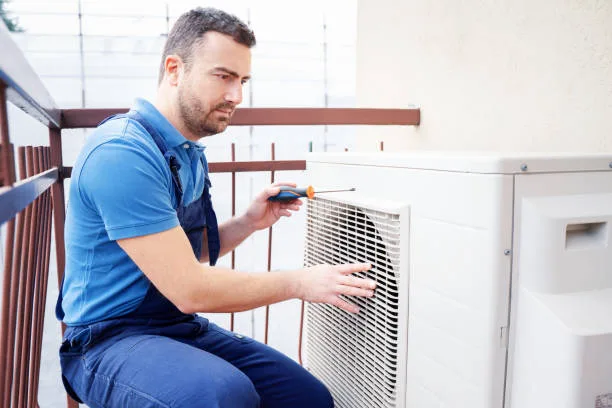
Preparing an HVAC system for an Ontario summer takes three things done in April, not in July: a test run while the weather is still cool enough that a failure is an inconvenience rather than an emergency, a fresh filter, and a booked tune-up at $120–$250. Do them in that order. The test run tells you whether the tune-up is a formality or a repair visit, and April is the last month when a part can be ordered without competing against every other cooling call in the GTA.
Run the System in April and Measure the Temperature Split
Pick a day above roughly 18°C — running a condenser when it is colder than that can damage the compressor — turn the outdoor disconnect back on the day before so any crankcase heater has time to boil refrigerant out of the oil, then set the thermostat well below room temperature and let the system run 15 minutes.
Now measure. Hold a thermometer at the return grille, then at the nearest supply register. A healthy system drops the air by roughly 8–11°C across the indoor coil. Less than that points to low refrigerant charge, a dirty evaporator or weak airflow; much more than that usually means the blower is being starved by a clogged filter or a closed-off return.
While it runs, go outside. The fan should pull air straight up with no rattle, the copper suction line should feel cold and sweat lightly, and the small liquid line should feel warm. A suction line that ices over is the classic sign of a restriction or a low charge, not of a system working hard.
What an Ontario Winter Does to the Outdoor Unit
Five months of snowmelt, freeze-thaw cycles and road spray leave marks that matter. Work through this before the first humid stretch:
- Pull the winter cover off completely. Covers that wrap the whole cabinet trap moisture and give mice a dry place to chew wiring over the winter
- Straighten bent fins with a fin comb and rinse the coil gently — a pressure washer folds the fins flat and permanently cuts airflow
- Check the pad. Freeze-thaw tips condenser pads on clay soils, and a unit sitting more than a few degrees off level runs its compressor short of oil
- Cut back cedar, hosta and ornamental grass to give the cabinet clear space on all sides and open sky above it
- Look at the line-set insulation where it enters the wall. UV-cracked black foam is cheap to replace and costs real capacity when it is gone
- Check the disconnect box for corrosion, and look for oil staining at the service valves — oil is where refrigerant left
Set the Thermostat for Humidity, Not Just Temperature
Lake Ontario is the reason a 27°C day in Bronte or Aldershot feels heavier than the same day inland. Cooling is only half the job; the other half is pulling moisture out of the air, and that only happens while the coil is running. Aim for 45–55% indoor relative humidity in summer.
Two settings undo that work. A thermostat fan set to ON re-evaporates the water sitting on the coil and blows it back into the house between cycles — leave it on AUTO. And chasing comfort by dropping the setpoint two degrees makes an oversized system cycle even faster, which cools without dehumidifying. If the house reads cool but feels clammy, why a house stays humid with the AC on covers the fixes in order of cost.
Free quotes, written pricing.
Protect the Basement: Condensate Is the Summer Failure Nobody Plans For
An air conditioner working on a humid Ontario afternoon can pull several litres of water out of the air, and all of it leaves through one small drain. Flush the drain line and the trap in spring, confirm the pan has a working float switch that will shut the system down rather than overflow, and if the coil sits above a finished ceiling, keep a pan tablet in place to stop biological slime rebuilding. A blocked drain typically costs $150–$350 to clear and far more in drywall.
Reduce the Cooling Load Before You Touch the Thermostat
- Close blinds on west-facing glass by mid-afternoon — late-day sun through a large west window is the single biggest heat gain in most GTA two-storeys
- Run bathroom and range fans while cooking or showering so that moisture leaves the house instead of loading the coil
- Set ceiling fans counter-clockwise in summer; they cool people, not rooms, so turn them off in empty rooms
- Open second-floor supply registers fully and check that return-air paths are not blocked by beds or dressers — most 1970s–90s subdivisions have one central return per floor at best
- Insulate supply ducts that run through an unconditioned attic; uninsulated runs give up a good share of their cooling before reaching the room
- Move lamps, televisions and gaming consoles away from the thermostat — their heat makes the system run past the point the room needed
Refrigerant: What Changed for the 2026 Season
New residential systems now ship with A2L refrigerants such as R-32 and R-454B instead of R-410A. Existing R-410A equipment keeps running and can still be serviced, so nothing about this forces a replacement — but if your unit is old enough to use R-22, understand that it has not been produced or imported for years and a leak repair becomes a judgement call rather than a routine fix. Our explainer on the A2L refrigerant transition covers what it changes for homeowners and what it does not.
Verdict: Repair It This Spring, or Replace It?
Use one rule. If the unit is under 12 years old and the quoted repair is less than half the cost of replacing it, fix it — most AC failures are a capacitor or contactor at $150–$350 and are done in one visit. If the unit is past 12 years, uses R-22, or the repair is a compressor or a leak in the indoor coil, put the money toward new equipment instead.
Replacing in April or May also buys you the choice you will not have in a July heatwave: time to compare an ENERGY STAR unit at 15.2 SEER2 or better against a base model, and time to consider whether the furnace is close enough to end of life that doing both at once makes sense. Central AC installs land at $3,500–$7,500 where ducts already exist; repair versus replacement for a GTA air conditioner works through the arithmetic.
ZK Mechanical books spring air conditioner tune-ups and installs across Burlington, Oakville, Hamilton and the wider GTA, with written pricing before any work starts. Tell us the model and age of your unit and we will tell you honestly whether it is worth another season.
Frequently asked questions
When should I turn my air conditioner on for the first time in Ontario?
Wait for an outdoor temperature above roughly 18°C, then run a full test in April or early May. Below that, the compressor can be damaged by liquid refrigerant in the crankcase, and the readings a technician needs are unreliable. Testing early gives you weeks of margin to order a part before the first heat warning of the season.
How much does a spring AC tune-up cost in the GTA?
A standalone cooling tune-up with a refrigerant check and coil cleaning runs $120–$250. If the technician finds a fault, the repair is quoted separately — most AC repairs land between $150 and $800, with a capacitor or contactor at the low end. Booking the visit in April usually means a longer appointment window than a July call.
Why is my house humid even though the air conditioner is running?
Usually the system is cooling faster than it is dehumidifying. An oversized unit satisfies the thermostat in a few minutes and shuts off before much moisture condenses on the coil, and a thermostat fan left on ON blows that moisture straight back into the house. Switch the fan to AUTO first, then have the charge and airflow checked.
Do I need to cover my air conditioner over the winter?
No, and a full wrap does more harm than good. Condensers are built for outdoor exposure; a sealed cover traps moisture against the coil and gives rodents a sheltered place to nest in the wiring. If falling ice from a roofline is a concern, use a top-only cover that leaves the sides open, and take it off before the first test run.