
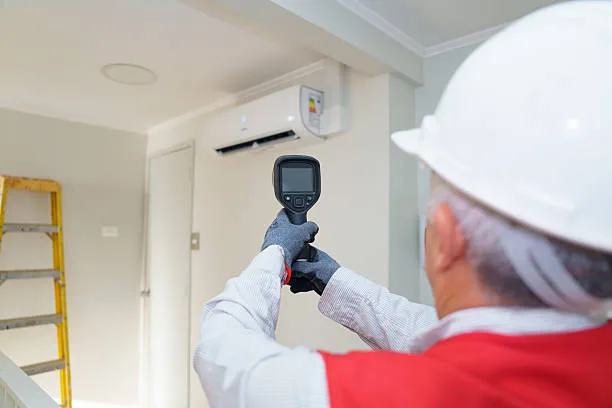
Book a pre-listing HVAC inspection four to eight weeks before your GTA home goes live, and treat it as a tune-up with paperwork: $120–$250 per system buys you a written condition report and, more useful, a list of what the buyer's inspector is going to write down. The value is control. Every mechanical fault found after an offer is negotiated at the buyer's number and the buyer's timeline; the same fault found in advance is priced at yours.
What the Report Should Actually Contain
A condition report is not a certificate and no contractor can issue one that binds a buyer. What it can do is document facts a buyer's inspector will otherwise infer. Ask for these in writing:
- Make, model and serial number of the furnace, air conditioner and water heater, with the manufacture year read off each data plate
- Combustion results on the furnace: flue carbon monoxide reading, flame condition, and a visual heat-exchanger inspection with the method noted
- Cooling performance measured, not guessed — the temperature drop across the indoor coil, plus superheat or subcooling and the refrigerant type
- Venting checked to CSA B149.1: vent slope, termination clearances, and whether an old furnace and the water heater share a chimney
- Condition of the ductwork, returns and dampers, including any disconnected runs in the attic or crawlspace
- Dated service history, since a folder of invoices does more for a buyer's confidence than any adjective in a listing
How a Buyer's Inspector Puts an Age on Your Equipment
They read the serial number. Nearly every manufacturer encodes the week and year of manufacture in it, and that is the number that lands in the inspection report — not the year you were told it was installed. If a previous owner bought the house with a five-year-old furnace already sitting in the basement, the report will age the equipment from the plate, and it is worth knowing that before the buyer does.
Age drives the language. A furnace under 10 years old is described as mid-life. Between 12 and 15 it gets "nearing the end of typical service life". Past 15 it is flagged for budgeting, which is an invitation for the buyer's agent to ask for a credit — our guide on how long a furnace lasts in Ontario explains where those brackets come from.
The Findings That Move Money in a GTA Deal
- A cracked or suspect heat exchanger. Repair is $1,500–$3,000 and almost never worth it on a furnace old enough to crack — this becomes a replacement conversation mid-deal
- An R-22 air conditioner. The refrigerant has not been produced or imported for years, so any leak turns into a replacement, and inspectors note it on sight
- A furnace or water heater with a TSSA red tag. One kind of tag shuts the appliance down on the spot; the other gives a window to correct the fault. Either way it is a known safety defect, not something to leave for closing
- A water heater past 12 years, or any tank showing rust weeping at the bottom seam. A tank-for-tank swap is $1,200–$2,500 installed and is cheap next to a flooded basement during the buyer's visit
- Missing or expired carbon monoxide alarms. Ontario requires a working CO alarm adjacent to each sleeping area in homes with a fuel-burning appliance or attached garage, and this is the easiest item on the entire list to fix
- A furnace or AC replaced without a permit, which surfaces when someone pulls the property file
Fix It, Disclose It, or Price It In?
Free quotes, written pricing.
Use a three-way rule rather than fixing everything reflexively.
- Fix anything under roughly $800 that reads as neglect: a flame sensor, a capacitor, a condensate pump, a missing CO alarm, a filthy coil. Most repairs land at $150–$800 and removing them from the report costs less than the credit a buyer will ask for
- Fix anything unsafe regardless of cost. A red-tagged appliance or an unsafe vent connection is not a negotiating item
- Price in, do not replace, equipment that is simply old but working. Putting in a new furnace at $4,300–$7,000 weeks before you hand over the keys rarely returns its cost, and buyers discount the value of a brand they did not choose
- Disclose, always, anything you know to be defective. Concealing a known fault is the one path in this process that turns a $1,500 problem into a legal one
If the furnace is genuinely at end of life and you would rather deal with it than argue about it, read the warning signs that a furnace is done first and get two quotes before committing.
The Paperwork Buyers and Their Lawyers Ask For
Rented equipment is the most common late surprise in Halton and Hamilton transactions. If the water heater, furnace or air conditioner is on a rental or a finance contract, get the buyout figure and the contract number from the provider early — it has to be settled or assumed at closing, and doing it in the last week of a deal is where things go sideways.
Permits are the second. A furnace change-out in most GTA municipalities needs a permit from the local building department, and an AC install involves an electrical connection that should have an ESA authorization behind it. If work was done without either, say so rather than hoping nobody checks — whether a furnace replacement needs a permit sets out how the process actually runs.
Verdict: Book It Before the Photographer, Not After the Offer
The sequence that works: inspection four to eight weeks out, small repairs done within two weeks, invoices collected in a folder, and old equipment disclosed rather than replaced. You keep the choice of contractor, the choice of timing, and the choice of what a repair costs — all three of which you lose the moment a home inspector's report lands on an agent's desk.
ZK Mechanical runs pre-listing inspections and residential HVAC work across Burlington, Oakville, Hamilton and the wider GTA, with written pricing and a plain-language condition report you can hand to your agent. Tell us your closing date and we will work backwards from it.
Frequently asked questions
How much does a pre-sale HVAC inspection cost in the GTA?
Expect $120–$250 per system for a tune-up-level inspection with a written report, so a furnace and air conditioner together sit in the $240–$500 range. That covers combustion testing, cooling performance, venting and a condition summary. If the technician finds a fault, the repair is quoted separately, commonly $150–$800 depending on the part.
Do I have to disclose a broken furnace when selling in Ontario?
Anything you know to be defective and that a buyer could not reasonably discover on their own should be disclosed. A cracked heat exchanger, a red-tagged appliance or a chronic leak fall squarely into that category. Talk to your lawyer or agent about how to word it, but do not paper over a known safety fault — the exposure after closing is far larger than the repair.
Should I replace an old furnace before listing my home?
Usually not, if it is old but working safely. A new furnace at $4,300–$7,000 rarely returns its full cost in the sale price, and buyers assign little value to equipment they did not choose. Replace it when it is unsafe, red-tagged, or when a credit request would exceed the cost anyway. Otherwise disclose the age and let the price reflect it.
What HVAC issues fail a home inspection in the GTA?
Home inspections do not pass or fail, but the findings that stall deals are consistent: a cracked heat exchanger, an unsafe vent connection or a red tag, an R-22 air conditioner with a leak, a water heater weeping rust, and missing carbon monoxide alarms. Every one of them is cheaper to deal with before the listing photos than after an offer.