
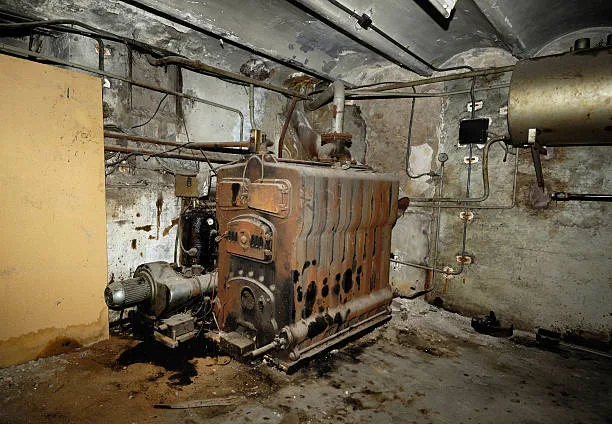
A furnace is finished when it is past 15 years old and the next repair costs more than half of a new unit — that single test settles most cases. Below that line, fix it and keep the money. The seven signs on this page are the ones our technicians see first in Toronto basements, and three of them are safety matters that should stop you from waiting for spring.
For context on price, a diagnostic visit runs $90–$150 and is usually credited toward the repair, common fixes land at $150–$450, and a replacement furnace installs at $4,500–$6,500 across most of the GTA. Those three numbers are what the decision actually turns on.
The seven signs at a glance
- The unit is over 15 years old and still has the original blower and control board
- Gas usage is climbing year over year while the thermostat schedule has not changed
- Two or more repairs in the last two winters, or one quote that reaches half the price of a new furnace
- Rooms at the end of the duct run never reach the thermostat setting
- Banging on start-up, a squeal from the blower compartment, or a rattle that appears mid-cycle
- A yellow, lazy burner flame instead of a crisp blue one
- Soot around the registers, rusty streaks on the cabinet, or a technician's report of a cracked heat exchanger
Sign 1: the furnace is past 15 years old
Most gas furnaces in Ontario run 15 to 20 years, and a unit that has been serviced every autumn sits at the upper end of that. Beyond 15, you are into the years when the expensive parts fail: the inducer motor, the blower, the control board, the gas valve. Parts availability also thins out once a model is a decade out of production.
Check the manufacturing date on the label inside the burner door rather than trusting the previous owner's estimate. Our note on how long a furnace lasts in Ontario covers what stretches or shortens that range in this climate.
Sign 2: gas usage is climbing while your habits stay the same
Compare cubic metres on your Enbridge bill against the same month last year — the dollar total moves with rates, but the volume tells you what the furnace is doing. A dirty burner, a worn inducer or a blower struggling against a clogged filter all make the unit run longer for the same indoor temperature.
There is also an efficiency ceiling on older equipment. A mid-efficiency furnace from the 1990s that vents into a masonry chimney sends a meaningful share of its heat up that flue, while 95% AFUE is the federal minimum for any new gas furnace sold today. That gap is why a replacement often shows up on the bill immediately.
Sign 3: the repairs are stacking up
Individual furnace repairs are not expensive. A flame sensor cleaning or replacement is $150–$300, a hot surface igniter is $200–$450, and a capacitor or pressure switch runs $250–$500. Those are worth doing on almost any furnace that is otherwise sound.
The picture changes with the big-ticket parts. A draft inducer motor is $400–$900, a blower motor is $500–$1,500 depending on whether it is an ECM, and a control board is $500–$1,200. Two of those in the same season on a 16-year-old unit is money spent propping up equipment that owes you nothing — the arithmetic is laid out in our furnace repair vs replacement cost guide.
Sign 4: some rooms never reach the thermostat setting
Uneven heat is often a duct problem wearing a furnace costume. In a 1950s Etobicoke or Scarborough bungalow with one undersized return in the hallway, the far bedroom was cold when the house was new and it is colder now that a finished basement has been added to the same trunk.
Free quotes, written pricing.
Before condemning the furnace, have someone check static pressure across the blower, look for disconnected or crushed branch ducts in the basement, and confirm the filter is not restricting airflow. If the ducts check out and the furnace still cannot hold the house, a single-stage unit at the end of its life genuinely is the problem, and a two-stage replacement with properly sized returns fixes what neither one could do alone.
Sign 5: it bangs, squeals or rattles
Noises are diagnostic, and the timing tells you which one you have. A bang a few seconds after the burners light is delayed ignition — gas pooling before it catches, usually from dirty burners or a weak igniter, and it is worth a service call now rather than in February. A squeal from the blower compartment is a bearing or a belt on older units.
Rattles are usually sheet metal or a loose panel and are harmless. A grinding or rumbling sound is not: caught early, a worn blower bearing is a lubrication or motor-mount fix, but left for a season it becomes a $500–$1,500 blower motor replacement.
Sign 6: a yellow burner flame instead of blue
A healthy gas flame is crisp and blue. Yellow, orange or lazy flames mean incomplete combustion, which is the condition that produces carbon monoxide. Add soot marks, a sharp smell when the burners fire, or condensation on the windows during a heating cycle, and it is a shut-it-down-and-call situation rather than something to monitor.
Ontario's Hawkins-Gignac Act requires a working carbon monoxide alarm next to the sleeping areas in any home with a fuel-burning appliance or an attached garage — a $50 device that covers the one failure mode you cannot smell. What a furnace can and cannot do on this front is set out in can a furnace leak carbon monoxide.
Sign 7: soot, rust or a cracked heat exchanger
Rust streaks on the cabinet, flaking metal at the flue collar or soot around the registers point at combustion and moisture problems that do not get better. The diagnosis that ends a furnace's life is a cracked heat exchanger, found by a technician with a camera and a combustion analyser rather than by eye.
Replacing one is $1,500–$3,000 in parts and labour, and because the crack usually turns up on furnaces 15 years and older, that money belongs in a new unit instead. A cracked exchanger is also a reason to stop running the furnace until it is dealt with, not a repair to schedule for next month.
The verdict: repair it or replace it
- Under 10 years old with a sensor, igniter or capacitor fault — repair, and book the annual service you have been skipping
- Ten to 15 years with one large part failing and no combustion problems — repair once, then start pricing replacement for the following autumn
- Over 15 years and the quote reaches half the price of a new unit — replace, and put the repair money into the down payment
- Any age with a cracked heat exchanger or persistent combustion problems — replace, and treat the timeline as urgent
- Two or more failures in two winters — replace, because the third call is already booked whether you know it or not
What replacement costs, and how to get a straight quote
A high-efficiency replacement runs $4,500–$6,500 installed for most GTA homes, with the range driven by staging, blower type and what the venting and ductwork need. Our furnace cost guide for the GTA breaks the line items apart, including the permit and the chimney liner that a high-efficiency conversion often triggers.
If the furnace has already quit, get the heat back on first and make the replacement decision with a working house. We cover furnace repair in Toronto and across the GTA and Hamilton with TSSA-licensed gas technicians, written pricing before any work starts, and no overtime or weekend surcharges. Book a visit and we will tell you plainly which side of the line your furnace sits on.
Frequently asked questions
How long should a furnace last in Toronto?
Fifteen to 20 years is the realistic range for a gas furnace here, with annual service pushing it toward the top end. Short cycling from an oversized unit, a restrictive filter left in place too long, and skipped maintenance all pull it down. Check the date on the label inside the burner door to find out where yours stands.
Is a yellow furnace flame an emergency?
Treat it as one until a technician says otherwise. A yellow or lazy flame means incomplete combustion, which is how carbon monoxide is produced. Shut the furnace off at the switch, make sure your CO alarm is working, and book a service call. If the alarm sounds or anyone feels headachy or nauseated, leave the house and call from outside.
Should I replace my furnace and air conditioner at the same time?
If both are over 12 years old, doing them together typically runs $7,500–$11,500 and saves roughly a thousand dollars versus separate jobs, because the labour, sheet metal, electrical and permit overlap. If the air conditioner is younger and cooling well, replace the furnace alone and make sure the new blower suits the existing coil.
Can I replace a furnace in the middle of winter?
Yes. Winter replacements are routine here, and a same-size swap in an accessible basement is generally a single working day with the house warm again by evening. Plan for a few hours without heat during the changeover. The harder part in January is equipment availability, so ask what is in stock before you commit to a model.
What does a furnace inspection actually check?
A proper visit covers the heat exchanger, burner condition and flame pattern, the igniter and flame sensor, gas pressure, the inducer and blower, the venting and condensate path, and safety controls, finishing with a combustion analysis. Expect a diagnostic fee of $90–$150 if you are calling about a fault, usually credited toward the repair.