Quick Answer
Yes. Any gas furnace can produce carbon monoxide if combustion goes wrong — most often from a cracked heat exchanger, blocked venting, or backdrafting. CO is colourless and odourless, so working CO alarms on every floor are non-negotiable in Ontario (and required by law near sleeping areas). If an alarm sounds, get everyone outside and call 911; don't ventilate-and-ignore it.
Carbon monoxide is the most serious risk associated with gas heating, and Ontario averages dozens of CO-related deaths and hundreds of hospitalizations per year, with faulty fuel-burning appliances a leading cause. The risk from a properly installed, properly maintained furnace is very low — but 'maintained' is the operative word. Here's how furnaces produce CO, the warning signs, and exactly what to do at each level of concern.
How a furnace can leak CO
- Cracked heat exchanger — the metal barrier between combustion gases and your household air fatigues with age; cracks let exhaust mix into the airstream. Most common on furnaces 15+ years old.
- Blocked or disconnected venting — snow/ice over intake-exhaust pipes, bird nests, or corroded older metal flues force exhaust back into the house.
- Backdrafting — powerful kitchen/bath exhaust fans or fireplaces in tight homes can pull combustion gases down the flue of older natural-draft appliances.
- Incomplete combustion — dirty burners or wrong gas pressure produce far more CO than clean combustion; this is measurable at a tune-up.
Ontario's CO alarm law
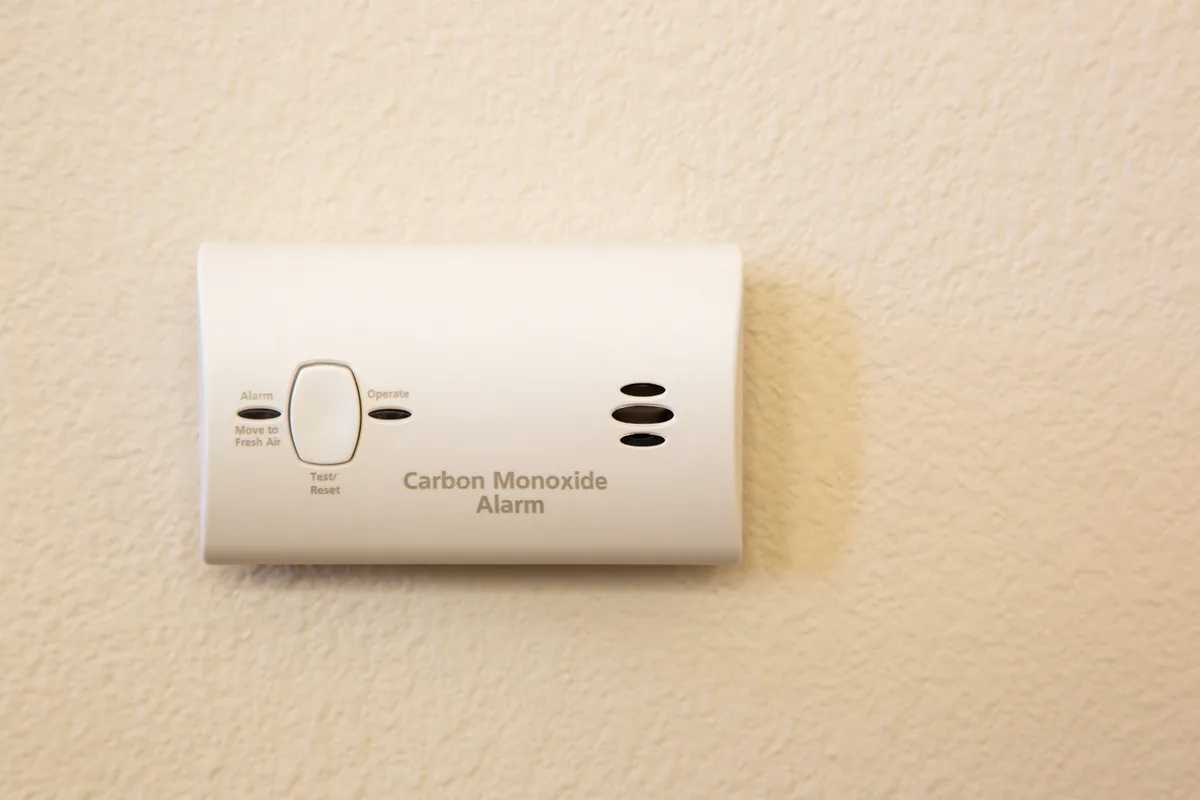
Since 2014, Ontario law requires working CO alarms adjacent to all sleeping areas in homes with fuel-burning appliances or attached garages. Best practice goes further: one on every storey, replaced every 7–10 years (check the date on the back), with batteries refreshed annually. Plug-in units with battery backup are fine; combination smoke/CO units count.
Warning signs and what to do
- CO alarm sounding: leave immediately with everyone including pets, call 911 from outside. Fire services will meter the house. Do not re-enter to open windows.
- Flu-like symptoms (headache, nausea, dizziness) that improve when you leave the house — classic low-level CO exposure; treat as above.
- Soot streaks around the furnace, excessive moisture on windows, a pilot flame burning yellow instead of blue — book service promptly.
- Alarm chirping (not alarming): replace batteries or the expired unit.
Prevention is a 60-minute annual job
Every item in the risk list above is checked during a proper annual inspection: a furnace tune-up includes a heat exchanger inspection, venting check, combustion analysis, and ambient CO measurement. If your furnace hasn't been inspected in over a year — or ever, since you moved in — that's the single most effective step. ZK Mechanical's licensed technicians perform full safety inspections across the GTA as part of every maintenance visit, and we treat suspected CO issues as same-day emergency calls: (647) 801-1252.
Need a Professional? We Can Help
ZK Mechanical's licensed technicians serve the entire Greater Toronto and Hamilton Area with upfront pricing and 24/7 emergency availability.