
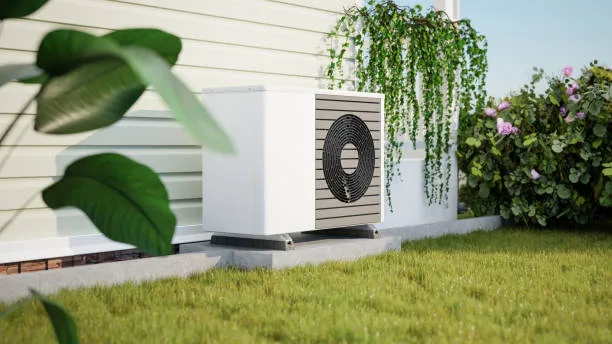
A cold-climate heat pump keeps heating a Toronto house through the part of winter that used to end the conversation. Listed models hold close to their rated output near -15°C and keep producing usable heat well into the -20s, with backup heat covering the rest. That matters here because the winter design temperature used to size equipment in this part of Ontario sits around -22°C — a few nights a season, not the whole season.
The label is not decoration. A unit earns it through a variable-capacity compressor, an injection circuit that keeps output up as pressures fall, and a defrost strategy built for freezing drizzle rather than dry prairie cold. A single-speed heat pump from an earlier era does none of that, which is why the old advice against heat pumps in Canada still circulates.
What makes a heat pump count as cold-climate
- A variable-speed inverter compressor that can run well below its nameplate capacity in shoulder season and step up when it turns cold
- Vapour injection, sometimes labelled EVI or flash injection, which feeds refrigerant into the compressor mid-cycle to hold heating output at low outdoor temperatures
- A demand-based defrost strategy that reads coil temperature and outdoor conditions instead of running on a fixed timer
- Backup heat as part of the design — electric resistance elements in an all-electric system, or the gas furnace in a dual-fuel setup
- A listing on the NEEP cold-climate product list, with published capacity at low ambient temperatures rather than a single headline rating
How to read the capacity curve before you buy
Every listed model publishes heating capacity and efficiency at several outdoor temperatures, and that curve — not the badge — is what your installer sizes against. Capacity is highest in mild weather and falls as the outdoor coil gets colder, while the efficiency figure falls with it. The numbers below describe the shape of a typical listed model; the submittal sheet for the exact model you are quoted is the one that governs.
- Near +8°C — full rated capacity, and the efficiency figure is at its highest point of the year
- Around -8°C — most of rated capacity, still comfortably above what resistance heat can deliver per unit of electricity
- Around -15°C — a listed cold-climate model holds the bulk of its output here, which is the point single-speed units used to give up
- Into the -20s — output tapers and backup heat starts filling the gap on the coldest nights
- Below the model's published range — backup carries the house, and the heat pump idles until conditions recover
Sizing a heat pump is not sizing a furnace
Furnaces get oversized routinely and mostly get away with it. A heat pump does not: too much capacity and it cannot modulate low enough in October, leaving the house clammy; too little and the resistance strips run through January at resistance-heat prices. The output has to be matched to the home's calculated heat loss at the local design temperature.
That means a room-by-room heat-loss calculation, not a tonnage guess from floor area. Ask what design temperature the calculation used and what the balance point works out to — the outdoor temperature at which the heat pump alone stops covering the load. Those two numbers tell you how often backup heat will actually run.
Ducted or ductless: which layout fits the house
A house with sound ductwork usually takes a ducted cold-climate system: one outdoor unit feeding an air handler in the basement, using the registers already in the floors. Airflow is the catch — heat pumps move more air at a lower temperature, so returns sized for a 1960s furnace often need opening up before the system can breathe.
Houses with radiators, an unheated addition, or a converted attic tend to go ductless, with wall or ceiling heads on refrigerant lines run to a single outdoor unit. Many homes end up with both: ducted for the main floors, one head for the room nothing ever reached. The trade-offs sit in central air vs ductless mini-split.
Free quotes, written pricing.
Siting the outdoor unit for a GTA winter
- Raise the unit on a stand, not a slab at grade — the coil has to stay clear of drifted snow and of the ice that builds where a roof drips onto it
- Keep it out from under a valley or eaves without gutters; lake-effect snow coming off Lake Ontario loads the north and east sides of a house first
- Specify a base pan heater so meltwater from defrost drains away instead of freezing into a block under the coil
- Leave clearance for service access on the panel side and for airflow across the coil, and keep it off a shared bedroom wall in a semi or a townhouse
- On exposed Escarpment properties around Waterdown and Ancaster, plan the orientation for wind-driven snow rather than for the tidiest sightline
What defrost looks like from inside the house
Near freezing with high humidity — the classic Lake Ontario shoulder-season condition — frost forms on the outdoor coil and the system briefly reverses to melt it. You will see steam rolling off the unit, hear the reversing valve change over, and feel supply air go neutral for a few minutes while backup heat covers the gap. It is normal operation, not a fault.
What is not normal: defrost running every few minutes, ice standing under the unit after a mild day, or the coil sheeted over in solid ice. Those point to drainage, refrigerant charge or a failed sensor, and they are worth a service call before the next cold snap rather than after it.
Brands we install and service
- Mitsubishi Electric — Hyper-Heat lines, strong on the ductless and multi-head side
- Daikin — Aurora and FIT lines, ducted and ductless, with R-32 across much of the range
- Lennox — Signature-series variable-capacity heat pumps, ducted
- Carrier — Infinity variable-speed heat pumps, ducted
- Fujitsu — ductless and multi-zone systems for houses without duct runs
Cost, rebates and the verdict
A 3-ton cold-climate heat pump installs for $9,500–$15,000 in the GTA depending on ducting, electrical work and the model tier, and our heat pump cost breakdown for Ontario covers what shifts a quote inside that band. Heat pumps sit at the top of the $500–$7,500 range of current Ontario rebates, and the paperwork should be filed by your contractor as part of the job.
The decision rule: if your air conditioner is at end of life and the furnace is over 12 years old, price a cold-climate heat pump before you price a like-for-like replacement, because one unit is replacing two. If the furnace is under 10 years old, keep it and run the heat pump against it as a hybrid. If the house has a 100 A panel with no room in it, get the load calculation done before anyone quotes equipment.
Book a cold-climate heat pump assessment
Every quote we write starts with a heat-loss calculation, a look at the duct and return sizing, and a check of the electrical service — because those three decide whether the system performs the way the brochure says. Refrigerant work is done by technicians holding an ODP card, electrical connections fall under ESA rules, and where a gas furnace stays in the system, our TSSA-licensed gas technicians handle it.
We install across Burlington, Oakville, Hamilton, Toronto and the wider GTA. See what a system changeover involves on our heating services page, or book a free assessment and we will tell you plainly whether the house is a good candidate.
Frequently asked questions
Do I need backup heat with a cold-climate heat pump in Ontario?
Yes, and every properly designed Ontario system has it. All-electric installs use resistance elements in the air handler; dual-fuel installs use the gas furnace below a switchover setpoint. Backup exists for the coldest nights and for defrost cycles, not because the heat pump is failing. How often it runs depends on sizing and the balance point.
Why is my heat pump steaming in the winter?
That is a defrost cycle. Frost builds on the outdoor coil in humid weather near freezing, and the system reverses briefly to melt it off, which produces visible steam. It lasts a few minutes and backup heat covers the house in the meantime. Constant defrost cycles or standing ice under the unit are worth a service call.
Can a heat pump use my existing ductwork?
Often, but the return side is what decides it. Heat pumps move more air at a lower supply temperature than a furnace, so undersized returns in an older house show up as noise, weak upstairs airflow and short cycling. A duct assessment during the quote catches it, and opening up a return is far cheaper than replacing the system.
What size cold-climate heat pump does my house need?
It comes from a room-by-room heat-loss calculation at the local winter design temperature, which is roughly -22°C for this part of Ontario, not from floor area. Oversizing hurts a heat pump more than it hurts a furnace, because the unit cannot modulate low enough in mild weather. Ask for the calculated load and the balance point.
How long does a cold-climate heat pump last?
Plan on roughly 12–18 years. A heat pump runs in both seasons, so it accumulates more hours than an air conditioner would, and annual service matters more as a result. Keeping the coil clear of snow and debris, changing filters and having the charge checked each year are what get you to the top of that range.