
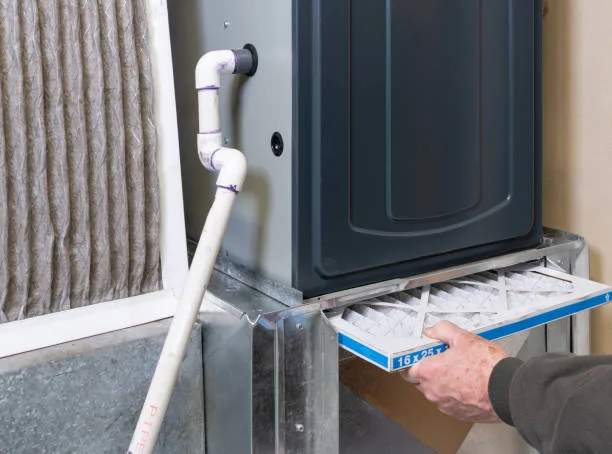
Furnace installation in Toronto, Mississauga and Oakville costs $4,500–$7,500 for a high-efficiency unit installed, and most straightforward replacements cluster around $4,500 to $6,500. Permits add $100–$300 depending on which city issues them. What moves a quote inside that band is the house rather than the postal code: the venting route, the state of the plenum, and whether the water heater is left orphaned in the chimney.
What furnace installation costs in these three cities in 2026
Across the GTA a new high-efficiency furnace lands between $4,300 and $7,000 installed, and the cluster sits at $4,500 to $6,500 once you strip out the jobs with a duct rebuild attached. Every gas furnace sold new for a Canadian house is now a condensing unit, because the federal minimum is 95% AFUE, so there is no cheap mid-efficiency tier left to shop.
Your three quotes will therefore differ on tier and scope, not on efficiency class. A single-stage 96% furnace with a constant-torque blower is the floor. Two-stage with a variable-speed ECM sits above it, and a modulating furnace paired with a communicating thermostat sits at the top of the band. Flagship badges from Lennox, Carrier or Trane typically add $500–$1,500 over an equivalent unit from a value brand.
The seven lines that belong on a furnace installation quote
- The furnace itself: model number, BTU input, AFUE, stage count and blower type — not the phrase "96% high-efficiency furnace" on its own
- Permit and inspection, $100–$300 depending on the municipality
- Removal and disposal of the existing furnace, worth $150–$400
- Venting: PVC intake and exhaust, the terminations, and the sealing where they leave the wall
- Condensate: trap, drain routing, and a pump where there is no gravity drain nearby
- Sheet metal: supply plenum, return drop, and any transition the new cabinet needs
- Gas and electrical: reconnection, drip leg, and the disconnect switch
If a quote is one line and one number, ask for it itemized before you compare it to anything else. Two quotes a thousand dollars apart usually differ on sheet metal and venting rather than on the furnace, and a total hides that completely.
What changes city by city
Permits come from the municipality, not the region, so the process differs across the three. Toronto's is the most involved and the slowest to schedule; Mississauga and Oakville each run their own building department with a lighter path for a like-for-like replacement. We pull the application either way, and our Toronto furnace permit guide covers what the inspector checks.
- Toronto — pre-war semis and Victorians in the old city have low basements, tight side yards and a masonry chimney that often carries the furnace and the water heater together. Take the furnace off that flue and the water heater needs the chimney lined, and the new PVC terminations have to clear windows, the gas meter and the neighbour's wall on a narrow lot.
- Mississauga — the subdivisions built from the 1970s through the 1990s had forced air from day one, so the duct system is already in place. What we find instead is a return side sized for a small PSC blower, which throttles a modern variable-speed furnace unless the return drop is opened up.
- Oakville — newer subdivisions carry builder-grade single-stage furnaces specified generously for the house. On replacement they are often a size too large, and dropping one size down is both cheaper and more comfortable. Older brick homes closer to the lake follow the Toronto pattern instead: chimney, liner, and a mechanical room with no room to work.
The five things that actually move your price
Free quotes, written pricing.
- Sizing — a heat-loss calculation on the house rather than a match to the old rating plate; our guide to what size furnace you need shows the method
- Venting distance and route — a furnace at the far side of a finished basement needs more pipe, more coring and more drywall restoration than one against an outside wall
- A chimney liner for an orphaned water heater, which is a genuine line item and a combustion-safety issue rather than an upsell
- Ductwork — undersized returns, a plenum that does not match the new cabinet, or a filter rack that has to be rebuilt
- Timing — booking in September or April gets you a crew that is not being pulled off a no-heat call, and a date that suits you
Rebates and financing on a 2026 furnace replacement
The Home Renovation Savings Program, run by Enbridge Gas with Save on Energy since January 2025, is the live Ontario program. Furnace-only upgrades typically see $500–$1,500, and a smart thermostat included in the install qualifies for $75. The Canada Greener Homes Grant is closed to new applicants and Enbridge's older Home Efficiency Rebate has ended, so treat any quote that still leans on them as out of date — current requirements are on the Ontario rebates page.
Financing through a lender is how a large share of replacements get paid for, with terms running from 12 months to 15 years. A $5,000 high-efficiency furnace over 10 years lands near $60–$75 a month depending on the rate. We file the rebate paperwork as part of the job instead of handing you a form at the end.
How to compare three quotes without getting fooled
Line the three up on scope first and price second. Check that all three name the same BTU input — a contractor quoting a bigger furnace to look thorough is selling you short cycling. Check that all three include the permit. Check who is coming: whoever quotes should be able to name the TSSA licence class of the technician who will be in your basement.
Then ask each of them what happens to the water heater. In an older Toronto or Oakville house that one question separates a complete quote from one that grows by four figures on installation day.
The verdict on what to budget
Set aside $4,500–$7,500 installed, expect $4,500 to $6,500 for a like-for-like swap in a house with sound ducts, and read anything well under that as a quote with something missing rather than a bargain. Put the extra money into the blower and the quality of the installation before you put it into the badge.
ZK Mechanical quotes furnace and heating installations in Toronto, Mississauga, Oakville and across the GTA with written pricing before the work starts, the permit pulled, and the old unit hauled away. If you want a second opinion on a quote you already hold, send it over — get in touch and we will tell you what it leaves out. The wider regional breakdown lives in our GTA furnace cost guide.
Frequently asked questions
How long does a furnace installation take in Toronto or Mississauga?
A like-for-like replacement is a single day, usually four to six hours from shutting the gas off to running the new unit through a full heating cycle. Add half a day when venting has to be re-routed, the plenum rebuilt, or a chimney lined for the water heater. The permit inspection is booked afterward and does not hold up your heat.
Is a bigger furnace better?
No. Oversizing is the most common sizing error we find on GTA replacements. Too much output means the furnace heats the air fast, reaches setpoint, shuts down and repeats, which wears the igniter and inducer while the rooms furthest from the furnace stay cold. A heat-loss calculation on your actual windows, insulation and floor plan sets the right input — not the number stamped on the unit you are removing.
Do I need a permit to replace a furnace in Oakville or Mississauga?
Yes. Replacing a gas furnace is permitted work in Ontario municipalities, and the contractor normally pulls it as part of the job. Fees typically run $100–$300 depending on where you live. The permit exists so an inspector can confirm the venting, gas connection and clearances are right, and it is one of the first things a buyer's home inspector looks for when you sell.
What is the cheapest way to replace a furnace?
Book off-season, choose a single-stage 96% unit from a value brand, and keep the scope tight — same location, same venting route, no duct changes. What you should never cut is the permit, the sizing calculation or the sheet metal, because those decide whether the furnace runs quietly and reaches its second decade. Financing spreads the cost without shrinking the job.