
Quick answer
A furnace flame that is yellow or orange and lazy instead of steady blue means the gas is not burning completely, which produces soot and carbon monoxide. A blue flame with a small yellow tip is normal. If the whole flame is yellow, wavering or leaving soot, shut the furnace off, test your CO alarms and book a combustion analysis by a TSSA-licensed technician.
Your furnace flame is yellow instead of blue because the burner is not getting the right mix of gas and air. Natural gas that burns completely gives a crisp blue flame; when it is starved of air or overfed with gas, unburnt carbon glows yellow and the burner starts making soot and carbon monoxide. The decision rule is short: blue with a small yellow tip is fine, yellow through the body of the flame is a reason to turn the furnace off.
What a healthy furnace flame looks like
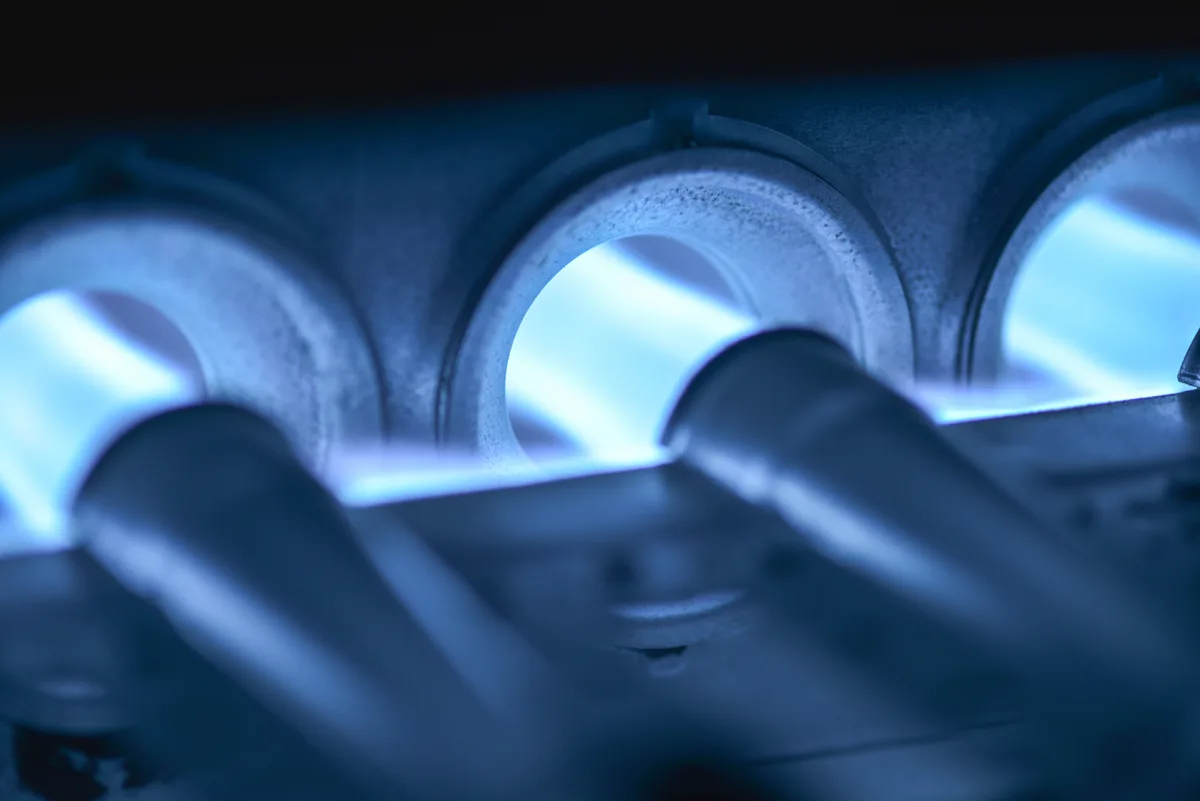
A healthy flame is steady, blue and points straight into the heat exchanger tube. Each burner should look like its neighbours: same length, same colour, no lifting off the burner face and no leaning sideways. A light-blue inner cone with a faint yellow or orange tip is within normal.
Brief orange sparks or streaks are usually dust burning off. They are common in the first heating cycles of fall and in homes that run a portable ultrasonic humidifier, which puts mineral dust into the air. Those flecks come and go. A flame that stays yellow, looks soft and floppy, or licks upward out of the burner opening is a different thing.
What turns a furnace flame yellow
- Dirty burners or blocked primary air. Rust scale, dust, pet hair and spider webs inside the burner throat cut the air that mixes with the gas before it lights. This is the most common cause and the least expensive to fix.
- Wrong orifice or gas pressure. Natural gas burners are typically set near 3.5 inches of water column at the manifold and propane near 10; the rating plate inside the cabinet gives the exact figure. A furnace converted between fuels with the wrong orifices, or a gas valve drifting out of adjustment, overfeeds the burners and the flame goes yellow and sooty.
- A cracked heat exchanger. If the flame is blue at ignition and then wavers, rolls or changes colour 30 to 90 seconds later when the blower starts, house air is being pushed through a crack into the combustion chamber. That is a stop-using condition; see how to tell if a heat exchanger is cracked.
- Starved or recirculating combustion air. A blocked intake pipe, a furnace closet with no air supply, or exhaust being pulled back into the intake at the outside wall all rob the flame of oxygen.
Fuel conversions matter in our service area. Homes in Kilbride, Lowville, Campbellville, Carlisle and rural Caledon often run on propane because the gas main does not reach them, and a furnace moved from one fuel to the other needs its orifices and regulator spring changed and the pressure set with a manometer. A propane to natural gas conversion done without that step is a classic source of yellow, sooting flames.
What to check yourself, and when to shut the furnace off
You can look; you should not adjust. Watch through the sight glass or the louvres of the burner door and leave the door in place, because on a sealed-combustion furnace that cover is part of the air path. Check this yourself first:
- Watch a full start-up: note the flame colour at ignition and again after the blower comes on.
- Compare the burners. One yellow burner among blue ones points to dirt or a blocked port on that burner; all of them yellow points to gas pressure or air supply.
- Look for soot: black dust on the burner box, on the floor of the burner compartment, or streaks above the burner door.
- Press the test button on every carbon monoxide alarm and read the replacement date on the back.
- Walk outside and confirm the intake and exhaust pipes are clear of snow, leaves and nests.
Turn the furnace off at the thermostat and at the furnace switch, and call a technician the same day, if any of these is true:
- The flame is yellow or orange through its body, or lifts and rolls out of the burner opening.
- There is soot anywhere around the burner box. Soot means the furnace has been burning dirty for a while, and it is a stop-using sign on its own.
- The flame changes shape or colour when the blower starts.
- A CO alarm has sounded, or anyone has a headache or nausea that eases outdoors. In that case leave the house and call 911 before you call anyone else.
What a combustion analysis finds, and what the fix costs in Ontario
A combustion analysis is a measurement, not an opinion. The technician puts an analyzer probe in the flue, reads oxygen, carbon monoxide and stack temperature, checks manifold gas pressure with a manometer, and inspects the burners and heat exchanger. The numbers tell you whether the furnace needs a cleaning, an adjustment or a harder conversation.
- Diagnostic visit: $90–$150, credited toward the repair if you go ahead.
- Burner cleaning and combustion check as part of a furnace tune-up: $120–$250.
- Gas valve replacement when the pressure cannot be held: $500–$1,000.
- Heat exchanger replacement: $1,500–$3,000 in parts and labour. On a furnace past 15 years, that money is usually better put toward a new high-efficiency furnace at $4,500–$7,500 installed.
General price bands are on the pricing page, and you get a written figure before any work starts.
Is it safe to run a furnace with a yellow flame overnight?
No. A yellow flame is a furnace making carbon monoxide in the burner compartment, and the only things between that and your bedrooms are the heat exchanger and the vent. Leave it off, use electric space heaters for the night, and treat it like any other no-heat call.
A yellow flame is a furnace repair call for a TSSA-licensed gas technician with a combustion analyzer, and ZK Mechanical takes those calls across Burlington, Oakville, Milton and Hamilton. Phone (647) 801-1252 at any hour, or send the details through the contact page. More urgent heating questions are answered in the emergency answers hub.