
Quick answer
You cannot confirm a crack from outside the furnace, but several signs are worth acting on: a flame that flutters or changes colour the instant the blower starts, soot around the burners, a sharp smell during heating cycles, rust flakes in the cabinet, a rollout switch that keeps tripping, or a carbon monoxide alarm. Confirming it takes a licensed technician with a combustion analyzer and a camera.
The heat exchanger is the steel shell that keeps combustion gases apart from the air you breathe. Flue gases pass through the inside of it, house air passes over the outside, and the two never meet. A crack lets them mix, which is why a confirmed crack takes a furnace out of service the same day. Here is what points toward one, and what proves it.
Symptoms that put a cracked heat exchanger on the list
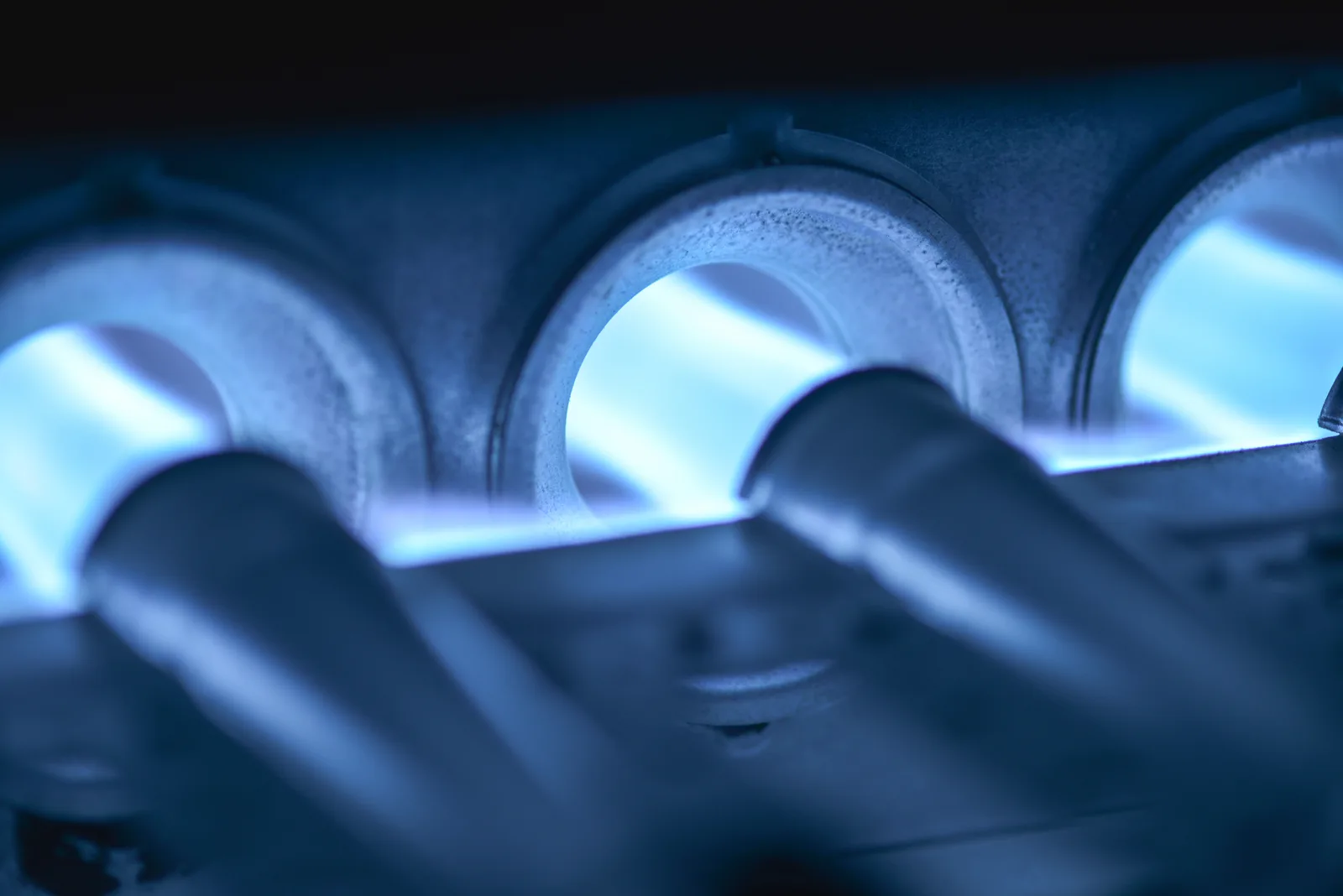
- The flame changes when the blower starts. Watch through the sight glass: a steady blue flame that suddenly leans, flutters or turns yellow-orange the moment the blower engages is the classic indicator, because blower pressure is pushing air through the crack into the burner box.
- Soot. Black powdery deposits on the burners, in the cabinet or around the vent connector mean incomplete combustion, and a crack is one of the reasons for it.
- A flame rollout switch that keeps tripping. It exists to catch flame spilling out of the burner box, and a crack can change the draft enough to make that happen.
- Rust or metal flakes on the burner tray and corrosion low on the exchanger sections, common on furnaces that spent years condensing inside a flue that was never designed for it.
- Smells and physical symptoms tied to heating cycles: a sharp odour, headaches, nausea or drowsiness that ease when everyone leaves the house.
- A carbon monoxide alarm that has sounded even once. Deal with that first — what to do when a CO alarm goes off covers the immediate steps.
None of these proves anything on its own. A yellow flame can be dirty burners, and a headache can be a hundred other things. What the list means is that the guessing should stop and a combustion test should happen.
How a technician confirms a cracked heat exchanger
- Combustion analysis in the flue, watching carbon monoxide levels through a full cycle — a reading that jumps the moment the blower engages is a strong signal.
- An ambient CO check in the supply air stream and in the living space, with the readings written down rather than described.
- A camera scope down each exchanger cell, which on most modern furnaces is the only way to see the upper bends and weld seams at all.
- Burner removal and a direct look at the primary exchanger; on a condensing furnace, an inspection of the secondary coil, where corrosion tends to start.
- Occasionally a tracer gas or pressure test, depending on how the furnace is built.
In Ontario this is not a judgement call a technician gets to soften. Under the TSSA rules a certificate holder works to, an appliance found with a compromised heat exchanger is shut off and tagged, and the gas stays off until it is repaired or replaced. If someone tells you the exchanger is cracked and then leaves the furnace running, something is wrong with the diagnosis or the diagnostician.
Getting a second opinion without being scared into a sale
This is the most abused diagnosis in the trade, because it converts a service call into an equipment sale. Ask for three things before you accept it: a photo or video from the camera scope, the printed combustion readings, and the specific location of the crack. Anyone who has found one can produce all three in a couple of minutes. How to choose an HVAC contractor lists the other questions worth asking while you are at it.
Repair or replace, and what it costs
Heat exchanger replacement runs $1,500–$3,000 in parts and labour on most furnaces, and even where the part itself is covered by a lifetime exchanger warranty, the labour rarely is. Because cracks turn up mostly on furnaces past 15 years, that money usually belongs in a replacement instead — the repair-versus-replacement guide works through the arithmetic with real numbers.
There is one exception. If the furnace is under 10 years old, the exchanger is in warranty and the rest of the unit is sound, replacing the part can make sense — but find out why it failed first. Chronic overheating from restricted airflow is what kills exchangers, and if the duct system caused it, the replacement will crack too.
Which furnaces around here are most at risk
Age is the main factor, so the highest-risk units are 1990s and early-2000s mid-efficiency furnaces still working away in Waterdown, Ancaster and the older parts of Burlington. Two local wrinkles matter. A furnace squeezed into a tight utility closet with an undersized return runs hotter than the same unit in an open basement. And a mid-efficiency furnace sharing a masonry chimney with a water heater can spend years condensing inside a cold, oversized flue, rusting the exchanger from the outside in.
That is exactly what an annual inspection is for. A proper furnace tune-up includes a combustion check and an exchanger inspection; a rushed phone-special cleaning usually includes neither, and the difference only shows up when it matters.
If your flame changes when the blower kicks in, or a CO alarm has sounded, ZK Mechanical will scope the exchanger and show you what we see before anyone mentions a new furnace. Every technician here holds a TSSA gas licence and every diagnosis comes with the readings behind it. Call (647) 801-1252, request a visit, or read how our 24/7 emergency service works — there is no after-hours surcharge.