
Quick answer
If your carbon monoxide alarm goes off, get everyone — including pets — outside to fresh air first, then call 911 from outside. Do not open windows, hunt for the source, or silence the alarm and go back to bed. Stay out until firefighters meter the house, and leave the furnace off until a licensed gas technician tests it.
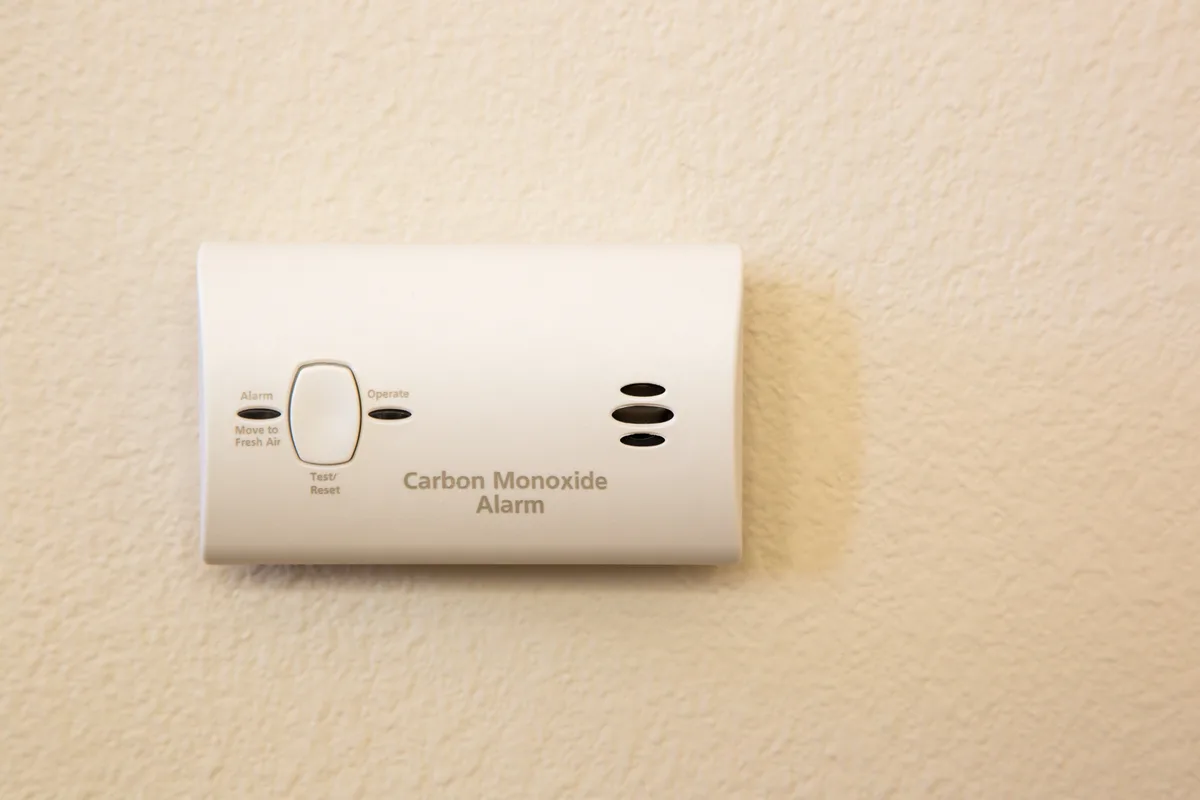
What you should do if your carbon monoxide alarm goes off is the same at 3 p.m. and at 3 a.m.: everyone leaves the house, and you call for help from outside. Carbon monoxide has no colour, no smell and no taste, so that alarm is the only warning anyone in the building is going to get. Nothing you might be tempted to do first — open a window, look at the furnace, press the hush button — is worth the minutes it costs.
Get out first, then call 911 from outside
- Take every person and pet out to fresh air. Grab your phone on the way past and leave everything else where it is.
- Call 911 once you are outdoors. Fire crews arrive with calibrated meters and can read the actual parts-per-million inside, which nobody can judge from the porch.
- Do not go back in to air the house out. Ventilating scrubs the reading the crew needs and puts you back into the gas you just walked away from.
- Tell the dispatcher if anyone has a headache, nausea, dizziness, blurred vision, confusion or chest pain, and flag infants, anyone pregnant or elderly, and anyone unresponsive. They need to be checked medically even if they perk up outside.
- Stay out. The fire service decides when the house is safe to re-enter — the alarm going quiet does not.
Four beeps is an alarm, one chirp is a battery
Learn the difference standing in the driveway, not in the hallway. On most residential CO alarms sold in Canada a genuine alarm is four short beeps in a quick group, repeating; a single chirp every 30 to 60 seconds is a low battery, and an end-of-life warning is a different chirp pattern that varies by brand — the label on the back lists both. If you cannot tell which one you are hearing, treat it as real and stay outside. That call costs you nothing.
Sensors expire. Most units carry a service life — between five and 10 years depending on the model — printed on the back beside the manufacture date, so the alarm that came with a house built in Alton Village or the Orchard in the mid-2000s is well past due even if the light still glows. Ontario's Fire Code — amended in 2014 under the Hawkins-Gignac Act — requires a working CO alarm adjacent to sleeping areas in any home with a fuel-burning appliance, fireplace or attached garage, which covers nearly every detached house in Burlington. One alarm outside the bedrooms is the legal floor; one on each storey plus one near the mechanical room is the version that actually protects you.
What the fire service will and will not do
Crews meter the house, locate the general source, ventilate, and shut down the appliance they suspect. They do not repair gas equipment, and they will normally leave the furnace or water heater off. That is the correct outcome rather than an inconvenience — anything that produced enough CO to trip an alarm is not something to relight and watch. What they most often find behind a tripped alarm in our area:
- A cracked heat exchanger letting exhaust into the supply air, which is its own emergency — see is a cracked heat exchanger an emergency.
- A blocked, iced or disconnected vent pushing combustion gases back into the mechanical room instead of out the wall.
- Backdrafting down a natural-draft flue, most often in 1950s and 1960s bungalows where the furnace and water heater share a masonry chimney and a strong range hood wins the tug of war.
- A car, generator, pressure washer or barbecue running in an attached garage. In the newer subdivisions where the garage sits under a bedroom, that is a direct path upstairs.
- A gas range or oven used as a heater during an outage — the one cold-snap shortcut that reliably makes people ill.
Do not relight anything yourself
Once the house is clear, a TSSA-licensed gas technician has to find the cause before any appliance runs again. That visit is not a look-and-listen: it is a combustion analysis at the burner, a draft and spillage test, an inspection of the heat exchanger and the full vent run, and an ambient CO sweep through the house with the system firing. If an unsafe condition is confirmed, the appliance is tagged out of service and its gas is shut off, and it stays that way until the fault is repaired or the unit is replaced. Pulling that tag and firing it back up is prohibited under Ontario's gas regulations and precisely how people get hurt.
Questions homeowners ask after the trucks leave
- Can we sleep at home tonight? Only if the fire service has cleared the house and the suspect appliance stays off. If that appliance is the furnace and it is January, plan for temporary heat and for the plumbing.
- The alarm sounded once and then stopped — still call? Yes, from outside. Intermittent CO usually means an intermittent condition, such as a vent that only spills when the dryer and the range hood run together.
- Should I shut the gas off? Not before you leave. Firefighters shut down the suspect appliance once they have metered the house, and the technician isolates it properly afterward — how the gas shut-offs work is for once it is safe to be back inside.
- I smell rotten eggs as well. That is a natural gas leak rather than CO, and it has its own procedure — what to do if you smell gas.
- How many alarms do I need? At minimum one adjacent to the sleeping areas, and realistically one per storey. Follow the manufacturer's mounting height instructions and write the replacement date on the housing with a marker.
ZK Mechanical is owner-operated and TSSA-licensed, and a CO alarm follow-up goes ahead of routine work on our schedule: combustion analysis, heat exchanger and venting inspection, and a written verdict on whether the appliance is safe to run. If the fire service has already been to your house, book that follow-up before anything gets relit — 24/7 emergency service across the GTA and Hamilton, furnace repair in Burlington, or reach us here.