
Quick answer
There are two shut-offs. The one you want is the manual valve on the gas pipe beside the furnace: turn the lever a quarter turn so it sits crosswise to the pipe and the gas to that appliance stops. The meter valve outside shuts the whole house down, is for emergencies only, and only Enbridge should turn it back on.
To shut off the gas to your furnace you use the manual valve on the gas pipe within arm's reach of the appliance, not the valve out at the meter. It is a quarter-turn lever: in line with the pipe means open, across the pipe means closed. One condition overrides everything below, so read it before you head for the basement — if you can smell gas in the house, you are not going looking for a valve.
If you smell gas, leaving comes first
Natural gas is odourized to smell like rotten eggs so that you notice it. If you do, get everyone out, touch no switches, thermostats, garage door buttons or phones on the way past, and call Enbridge Gas at 1-866-763-5427 or 911 once you are outside. The utility makes the building safe; valves can wait until someone qualified is standing beside you. The full sequence is on our page about a gas smell in the house.
The appliance valve: one quarter turn beside the furnace
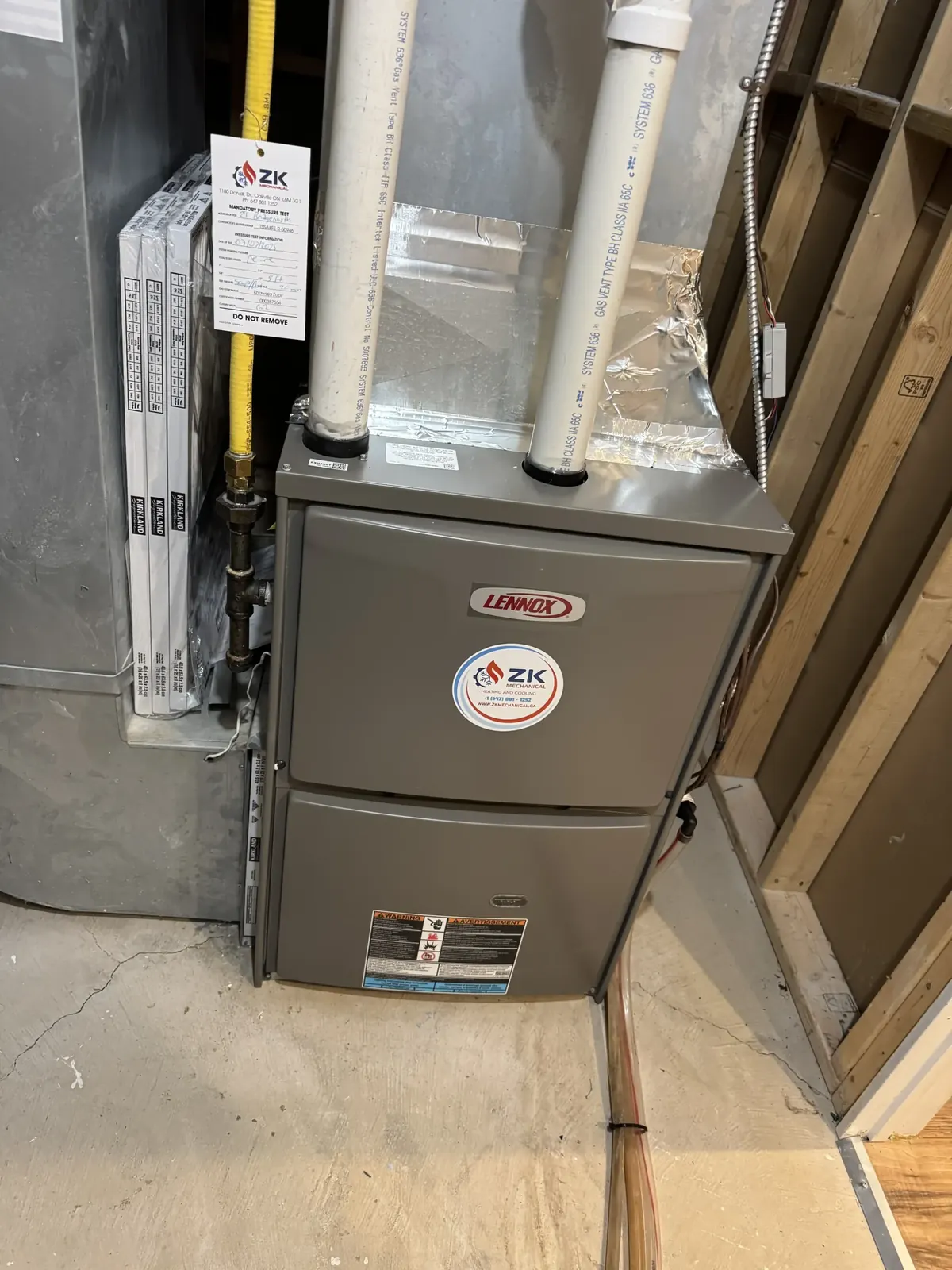
Follow the gas pipe back from the furnace toward the meter — black iron on most installs, or a yellow-jacketed flexible line on newer work. The shut-off is the first valve you meet, mounted so a technician can operate it standing at the unit. Most are a lever you can turn by hand; older houses often have a plug valve with a square head instead, which needs a small wrench and moves through the same quarter turn.
- Handle parallel to the pipe: gas is on.
- Handle at 90 degrees across the pipe: gas to that appliance is off.
- Below the valve there is usually a short capped stub of pipe pointing down. That is the drip leg or sediment trap. It is not a drain and you never need to open it.
- The water heater has its own valve on its own branch. Trace the pipe before turning anything, then label both with tape and a marker so nobody is guessing at midnight.
- Shutting the gas does not shut the electricity. The furnace still has power and the blower can still run.
The service switch is probably what you actually want
Most of the time the control a homeowner is looking for is the service switch — the light switch on the side of the furnace or on a nearby joist, usually with a plain cover plate. Flipping it down stops the furnace completely without touching the gas system, and flipping it back up is something you are allowed to do. Use it for a strange noise, a burning-dust smell, or before you change a filter, and save the gas valve for an actual gas problem.
The meter valve is for emergencies, and Enbridge turns it back on
Outside on the riser ahead of the meter sits a second valve with a rectangular tang and a hole for a padlock. A wrench turns it a quarter turn and shuts the entire house down. That is an emergency control: fire, flood, a vehicle striking the meter, or a leak you have been told to isolate. Once it is off, leave it off. Every gas appliance in the building then has to be purged and relit in the right order, and that is Enbridge's work — an unlit burner quietly filling a basement is exactly the hazard the rule exists to prevent.
In winter there is a second reason to think twice about the meter valve. Closing it stops the furnace and the water heater in the same motion, so the house begins cooling and the plumbing goes on the clock — our guide to keeping pipes from freezing when the heat is out is the next thing to read if you are in that position.
Questions homeowners ask about the gas valve
- The furnace has no heat — should I shut the gas? No. Use the service switch and the thermostat, then book a diagnostic. A furnace that fails to ignite has already closed its own gas valve internally.
- What about a flooded basement? Yes, shut the appliance valve if you can reach it without standing in water, and do not run the furnace afterward. Here is why a flooded furnace gets replaced rather than dried out.
- Can I turn the appliance valve back on myself? Moving the lever is the easy part. If you closed it because of a suspected safety problem, have the appliance checked and proved before it fires again.
- Is there a valve I should never touch? Anything on the utility's side of the meter, and anything sealed, locked or tagged. A tag on a valve was put there by someone who found a hazard.
- My valve is stiff or weeping residue. Old plug valves seize and their packing dries out. Do not lean on it with a cheater bar — have it replaced during a normal service visit rather than during an emergency.
Every ZK Mechanical technician is TSSA-licensed, which is the licence Ontario requires for any work on gas piping or gas-fired appliances. If your shut-off is seized, buried behind finished drywall, or you cannot tell which valve feeds what, we will sort it out on an ordinary service call — furnace repair and service across Burlington, Oakville and Hamilton, or get in touch.