
Quick answer
A water heater is backdrafting when exhaust spills from the draft hood into the room instead of rising up the vent. The signs are melted plastic grommets on top of the tank, soot or scorching at the draft hood, rust and condensation on the top, and CO alarm events. Hold a mirror at the hood with the burner running: fogging means spillage. Stop using it and call a licensed gas technician.
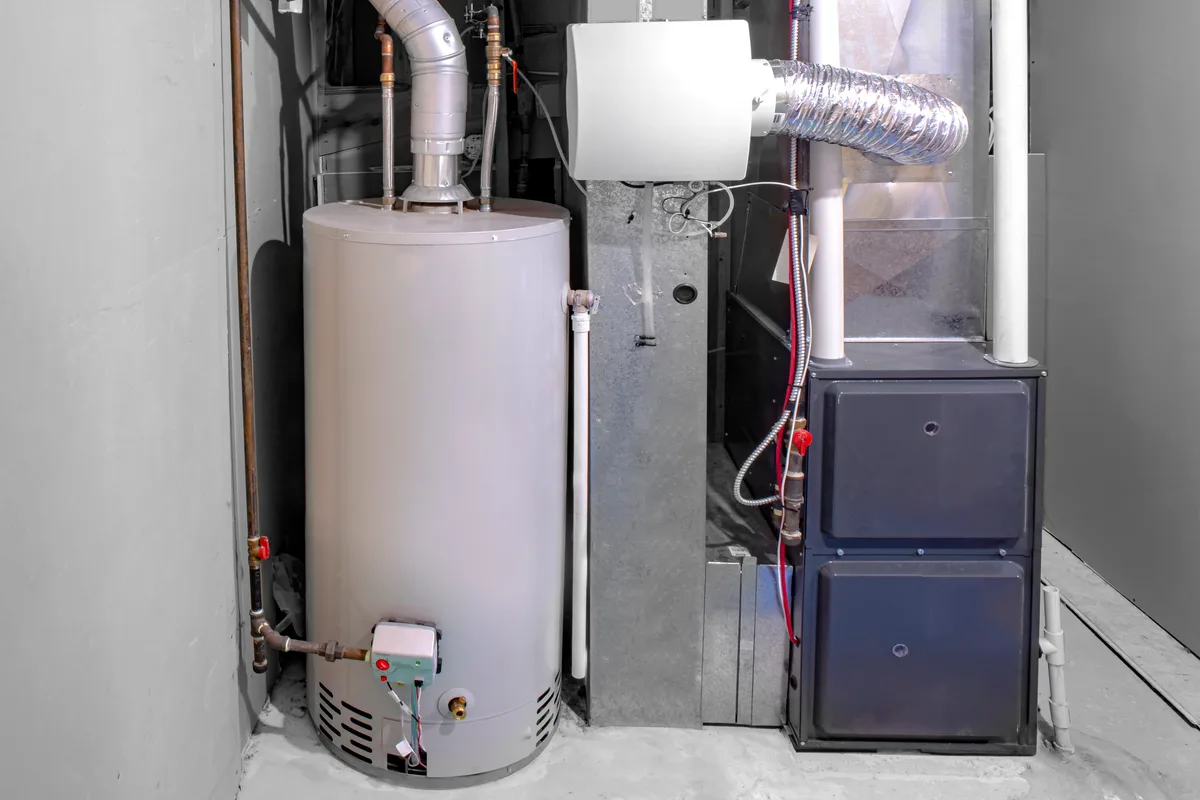
To know if your water heater is backdrafting, look at the top of the tank, not the burner. A conventional gas water heater has no fan: hot exhaust rises on its own through the flue in the middle of the tank, into the draft hood (the open-skirted collar on top) and up the vent. When the chimney cannot pull, that exhaust rolls out from under the hood into the room, carrying heat, water vapour and possibly carbon monoxide.
Signs of backdrafting you can see on the tank
- Melted plastic grommets: the plastic rings around the hot and cold pipe connections on top of the tank soften, sag or drip when hot exhaust washes over them. Almost nothing else on a water heater melts them.
- Soot or scorching at the draft hood: brown or black streaks on the tank top, or on the underside and legs of the hood.
- Rust and condensation on the top: flue gas is wet. When it spills it condenses on the cold-water pipe and the tank top, leaving rust trails, white mineral streaks and corroded fittings.
- Damp air in the utility room: fogged basement windows or sweating pipes whenever the burner runs.
- Carbon monoxide alarm events: an alarm that sounds, or a digital alarm that shows a reading, often while the dryer or range hood is running.
One mark on an old tank may be history: the grommets could have melted under a previous vent arrangement. Two signs together, or any CO alarm event, mean stop and test.
The mirror and smoke test at the draft hood
- Set up the worst case: close windows and exterior doors, then switch on the dryer, the range hood and the bath fans.
- Run a hot tap until the burner lights, and give the vent two or three minutes to warm up.
- Hold a small mirror beside the gap under the draft hood without touching the hot metal. Fog on the glass means moist exhaust is spilling out.
- Or hold a lit incense stick near the gap. Smoke should be pulled in under the hood and up the vent; smoke pushed back toward you is a backdraft.
- Check several points around the hood, since spillage often shows on one side only.
A few seconds of spillage at a cold start can be normal. Spillage that continues once the burner has run for a few minutes is not, and a pass on a calm day with the fans off does not clear a tank that fails with them on. The home test is a screen; a technician measures draft and carbon monoxide with instruments.
Why water heaters backdraft: orphaned chimneys and depressurised houses
The most common cause we see is an orphaned water heater. The old furnace and the water heater shared one masonry chimney, and the furnace's exhaust kept that flue hot. When a high-efficiency furnace went in and vented through the side wall in plastic pipe, the water heater was left alone on a chimney sized for two appliances. Its small flame cannot warm the oversized flue, so the exhaust cools, condenses and stalls.
That history fits 1950s–60s bungalows and 1970s–90s subdivision houses across Burlington, Oakville, Hamilton and Mississauga, where the furnace has been replaced once or twice and the water heater vent was never touched. The other causes:
- A blocked chimney: a bird or animal nest, fallen brick or mortar, a collapsed liner, or a cap iced over in winter.
- A depressurised house: the dryer, range hood, bath fans and central vacuum all push air outdoors. In a house tightened up with new windows and air sealing, the replacement air comes down the easiest opening, which is the water heater vent. A large range hood is the biggest single culprit.
- Vent connector faults: a run that is too flat, has too many elbows, has corroded through, or a draft hood knocked off its legs.
How backdrafting is fixed under CSA B149.1
CSA B149.1, the gas code used in Ontario, requires venting sized for the appliances connected to it, so taking the furnace off a shared chimney means the remaining vent has to be re-evaluated. There are two lasting fixes and one minor one.
- Chimney liner: a continuous metal liner sized for the water heater alone runs inside the masonry chimney and keeps the flue small and warm. Chimney height and roof access drive the price, so chimney liner installation is quoted in writing after a look.
- Power-vent or direct-vent replacement: a fan-assisted or sealed heater vents through the side wall and abandons the chimney. A direct-vent model also draws its combustion air from outdoors, so house pressure stops mattering. Tank replacement runs $1,200–$2,500 installed depending on size and venting, with power-vent water heaters toward the top of that range.
- Vent repair: re-sloping or replacing a connector, or clearing a blockage, falls within the $150–$800 water heater repair range.
A licensed technician who finds a water heater spilling exhaust cannot leave it running as it is. Under TSSA rules the appliance is tagged as unsafe: where the hazard is immediate, the gas to it is shut off on the spot, and otherwise the tag sets a deadline for the repair. The same process applies to any gas appliance, as explained in what a red tag means in Ontario.
When backdrafting is an emergency
If a CO alarm is sounding, or anyone has a headache, nausea or dizziness that eases outdoors, leave the house and call 911 from outside; what to do if a carbon monoxide alarm goes off has the steps. If you have only found the signs, turn the gas control on the tank to OFF and do without hot water until it has been tested.
ZK Mechanical tests draft and carbon monoxide at the hood, inspects the chimney connection and quotes the liner or the replacement in writing before any work starts. For water heater service in Burlington and the surrounding area, call (647) 801-1252 or request a venting check.