
Quick answer
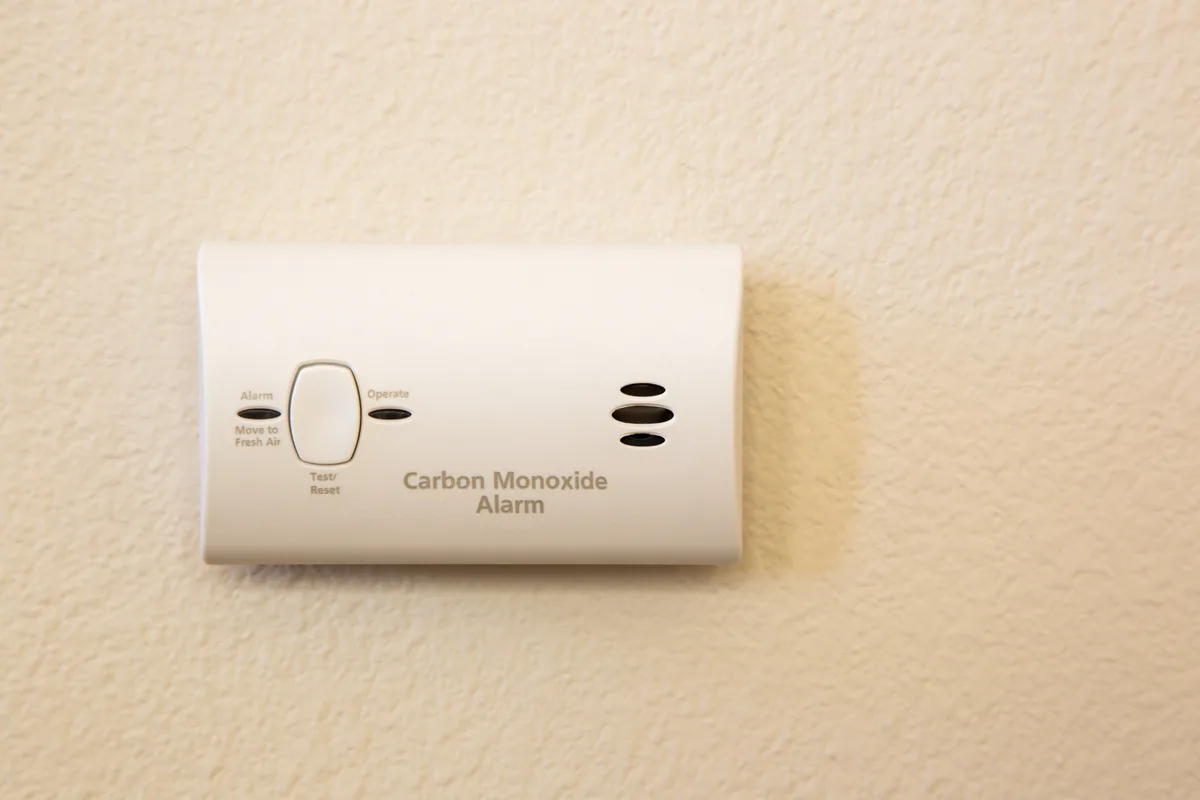
Any carbon monoxide reading above zero in a house needs an explanation. Health Canada's residential guideline is 25 ppm averaged over one hour and 10 ppm over 24 hours. Alarms certified to CSA 6.19 sound at about 70 ppm after 1 to 4 hours, 150 ppm after 10 to 50 minutes and 400 ppm after 4 to 15 minutes. If the alarm sounds, get everyone out and call 911.
The level of carbon monoxide that is dangerous in a house depends on two numbers, not one: the concentration in parts per million (ppm) and how long you breathe it. A high level harms in minutes; a low level harms over hours and days. That is why the guideline for a home is far lower than the level at which an alarm sounds, and why a silent alarm is not proof of clean air.
Carbon monoxide levels in ppm, from normal to life-threatening
- 0 ppm: what a house with properly vented appliances should read. A brief reading of a few ppm while a gas range is in use is common and clears when cooking stops.
- 10 ppm: Health Canada's residential limit for a 24-hour average.
- 25 ppm: Health Canada's residential limit for a one-hour average.
- 30 ppm: a certified alarm is designed to stay silent here, to avoid nuisance alarms.
- 70 ppm: the alarm must sound after 1 to 4 hours. Headache and fatigue are typical after a few hours of exposure.
- 150 ppm: the alarm must sound after 10 to 50 minutes.
- 400 ppm: the alarm must sound after 4 to 15 minutes. This level is life-threatening after a few hours.
- Above 400 ppm: the time to collapse shrinks from hours to minutes as the number climbs.
Infants, pregnant women, older adults and people with heart or lung conditions are affected sooner and at lower levels than a healthy adult. How the symptoms differ from a winter virus is covered in carbon monoxide poisoning versus the flu.
Why a steady 10 to 30 ppm on the display matters when the alarm is silent
A residential alarm is a life-safety device, built to wake you before a dangerous dose, not to police air quality. It weighs concentration against time, which is why 70 ppm takes at least an hour to trigger it. A digital display that sits at roughly 10 to 30 ppm for hours will never set it off, yet that reading is at or above the Health Canada guideline.
A steady low number means a fuel-burning appliance is putting combustion gas into the house right now: a furnace or water heater spilling at the draft hood, a blocked vent, a fireplace, or a car idling in an attached garage. Open windows, turn the fuel-burning appliances off and have them checked the same day. Some alarms show nothing on the live display below 30 ppm, so check the peak-memory button in the manual; a stored peak is evidence too.
Ambient CO and flue-gas CO: the two readings on a technician's analyser
A combustion analyser gives two different carbon monoxide numbers, and they mean different things. Ambient CO is measured in the room air, at the furnace and at the registers. The target is zero, and any reading traceable to an appliance is a fault.
Flue-gas CO is measured with a probe in the vent, where carbon monoxide is expected. A clean-burning gas furnace typically shows a low, stable figure in the tens of ppm. The appliance certification standards cap it at 400 ppm on an air-free basis, meaning corrected for the excess air diluting the sample. A flue reading that climbs through the cycle instead of settling points to a combustion problem, usually dirty burners, wrong gas pressure or a compromised heat exchanger, even when the number is still under the cap.
When a carbon monoxide reading leads to a red tag
No single ppm figure triggers a tag. A TSSA-licensed technician has to judge whether the appliance is an immediate hazard, and the findings that settle it are flue gas spilling into the house, carbon monoxide in the room air that tracks back to the appliance, a cracked heat exchanger, a blocked or disconnected vent, or combustion that cannot be brought back into the manufacturer's range.
An immediate hazard means the gas to that appliance is shut off on the spot. A lesser defect gets a warning tag with a deadline to repair it. The process is explained in what a red tag on a furnace means in Ontario.
What to do at each level
- Alarm sounding: everyone out, then call 911 from outside. The fire department measures the air and tells you when you can go back in. The full sequence is in what to do if a carbon monoxide alarm goes off.
- Symptoms at any reading, such as headache, dizziness, nausea or confusion that eases outdoors: treat it as an alarm.
- A steady reading with no alarm and no symptoms: ventilate, shut the appliances off, and book a combustion test that day.
- A single brief blip near the kitchen during cooking: note it, run the range hood, and watch whether it returns.
Where alarms belong in an Ontario house
Ontario's rule, known as the Hawkins-Gignac Act, requires working carbon monoxide alarms in any home with a fuel-burning appliance, a fireplace or an attached garage. Alarms go beside each sleeping area, and since January 1, 2026 the Ontario Fire Code also requires one on every storey, including the basement. Replace each alarm by the date printed on its back; the sensor wears out even if the test button still beeps. The details are in our guide to Ontario's carbon monoxide detector law.
An alarm tells you there is a problem; a combustion test finds which appliance is causing it. ZK Mechanical installs hardwired and plug-in units through its carbon monoxide detector service and tests furnaces, boilers, water heaters and fireplaces with a calibrated analyser. For a reading you cannot explain, call (647) 801-1252 or book a combustion test.