
Quick answer
Carbon monoxide poisoning feels like the flu without the fever: headache, dizziness, nausea, fatigue and confusion. The tell is the pattern. Everyone in the house, pets included, gets sick at the same time, feels better after leaving, and gets worse again once the furnace, boiler or fireplace has been running. If that fits, get everyone out and call 911.
To tell carbon monoxide poisoning from the flu, look at three things: temperature, timing and place. CO does not cause a fever, it hits the whole household together, and it lifts when you leave the building. Flu brings fever and aches, moves through a family one person at a time over days, and follows you wherever you go.
Carbon monoxide symptoms versus flu symptoms, side by side
- Fever: common with flu, absent with carbon monoxide.
- Headache: both, but a CO headache is dull, constant and often worst on waking.
- Dizziness, confusion or trouble concentrating: typical of CO, unusual with flu.
- Nausea and fatigue: both, which is why the two get mixed up.
- Sore throat, cough, runny nose and swollen glands: flu or a cold, not CO.
- Who is sick: CO affects everyone breathing the same air, including dogs, cats and birds, at roughly the same time. Flu spreads person to person with a gap of a day or more.
- Where it happens: CO symptoms ease outdoors, at work or at school and return at home.
Pets and small children often show it first because they breathe faster for their size. A dog that is suddenly lethargic or vomiting on the same evening that two adults have headaches is a pattern, not a coincidence.
The pattern that points to the furnace, boiler or fireplace
CO symptoms track appliance run time. They build overnight and on the coldest days, when the furnace or boiler cycles longest, and they fade on mild afternoons or when the heat has been off. Headaches that start after the gas fireplace has been on for an evening, or after a car has idled in an attached garage, fit the same picture.
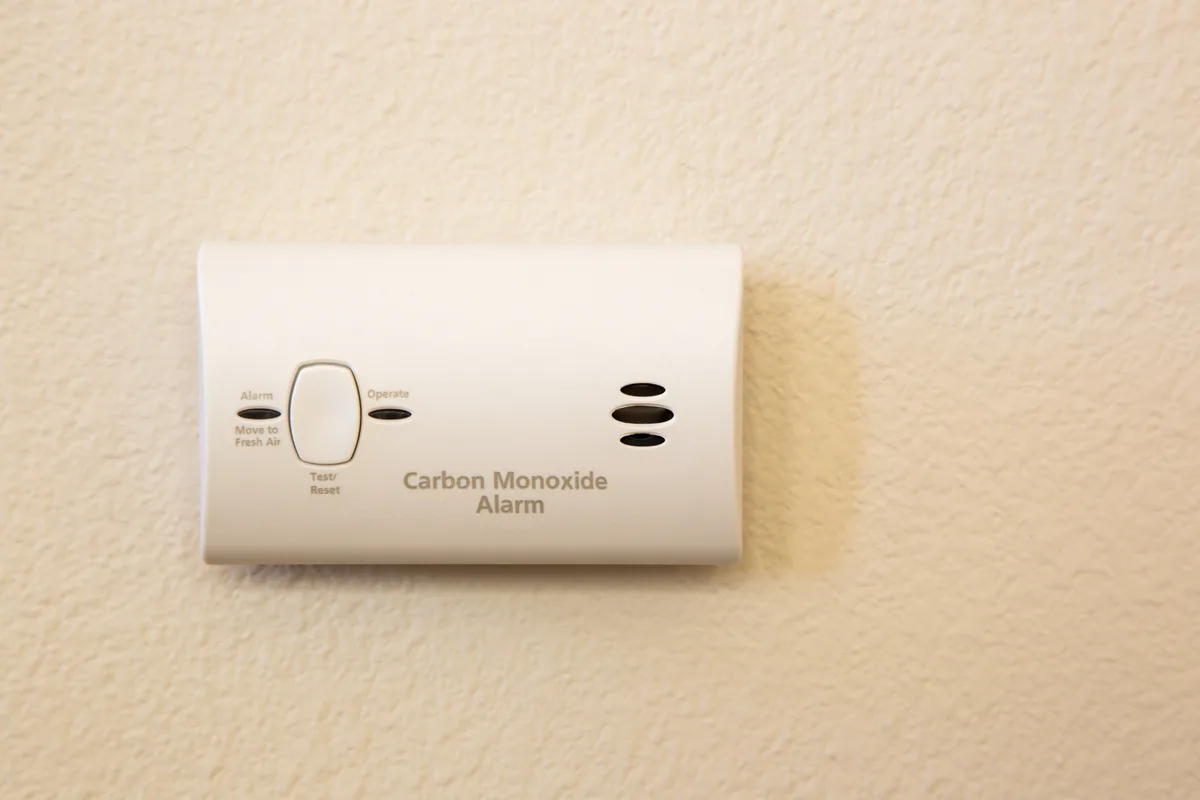
Do not wait for an alarm to agree with you. Residential CO alarms are built to sound on sustained concentrations and are not designed to flag low-level exposure, so mild symptoms with a silent alarm do not rule carbon monoxide out. An alarm past its replacement date, or one sitting in a drawer, rules out nothing at all. The thresholds are covered in what level of carbon monoxide is dangerous.
Ontario's Fire Code requires CO alarms in homes with a fuel-burning appliance, a fireplace or an attached garage, and since January 1, 2026 that means one on every storey, not only outside the bedrooms. The Ontario CO alarm law guide has the detail.
What to do if you suspect carbon monoxide
- Get every person and pet out of the house. Do not stop to open windows or shut appliances off.
- Call 911 from outside. The fire department carries meters and will measure the air.
- Tell the paramedics or the emergency department that you suspect carbon monoxide, so they test for it instead of treating a virus.
- Do not go back in until the fire department says the air is clear.
- Leave the furnace, boiler, water heater and fireplace off until each one has been inspected.
If you are unsure, do not test the theory indoors. Go outside, make the call, and let the fire department's meter settle it. A false alarm costs you some time on the driveway; a missed one is the kind of mistake nobody gets to correct.
What gets inspected before the heat goes back on
Every fuel-burning appliance in the house is inspected by a TSSA-licensed technician before it is used again, not only the one you suspect. On a furnace that means a combustion analysis at the flue, a look at the heat exchanger for cracks, and a check of the vent from the cabinet to the outdoors. On a water heater, boiler or fireplace it means a draft and spillage test with the house fans running.
The usual sources, in the order a technician rules them out:
- A cracked or rusted-through heat exchanger on an older furnace.
- A blocked, disconnected or corroded vent or chimney liner.
- A natural-draft water heater back-drafting when the dryer and range hood run.
- Burners running rich because of dirt or the wrong gas pressure.
- A vehicle, generator or barbecue running in or beside the garage.
A carbon monoxide test and diagnostic visit runs $90–$150, credited toward the repair if you proceed, and most furnace repairs land between $150 and $800. A cracked heat exchanger is the exception at $1,500–$3,000, which on a furnace over 15 years old usually tips the decision toward replacement.
Once the fire department has cleared the house, ZK Mechanical's emergency service line at (647) 801-1252 is answered around the clock, with no overtime or holiday surcharge. For a non-urgent safety check on an older furnace or a chimney-vented water heater, request a visit through the contact page. Other urgent questions sit in the emergency answers hub.