
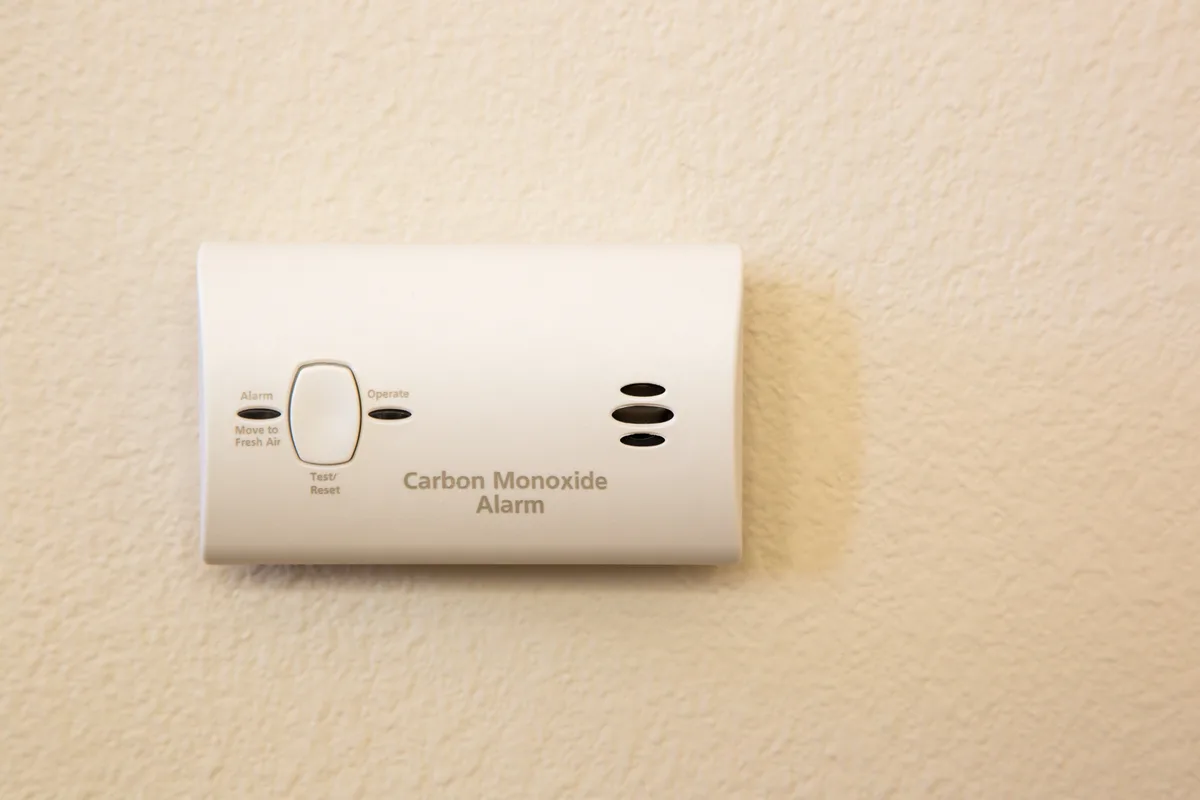
Ontario's carbon monoxide detector law has applied to homes across the province since 15 October 2014. Under Ontario Regulation 194/14, which amended the Ontario Fire Code, a working CO alarm must be installed adjacent to each sleeping area in any home that contains a fuel-burning appliance or has an attached garage. It applies to owners and to landlords, it is enforced by your local fire department, and adjacent to each sleeping area means in the hallway the bedrooms open onto — not tucked in the furnace room two floors down.
Who the Law Applies To
- Any home with a fuel-burning appliance — a gas or oil furnace, a gas or oil water heater, a gas fireplace, a gas range, a wood stove — or with an attached or built-in garage. That covers the overwhelming majority of houses in Burlington, Oakville and Hamilton.
- Owner-occupied and rented alike. In a rental, the landlord is responsible for installing and maintaining the alarms; a tenant who finds one dead or missing should report it in writing and keep a copy.
- Multi-residential buildings carry additional requirements, including alarms in service rooms containing fuel-burning appliances and in suites adjacent to those rooms. Larger buildings were given until 15 October 2015 to comply.
- A genuinely all-electric home with no fuel-burning appliance and no attached garage falls outside the requirement. An alarm is still cheap insurance against a car running in a nearby detached garage or a generator used during an outage.
If you rent out a basement suite or a secondary unit, that unit's sleeping area needs its own alarm, and installing and maintaining it is the owner's job rather than the tenant's. The same applies to the heating equipment serving the suite.
Where the Alarms Go
The requirement is adjacent to each sleeping area, which in practice means the corridor or landing that the bedrooms open onto. In a two-storey house in Millcroft or River Oaks that is the upstairs hallway. In an Aldershot or Hamilton Mountain bungalow it is the bedroom hall. If a finished basement contains a bedroom, that sleeping area needs an alarm of its own regardless of what is upstairs.
- Follow the manufacturer's mounting instructions for height and position. Different models specify differently, and the instructions are part of a compliant installation.
- Keep alarms outside the manufacturer's stated exclusion distances from fuel-burning appliances, bathrooms and supply registers, or you will be chasing nuisance alarms.
- Two extra alarms we recommend even where they are not required: one near the mechanical room, and one in any bedroom directly above an attached garage.
- New construction under the Ontario Building Code generally faces more demanding requirements, including interconnection. A 2000s or newer house in Alton Village, Joshua Creek or Waterdown may already be wired for it — check the panel and the existing devices before adding battery units.
- Combination smoke and CO alarms are permitted, but they have to satisfy the placement rules for both functions, and smoke alarm requirements are separate and cover every storey.
Certification, Lifespan and the Date on the Back
Buy an alarm certified for sale in Canada and check the certification mark on the back rather than trusting a marketplace listing. Then check the other thing on the back, which almost nobody does: the manufacture date.
CO sensors are consumable. Manufacturers typically rate them for seven to ten years from manufacture, and most modern units either print an end-of-life date or emit a distinct end-of-life chirp that people mistake for a low battery. You cannot refresh the sensor — the whole unit gets replaced. An alarm bought when the law came in is now well past its service life, which is the single most common problem we find in basements.
- Press the test button monthly. That confirms the horn and the electronics, not the sensor itself, which is why the manufacture date still matters.
- Change batteries on the schedule in the manual, or buy sealed ten-year battery units and take the job off your list.
- Write the replacement year on the unit in marker when you install it.
- Check every alarm in the house the day the clocks change — it is the only reminder most households reliably act on.
What to Do When It Sounds
Free quotes, written pricing.
- Get everyone outside to fresh air first, including pets. Do not stay indoors to hunt for the source.
- Call 911 or your fire department from outside the house.
- If anyone has a headache, nausea, dizziness, confusion or unusual drowsiness, treat it as a medical emergency and say so on the call.
- Do not go back in until the fire department says the house is clear.
- Before the appliances go back into service, have them inspected by a licensed technician who can run a combustion analysis and find the cause.
The full sequence, including how to tell an end-of-life chirp from a real alarm, is on what to do if a carbon monoxide alarm goes off.
What Actually Produces CO in a Halton or Hamilton House
The law exists because of a short list of failure modes, and most of them are things a technician can find during an annual visit.
- A cracked heat exchanger in an aging furnace, which lets combustion products into the supply air — see how to tell if a heat exchanger is cracked.
- A sidewall vent terminal buried by drifted snow after a lake-effect squall, which blocks the exhaust path.
- A water heater backdrafting down a chimney that became far too large for it when the furnace moved to high-efficiency PVC — the orphaned chimney problem covered in do you need a chimney liner when replacing a furnace.
- A collapsed or deteriorated clay liner in a masonry chimney, common in pre-war brick housing in Westdale, Kerr Village, Dundas and Old Oakville.
- A car or a snowblower warmed up in an attached garage. This is the most common non-appliance source, and it is the reason the attached garage triggers the requirement on its own.
- A gas range used to take the chill off a room, or a barbecue or generator brought into a garage during a power outage. Neither is ever safe indoors.
Our page on whether a furnace can leak carbon monoxide explains what a technician looks for and why a working alarm is the backstop rather than the first line of defence.
Enforcement, and Why Insurers Care Too
The Ontario Fire Code is enforced locally by fire departments under the Fire Protection and Prevention Act. An inspector can order compliance and issue tickets, and more serious proceedings carry substantially larger penalties for individuals and corporations. Landlords should assume a complaint will be inspected.
There is a second reason to keep this tidy. Insurers ask about alarm compliance and about servicing history after a loss, and gaps complicate claims. Keep the annual service invoices, the combustion readings and the purchase dates of the alarms together with your house documents.
A Practical Annual Routine
- At the fall tune-up, ask the technician to run a combustion analysis and to check ambient CO in the mechanical room, not just to change the filter. The readings belong on the invoice so next year's visit has something to compare against.
- Check the manufacture date on every alarm in the house once a year and replace anything approaching its end-of-life date.
- Clear snow from sidewall vent terminals after every significant storm through the winter.
- If you have added a gas fireplace, a garage heater or a secondary suite since the last check, revisit where the alarms are placed.
We supply and install alarms as part of our regular service work, and we would rather have this conversation at a tune-up than at an emergency call. See our carbon monoxide detector service for what an alarm check covers, or book an inspection if anything about your venting or your alarms is unclear.
Frequently asked questions
How many carbon monoxide alarms does an Ontario home need?
At minimum, one adjacent to each sleeping area in a home with a fuel-burning appliance or an attached garage. A bungalow with all bedrooms off one hall needs one there; a house with bedrooms upstairs and a bedroom in the finished basement needs one on each of those levels. Extra alarms near the mechanical room and above an attached garage are sensible additions.
Do carbon monoxide detectors expire?
Yes. The sensing element degrades, and manufacturers generally rate alarms for seven to ten years from the date of manufacture printed on the back. Many units chirp a distinct end-of-life signal that gets mistaken for a low battery. When an alarm reaches its date, the whole device is replaced — there is no sensor refill.
Is the landlord or the tenant responsible for CO alarms in Ontario?
The landlord is responsible for installing and maintaining them under the Fire Code. Tenants should not remove or disable an alarm, and should report a missing, chirping or non-functioning unit to the landlord promptly and in writing. If nothing happens, the local fire department is the body that enforces the requirement.
Where should I not put a carbon monoxide alarm?
Avoid the spots the manufacturer's instructions exclude, which typically include very close to a fuel-burning appliance, inside or right outside a bathroom, directly in front of a supply register, and in unconditioned spaces outside the alarm's rated temperature range. Those locations produce nuisance alarms, and a nuisance alarm is the one that ends up in a drawer.