
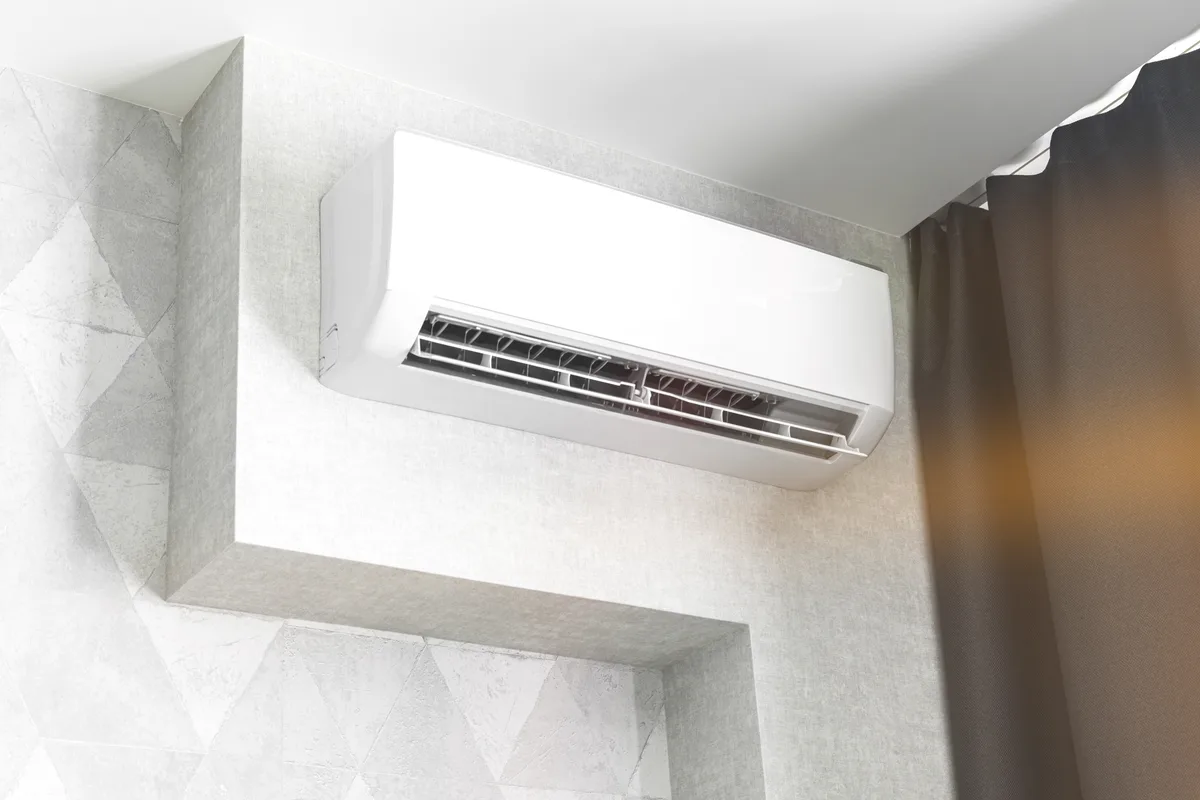
Fujitsu is unusual in giving you a genuinely readable code without any tools. On the indoor head the Operation lamp — the green one — blinks out the first character while the Timer lamp blinks the second, with the Economy lamp lit continuously to show you are in error display rather than normal running. Four blinks followed by two blinks is code 42. Counts above nine roll over into letters, so ten blinks then eleven is AC.
The stored code survives a power cut, which is useful when a fault trips while you are away. To recall it, stop the unit, disconnect power, restore power, and then either press TEST RUN on the remote or hold the MANUAL AUTO button on the indoor unit for ten seconds or more. The display only runs for a couple of minutes after power-up, so be ready to count. A wired remote controller skips all of this and shows the two characters outright.
Codes vary by model and by generation, and Fujitsu is a stronger example of that than most — several two-digit numbers were reused with different meanings between retired and current ranges, so an old list will actively mislead you. The label inside your own unit's panel wins. Model and warranty detail sits on the Fujitsu repair page, the same ground for another ductless make is on the Daikin code guide, and if you are still choosing a system, central air versus ductless is the honest comparison.
Fujitsu heat pump & mini-split codes, decoded
| Code | What it means | Safe? | Try first | When to call |
|---|---|---|---|---|
11 | Serial communication error between indoor and outdoor units. | keep running | Power the system down at the breaker for a minute, then restore it. | Call if it returns after a full power cycle. |
12 | Wired remote controller communication error at the indoor unit. | keep running | Check the controller cable has not been pinched, pulled or stapled through. | Call if the controller is dead or the fault survives a power cycle. |
41 | Room temperature sensor error at the indoor unit. | keep running | Nothing to fix. Expect the room to overshoot or undershoot the setpoint. | Book a visit — this is a small sensor and a short job. |
42 | Indoor unit heat exchanger sensor error. | keep running | Change the filters while you wait; poor airflow makes the symptoms worse. | Book a visit; without this reading the coil loses freeze protection. |
45 | Refrigerant leakage sensor error or sensor deterioration at the indoor unit. | turn it off | Turn the head off. This sensor exists to detect leaks, so a dead one matters. | Call — on newer refrigerants this sensor is part of the safety design. |
51 | Indoor unit fan motor error. | turn it off | Stop the indoor unit and describe the noise when you book. | Call — a stalling blower draws current the board cannot shed. |
53 | Drain pump error at the indoor unit. | turn it off | Turn the head off and check the wall and floor beneath it for water. | Call the same day if water is already showing — condensate ruins drywall fast. |
63 | Inverter error at the outdoor unit. | turn it off | Power down at the breaker and leave it off rather than retrying. | Call. Inverter faults are diagnosed with instruments, not resets. |
65 | IPM error — the outdoor power module has faulted. | turn it off | No homeowner fix. Leave the system off. | Call — this is outdoor power electronics and needs a technician. |
73 | Outdoor unit heat exchanger thermistor error. | keep running | Clear snow, leaves or mulch from around the outdoor coil. | Book before winter — the unit cannot defrost reliably without it. |
74 | Outdoor temperature thermistor error. | keep running | Nothing to do from indoors. Expect defrost timing to drift. | Book it ahead of the cold rather than during it. |
86 | High pressure switch error at the outdoor unit. | turn it off | Turn it off and clear anything crowding the outdoor cabinet. | Call. High pressure is airflow, an overcharge or a failing fan. |
94 | Over current error at the outdoor unit. | turn it off | Leave it off between attempts rather than cycling power repeatedly. | Call the same day; repeated trips are hard on the drive and compressor. |
95 | Compressor motor control error. | turn it off | Shut it down. Do not force restarts to see whether it catches. | Call — the drive cannot run the compressor safely without control feedback. |
97 | Outdoor unit fan motor error. | turn it off | Turn it off and check through the grille for ice, debris or a jammed blade. | Call. Without outdoor airflow the compressor overheats within minutes. |
99 | Four-way valve error — the heating and cooling changeover has failed. | turn it off | Say which mode failed: no heat, or no cooling. | Call. A stuck reversing valve is a heat pump running backwards. |
A1 | Discharge temperature error at the outdoor unit. | turn it off | Shut it down. This is the compressor's high-temperature protection. | Call promptly — high discharge temperature often accompanies a low charge. |
A5 | Low pressure error. | turn it off | Turn it off and look for oily film at the flare joints behind the outdoor unit. | Call. A sealed system reading low has leaked, and running it low does damage. |
AC | Heat sink temperature error at the outdoor unit. | turn it off | Shut it down and check nothing is blocking airflow through the cabinet. | Call if the fault comes back with clean filters and clear grilles. |
The codes that usually mean a real repair
A5 and A1 — a charge problem wearing two different hats
These two frequently arrive together, because a system short of refrigerant runs its compressor hotter than it should while reading low on the suction side. On ductless equipment the leak is most often a flare joint at the outdoor unit rather than a hole in a coil, which is genuinely good news — it is repairable. Leak detection, repair and a recharge to nameplate weight typically runs $300–$800, and we weigh the charge in rather than trusting a gauge alone.
51 and 97 — fan motors at either end of the system
Code 51 is the indoor blower and code 97 is the outdoor propeller, and both usually announce themselves as noise weeks before they become a code. Expect $300–$700 for a fan motor with labour. The reason we push people to call at the noise stage is straightforward: a motor that is merely worn is a motor swap, while a motor that seizes can take the control board with it.
63, 65 and 95 — the inverter and the compressor
This is where a Fujitsu repair conversation gets serious, because the inverter board and the compressor are the two most expensive parts in the system. On a unit past ten years old the sensible comparison is against a new outdoor section rather than a part swap. We measure first and quote both paths, including what a fresh single-zone system costs at $4,000–$7,000 installed, so the decision stays yours.
Licensed technicians, a written price before the repair, no overtime charges.
Common questions
How do I count the blink codes on a Fujitsu indoor unit?
Watch the lamps on the head. The Operation lamp blinks the first character, the Timer lamp blinks the second, and the Economy lamp stays lit throughout to show you are in error display. Four blinks then two blinks is code 42. Counts past nine become letters, so ten blinks then eleven reads as AC. Count each group twice before you trust it.
How do I recall a code after the power went out?
The error memory survives a power cut. Stop the unit, disconnect power, restore it, and then either press TEST RUN on the remote or hold MANUAL AUTO on the indoor unit for at least ten seconds. The stored code only displays for a couple of minutes after power-up, so have a pen ready before you start.
Do Fujitsu codes mean the same thing on every model?
No, and this brand is a stronger example than most. Several two-digit numbers were reused with different meanings between retired ranges and the current one, so an old list does not merely fail to help — it points you at the wrong component. Treat any table, this one included, as a starting point and let the label inside your unit's panel decide.
Can I keep using the other zones if one head shows an error?
Usually yes when the fault is indoor-side. A sensor code in the 40s belongs to that head alone and the rest of the system carries on. Outdoor codes in the 60s, 90s and the A range affect every zone, because they all share one compressor. That distinction is worth checking before assuming the whole system is down.
My mini-split heats an addition — is it safe to leave it off in winter?
If the code says turn it off, then off is safer than running it damaged, but do not leave the space unheated for long in an Ontario January. Use plug-in heat as a stopgap and get the unit looked at quickly, because a freezing addition brings plumbing problems of its own. We cover the area for heat pump service and installation.