
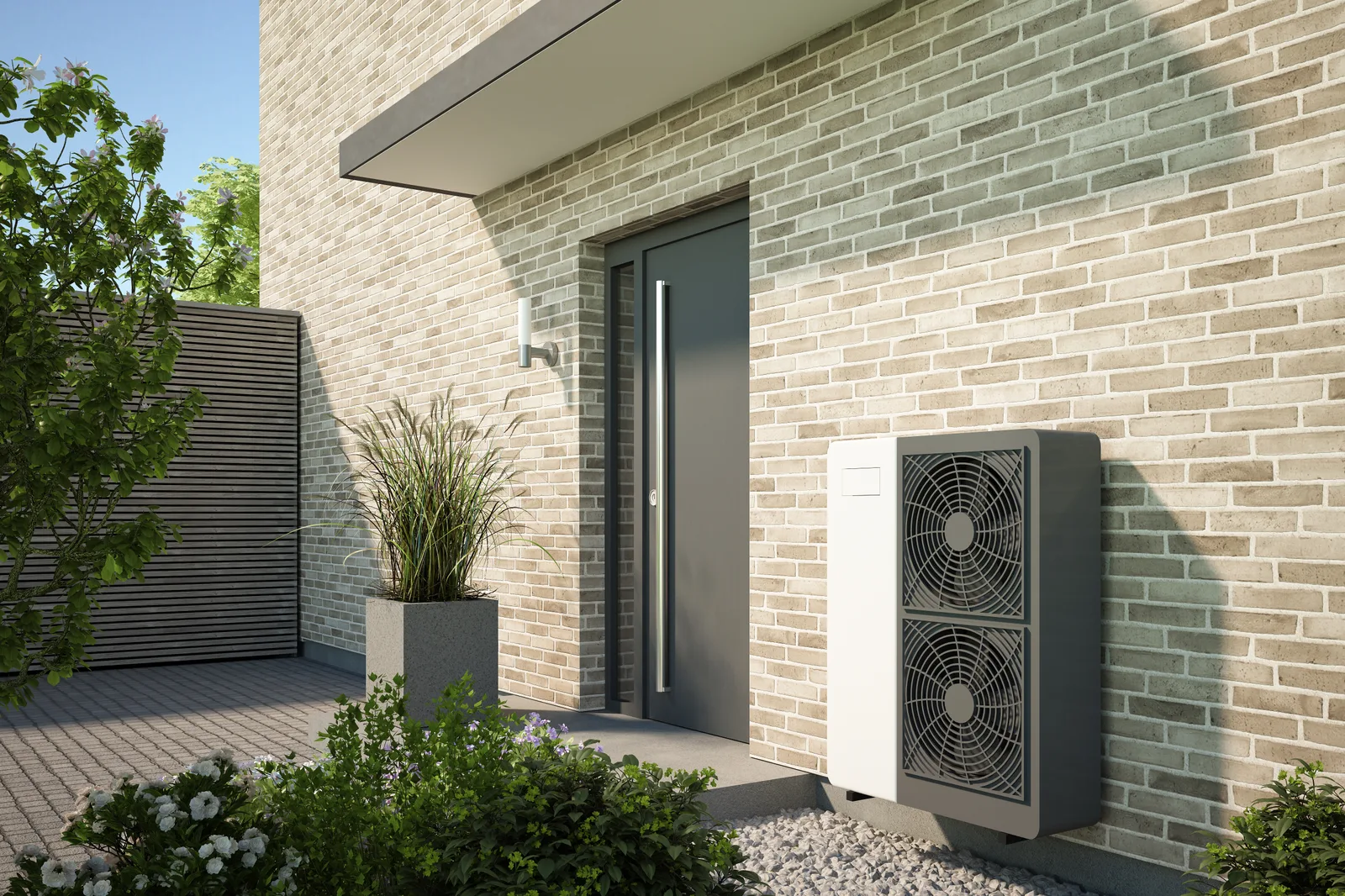
Pulling a code out of a Daikin is a small ritual, and it is worth learning because the head itself will not simply show you. On a wireless remote you hold TIMER CANCEL for about five seconds until 00 appears on the temperature display, then press TIMER CANCEL repeatedly to step through the characters. A short beep or a double beep means the code does not match; the character showing when you get a long beep is the fault. Hold TIMER CANCEL for five seconds to exit, or wait a minute and it exits itself.
Ducted Daikin units with a wired controller behave differently — the operation lamp flashes and the display prompts you to press the menu button, and the code appears from there. There is no homeowner blink-count system on this brand the way there is on some competitors: the indoor LED tells you a fault exists, not which one.
Read the first character before anything else. A and C codes sit in the indoor unit — boards, fan motors, drain control and the thermistors clipped to the coil. E, F, H, J, L and P codes live outdoors with the compressor, its inverter and its sensors. U codes are system-level. Codes vary by model, and the diagnostic label inside your own unit's panel is the authority rather than this page; the ductless codes below also do not transfer to Daikin's ducted or VRV-style products. Model and warranty detail sits on the Daikin repair page, and the equivalent list for another common ductless make is the Mitsubishi code guide.
Daikin heat pump & AC codes, decoded
| Code | What it means | Safe? | Try first | When to call |
|---|---|---|---|---|
A1 | Indoor unit PCB abnormality. | turn it off | Switch the head off, and cut power at the breaker if it will not respond. | Call. An indoor board is diagnosed and replaced, not adjusted. |
A5 | Freeze-up protection or heating peak-cut control has operated. | turn it off | Turn it off and check the indoor filter — a blocked filter freezes a coil quickly. | Call if the filter is clean, or if you can already see ice on the coil. |
A6 | Indoor fan motor or a related circuit is abnormal. | turn it off | Shut the head down. Note any rubbing or grinding you heard beforehand. | Call — a stalled fan draws current it cannot shed and takes the board with it. |
C4 | Indoor heat exchanger thermistor or a related circuit is abnormal. | keep running | No homeowner fix. Watch for weak heating or cooling alongside it. | Book a visit — these thermistors are inexpensive and clip onto the coil. |
C9 | Room temperature thermistor or a related circuit is abnormal. | keep running | Nothing to do. The head may hold temperature poorly until it is fixed. | Book a visit; this sensor is what the unit uses to decide it is finished. |
E1 | Outdoor unit PCB abnormality. | turn it off | Power the system down. One reset attempt is reasonable, no more. | Call. Outdoor boards are model-specific and confirmed off the rating plate. |
E5 | Compressor overload protection has activated. | turn it off | Leave it off and let it cool rather than forcing another start. | Call the same day — this is one of the codes that decides repair against replacement. |
E6 | Compressor lock. | turn it off | Shut it down. Repeated starts against a locked compressor do real damage. | Call. Locked rotors are electrical or mechanical and only measurement separates them. |
E7 | DC fan lock — the outdoor fan is not turning as commanded. | turn it off | Turn it off and look through the grille for ice, debris or a jammed blade. | Call — without outdoor airflow the compressor overheats within minutes. |
EA | Four-way valve abnormality — the heating and cooling changeover has failed. | turn it off | Note whether it blows cold when set to heat, or the reverse. That detail helps. | Call. A stuck reversing valve is a heat pump running the wrong way round. |
F3 | Discharge pipe temperature control has operated — the compressor is running too hot. | turn it off | Switch it off at the remote and leave the system down. | Call. A compressor running this hot is usually short of refrigerant. |
H6 | Compressor position sensor abnormality. | turn it off | No user-side fix. Power down rather than letting it retry. | Call — the drive cannot start the compressor safely without position feedback. |
H9 | Outdoor temperature thermistor or a related circuit is abnormal. | keep running | Nothing to do from inside. Expect defrost timing to be off. | Book it ahead of cold weather rather than during it. |
J3 | Discharge pipe thermistor or a related circuit is abnormal. | turn it off | Turn the system off — this sensor is the compressor's overheat protection. | Call promptly. Running blind on discharge temperature risks the compressor. |
J6 | Outdoor heat exchanger thermistor or a related circuit is abnormal. | keep running | Clear snow, leaves or mulch away from the outdoor coil. | Book a visit before heating season; defrost depends on this reading. |
L4 | Radiation fin temperature rise — the inverter heat sink is overheating. | turn it off | Shut it down and check nothing is blocking airflow through the outdoor cabinet. | Call if it returns once the unit has cooled and the airflow path is clear. |
L5 | Output overcurrent detection on the compressor circuit. | turn it off | Leave it off. Do not keep cycling power to force a start. | Call the same day — this is a drive or compressor fault, and retries make it worse. |
U0 | Refrigerant shortage. | turn it off | Turn it off and look for oily film at the flare connections behind the outdoor unit. | Call. Low charge means a leak, and running low charge cooks the compressor. |
U2 | Low-voltage or over-voltage detection. | turn it off | Check the breaker and whether other circuits misbehaved at the same moment. | Call if there was no storm and it keeps happening. |
U4 | Signal transmission error between the indoor and outdoor units. | keep running | Check the interconnecting cable where it leaves the wall sleeve for damage. | Call — on multi-zone systems this often points at one head or one run of cable. |
The codes that usually mean a real repair
U0 — the charge is low because something is leaking
U0 is the single most common reason we are called to Daikin ductless equipment, and the honest version is that a sealed system does not lose refrigerant through normal use. On mini-splits the leak is very often at a flare connection behind the outdoor unit, made during installation and weeping slowly ever since. Locating it, remaking the joint and recharging to nameplate weight generally lands in the $300–$800 band.
A6 and E7 — fan motors, indoors and out
A6 is the indoor blower wheel and E7 is the outdoor propeller, and both fail the same way: bearings dry out, the motor draws more current, and eventually the control sees an overload and stops. Replacement typically falls between $300–$700 with labour. Catching the noise early genuinely matters, because a fan that is merely loud is a cheaper visit than a fan that has already taken out the board beside it.
E5, E6 and L5 — the compressor and its drive
This trio is where a repair conversation turns into a replacement conversation. Inverter drives and compressors are the two most expensive parts in a ductless system, and on equipment past a decade old the arithmetic often favours a new outdoor unit. We measure before recommending and quote both paths — the heat pump cost guide sets out what a replacement actually runs in Ontario.
Licensed technicians, a written price before the repair, no overtime charges.
Common questions
How do I get the error code out of a Daikin with a wireless remote?
Hold TIMER CANCEL for roughly five seconds until 00 shows on the temperature display, then press TIMER CANCEL repeatedly to step through characters. Short and double beeps mean no match; the long beep marks the stored code. Hold TIMER CANCEL again for five seconds to exit, or leave it and it exits on its own after a minute.
What does the first character of a Daikin code tell me?
It tells you the neighbourhood of the fault before you know anything else. A and C are indoor-side, E, F, H, J, L and P are outdoor and compressor-side, and U codes are system-wide — charge, supply voltage and the communication link. Knowing that much before you call means the right parts are more often already on the truck.
My Daikin is a multi-zone. Which head do I check?
The one that stopped. On a multi-zone system an indoor-side code belongs to that specific head, while an outdoor or U code takes every zone down with it, because they all share one compressor. Telling us which room went first genuinely narrows the diagnosis, particularly on the four- and five-zone systems we see in Oakville additions and finished basements.
Can I run my Daikin with a sensor code showing?
Sensor codes such as C4, C9, H9 and J6 are not dangerous, so the system can usually keep operating until a technician arrives — it just runs less intelligently, and defrost and staging get sloppy. Compressor and pressure codes like E5, E6, F3, L5 and U0 are the opposite: shut the system down and leave it off.
Do these codes apply to every Daikin product?
No. The two-character scheme covers Daikin's ductless residential equipment, and meanings still shift between series and generations. It does not transfer cleanly to Daikin's ducted or commercial-style products, which use their own diagnostics. Check the label inside your own panel, or send us the model number with the code through heat pump service in Oakville and we will look it up properly.