
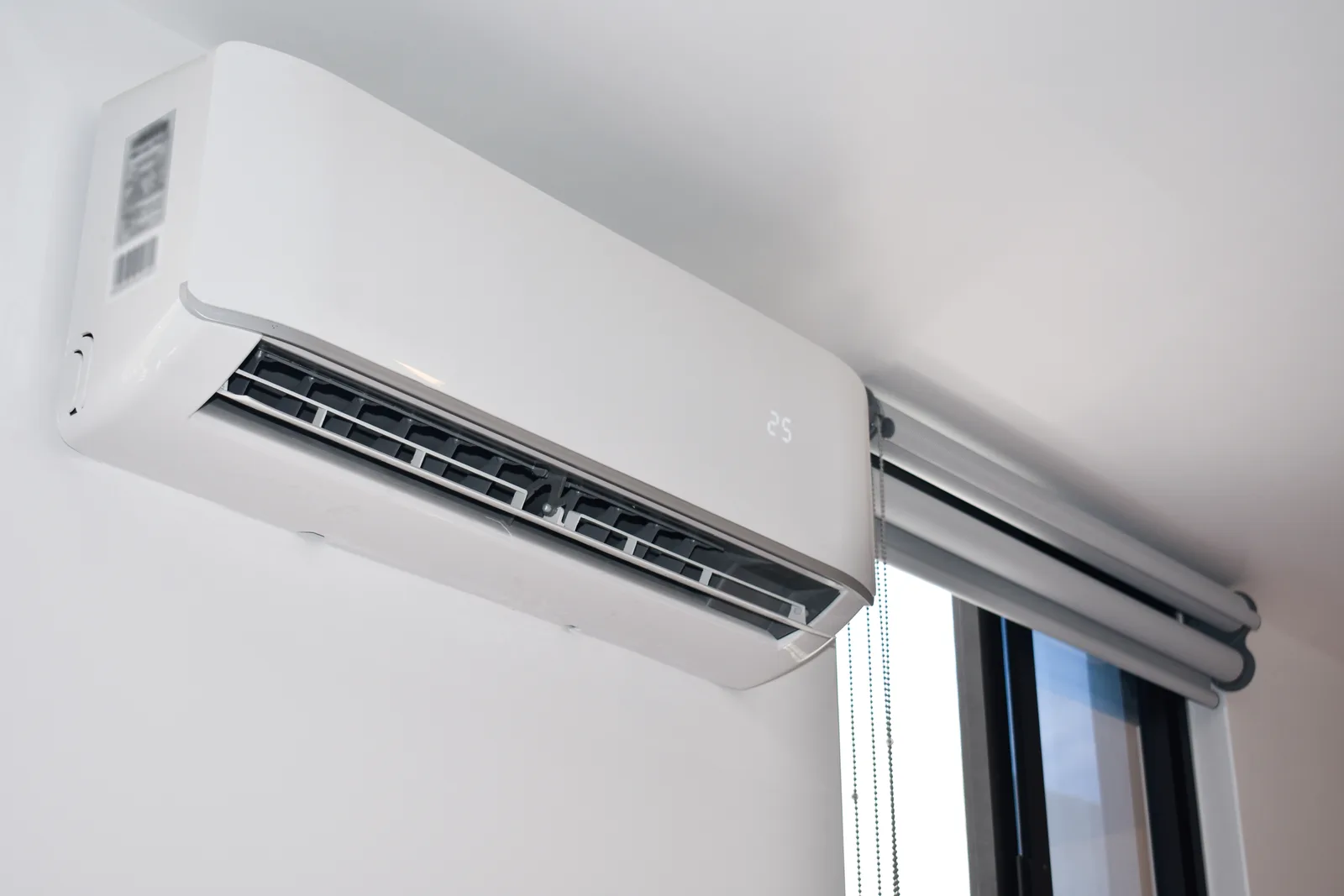
Mitsubishi Electric equipment shows up in GTA homes in two distinct forms, and homeowners often do not realize they are related. The M-Series ductless systems are the wall-mounted heads most people picture. Zuba-Central is the ducted cold-climate system Mitsubishi markets specifically in Canada, designed to feed conventional ductwork the way a furnace does — which makes it a genuine whole-home option rather than a room-by-room fix.
Both use hyper-heating inverter technology, which is Mitsubishi's approach to keeping meaningful heating capacity when the temperature drops well below freezing. Capacity still falls as it gets colder; what the technology changes is how much falls off and how fast. Sizing therefore has to be done against a real heat-loss calculation and your actual design temperature, not a square-footage rule of thumb.
The mistake we correct most often on this brand is multi-zone oversizing. Three heads on one outdoor unit in a small Kerr Village or Bronte home looks generous on paper and then short-cycles miserably through spring and autumn, because the smallest output the system can hold is still more than the house needs. Fewer, correctly sized zones almost always feels better than more zones.
One honest note about warranty length: Mitsubishi's longest coverage terms are tied to its own contractor program, and we are not enrolled in it. If maximum warranty length is your priority, buy the equipment from a contractor who is — and we will happily service it for you afterwards, because there is no rule preventing that. If you want a straight comparison against the other ductless brand we service most, see our Fujitsu heat pump repair page.
Mitsubishi lines we install and service
One outdoor unit and one indoor head, the simplest and most reliable way to heat and cool a room the ductwork never served properly — a converted garage, an addition over a cold crawlspace, a third-floor office. It runs quietly and holds temperature well because the compressor modulates instead of cycling. Installed cost is $4,000–$7,000 for a single zone.
One outdoor unit feeding several indoor heads, each with its own setpoint. Dual-zone systems install for $7,500–$11,000 and three to four zones run $10,000–$16,000. The design work matters more than the equipment here: zones must be sized to the rooms, not distributed evenly for symmetry.
Mitsubishi's Canadian ducted system, connected to conventional ductwork and capable of acting as the primary heat source with or without a gas backup. It suits a house with sound ducts where you want heat pump efficiency without wall-mounted heads in every room. Because it breathes through the ducts you already have, the limiting factor is usually the duct system rather than the equipment — we take a static pressure reading before quoting one as a furnace replacement, since heat pump supply air is cooler than furnace air and needs more of it moving.
Low-profile air handlers that hide in a closet or a soffit, and cassettes that sit flush in a ceiling. They give you the performance of a mini-split without the wall unit in the living room, at the cost of needing somewhere to run a short duct. In a two-storey where the upstairs never cools properly, this is often a better answer than adding heads room by room.
What goes wrong on Mitsubishi equipment
Water dripping from an indoor head — blocked condensate drain
Wall-mounted heads drain by gravity through a small line inside the line-set chase, and that line has no tolerance for a sag, a kink or a biofilm blockage. The first symptom is usually water tracking down the wall below the unit. Clearing and re-pitching the drain is a modest repair; ignoring it means drywall damage well beyond the cost of the service call.
Musty smell on start-up — fouled blower wheel and coil
Ductless indoor units run cold and wet all summer, and the blower wheel and evaporator collect a biological film that announces itself the moment the fan starts. The washable filters do not prevent it. The fix is a proper deep clean of the wheel and coil, which is a scheduled maintenance item on ductless equipment and the single most common complaint we hear about mini-splits generally.
Refrigerant leak at a flare joint
Ductless systems are joined with flare fittings rather than brazed connections, and a flare that was cut poorly or torqued by feel will weep refrigerant for years before the system loses enough capacity to be obvious. You notice it as weak heating in February rather than weak cooling in July. Locating and repairing the leak and weighing in a correct charge runs $300–$800.
Indoor-to-outdoor communication faults
The system stops responding and posts a code — on many M-Series systems it is reported as E6. The usual culprit is the three-conductor link between the indoor and outdoor units: a nicked wire in the chase, a loose terminal, moisture in a junction, or the wrong cable used at install. It reads like a board failure and usually is not, which is why the wiring gets checked first. Our Mitsubishi error code guide covers what the common codes mean.
Mitsubishi warranty: what to know
- Mitsubishi's residential coverage has a base term and a longer registered term, and the longest terms available are linked to the installing contractor's status in Mitsubishi Electric's own program. That is a genuine difference between contractors, and we would rather you hear it from us before you buy than discover it at claim time.
- Register the system yourself with the model and serial numbers from both the indoor and outdoor units — a multi-zone system has several serials, and a claim on one indoor head needs that head's number, not just the outdoor unit's.
- Compressor coverage runs longer than general parts coverage. Neither includes labour beyond the short initial period, so a covered compressor in year eight still comes with a substantial labour bill.
- Coverage requires installation to the manual: a pressure test, a proper evacuation, verified line lengths within the model's limits, and a documented charge adjustment where the line set is longer than the factory charge covers. Refrigerant lost through a badly made flare is not a manufacturing defect.
- Keep the filters clean and the coils serviced. On ductless equipment, denied claims most often follow visible neglect of the indoor unit, which is easy for a technician to photograph and hard to argue with afterwards.
Parts availability in the GTA
Mitsubishi Electric parts come through the manufacturer's Canadian distribution and are well supported in the GTA for current M-Series and Zuba equipment — indoor and outdoor control boards, fan motors, thermistors, drain pans, remote controllers and the wired wall controls are usually a day or two away, and filters and drain components are routine stock. The catch is that boards are model-specific down to the exact indoor head, so we need the model and serial from the sticker under the front flap of each unit before ordering anything; a photo of it saves a trip. Discontinued indoor heads on ten-year-old multi-zone systems are the hard cases, and where a head cannot be matched we will tell you honestly whether a single replacement head can be adapted or whether you are looking at a larger project.
Mitsubishi Heat Pump Error Codes Explained — what each one means and whether it is safe to keep running.
Common questions
What is Zuba-Central and how is it different from a mini-split?
Zuba-Central is Mitsubishi's ducted cold-climate heat pump sold in Canada. Instead of wall-mounted heads it connects to conventional ductwork, so it heats and cools the whole house from a central air handler the way a furnace and AC do. It suits homes with sound ducts; a mini-split suits homes without them, or rooms the ducts never reached.
Why does my mini-split smell musty when it starts up?
Almost always a fouled blower wheel and evaporator coil inside the indoor head. Cleaning the filters helps a little, but the smell lives on the wheel and fins where filters do not reach, and it needs a proper deep clean. Book it before cooling season rather than during it — it is a scheduled job, not an emergency.
Do the outdoor units need to be raised off the ground here?
Yes. A heat pump runs all winter and sheds meltwater every time it defrosts, so the outdoor unit needs to sit well above expected snow depth on a stand or wall bracket with free drainage underneath. Units set flat on a patio slab ice up around the base and then struggle at exactly the moment you need them.
Can you service a Mitsubishi system that a rebate-program contractor installed?
Yes. Servicing your equipment is separate from who sold it, and we take on plenty of systems installed by other companies. Bring us the model and serial numbers and any commissioning paperwork you were left with, and we will pick it up from there — reach us through the contact page.
Is a ductless system worth it compared with central air?
It depends entirely on whether you already have ducts and whether they work. With good ductwork, central equipment usually wins on cost per square foot; without it, ductless avoids a demolition project. Both sides are laid out in is a ductless mini-split worth it in Toronto and our central air versus ductless comparison.