
Quick answer
An AC that keeps turning on and off in runs shorter than about 10 minutes is short cycling. The common causes are a clogged filter icing the coil, a thermostat in the sun or beside a supply register, low refrigerant tripping the low-pressure switch, a dirty outdoor coil tripping the high-pressure switch, and an oversized unit. Change the filter first; pressure faults need gauges.
When your AC keeps turning on and off every few minutes, technicians call it short cycling, and the working definition is a run of less than about 10 minutes. On a warm afternoon a correctly sized system runs for 15 to 20 minutes at a stretch, and much longer in a heat wave. Time three cycles with your phone before anything else: the length of the run and the length of the pause point to the cause.
- Runs 5 to 8 minutes, the house reaches the setpoint, it shuts off normally: the unit is oversized or the thermostat is being fooled.
- Runs 2 to 5 minutes, stops before the setpoint, restarts after a pause: a safety switch is cutting it off, usually on refrigerant pressure.
- Runs a few seconds, clicks off, tries again: an electrical fault such as a failing capacitor or contactor.
- Airflow at the vents gets weaker through each run: the evaporator coil is icing over.
Short-cycling causes you can fix yourself
A clogged filter is first. It starves the coil of warm air, the coil drops below freezing and ices, and the system cuts in and out as the ice builds and partly melts. Replace the filter, set the thermostat to Off with the fan On until the coil has thawed completely, and then test again.
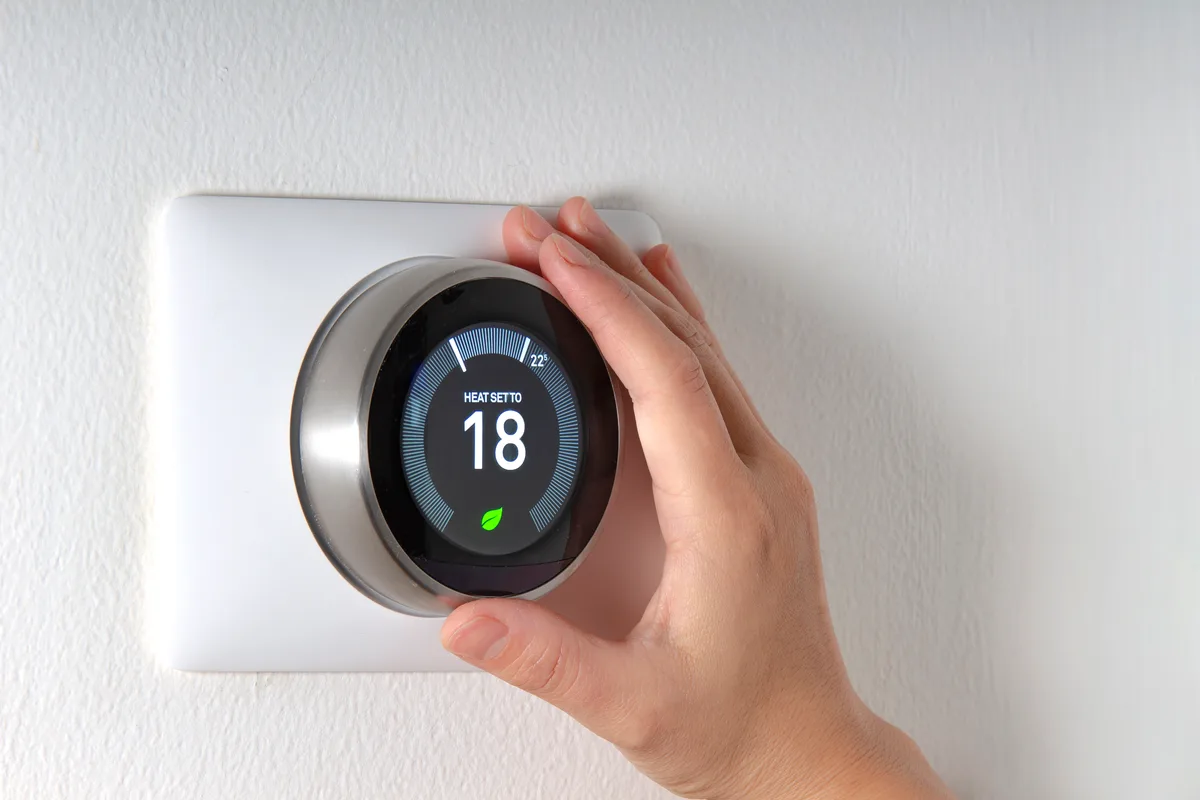
The thermostat's location is second. A thermostat in afternoon sun reads high and starts the AC early; one mounted in the airstream of a supply register feels the cold air almost at once and ends the cycle while the rest of the house is still warm. Close or redirect that register as a test. If the cycles lengthen, the lasting fix is moving the thermostat to an interior wall.
A dirty outdoor coil is third. With the power off at the disconnect, rinse the fins gently from the outside with a garden hose, never a pressure washer. Hosing off an AC condenser explains how to do it without bending the fins.
Short-cycling causes that need gauges
- Low refrigerant. As the charge leaks down, suction pressure falls until the low-pressure switch opens and stops the compressor. Pressure recovers with the unit off, the switch closes and the cycle repeats. The fix is a leak repair, not a top-up.
- High head pressure. A condenser coil clogged beyond what a rinse can clear, a weak fan motor or an overcharge pushes the high side up until the high-pressure switch trips.
- A frozen evaporator that returns with a clean filter. That is low charge, a failing blower or a dirty coil face, and telling them apart takes superheat and static-pressure readings.
- A failing capacitor or contactor. The compressor tries, fails and drops out. Either part is a $150–$350 repair.
The oversized air conditioner
An oversized unit short cycles from the day it is installed. It has more capacity than the house needs, so it drives the temperature down in a few minutes and shuts off, and no repair changes that. The clue is history: it has always behaved this way, and the house feels cold and clammy at the same time.
Sizing is settled by a heat-gain calculation, not by matching the old unit or adding half a ton for safety. Short of replacement, a technician can sometimes lower the blower speed or adjust the thermostat's cycle settings to stretch the runs. If the unit is near the end of its life, a two-stage or variable-speed replacement sized by calculation is the real cure; see what size air conditioner you need.
Why short cycling leaves the house humid and wears parts
An air conditioner removes moisture only after the coil has been cold for several minutes, when water starts running off the fins and down the drain. A cycle that ends at minute six has cooled the air and left the water on the coil, where the blower evaporates it back into the house. Near Lake Ontario, where summer air is already heavy, that is why a short-cycling house sits at 22 °C and still feels sticky. More causes are in why a house stays humid with the AC on.
The wear is electrical and mechanical. A compressor draws several times its running current at each start, and oil that left the compressor needs a long enough run to return. The contactor arcs slightly every time it closes. Every extra start in a day adds to that wear, which is why short-cycling units lose compressors and contactors early.
What it costs to fix a short-cycling AC
The diagnostic visit is $90–$150, credited toward the repair. An AC tune-up with a refrigerant check and coil cleaning is $120–$250 and resolves the dirty-coil cases. A refrigerant leak repair with recharge is $300–$800+.
If a new filter, a clean coil and a register test have not lengthened the cycles, the cause is on the refrigerant or electrical side. ZK Mechanical measures pressures, superheat and capacitor values and tells you which it is before quoting. See AC repair, or get in touch at (647) 801-1252 and mention how long the cycles run.