
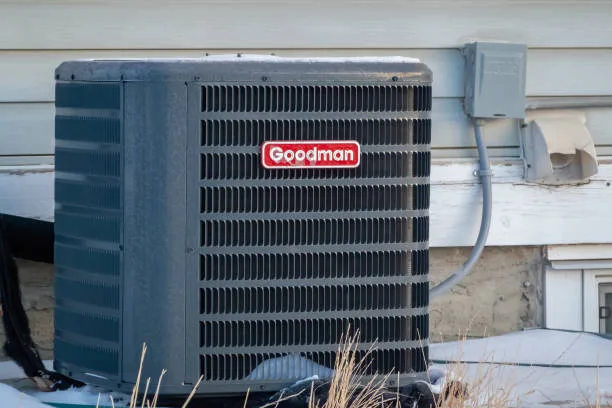
A typical 2,000 sq ft GTA home needs 2.5 to 3 tons of cooling, and the useful starting range is one ton per 500–900 square feet depending on the age and glazing of the house. One ton is 12,000 BTU/hr, and residential equipment comes in 1.5, 2, 2.5, 3, 3.5, 4 and 5 tons. Sizing an air conditioner matters more than sizing a furnace for one reason: an oversized unit does not just waste money, it leaves the house cold and clammy, because it never runs long enough to pull water out of the air.
The Quick Estimate, and Where It Breaks
- Well-insulated post-2010 build with good windows: one ton per 700–900 sq ft
- Typical 1980–2010 house: one ton per 600–700 sq ft
- Pre-1980 house with original windows and modest insulation: one ton per 500–600 sq ft
- Bias toward more coverage per ton — a smaller unit — where the house is shaded, tightly sealed and has modest glazing
- Bias toward less coverage per ton where there are west-facing window walls, vaulted ceilings, or a top floor sitting under a dark roof
Where the rule breaks is orientation. Late-afternoon sun through a large west window is one of the largest single heat gains in a GTA two-storey, which is why identical floor plans in Glen Abbey or River Oaks can want different equipment depending on which way the great room faces. Floor area does not know about the sun.
Why Oversizing Hurts More in Cooling Than in Heating
Cooling does two jobs at once: it lowers air temperature (sensible) and it condenses moisture on the coil (latent). The second one only happens after the coil has been cold and wet for a while, which takes sustained run time.
An oversized condenser hits the thermostat setpoint in five to eight minutes, shuts off, and leaves the moisture in the house. You end up with a thermostat reading 23°C in a home that feels like a basement in August, and people respond by dropping the setpoint further, which makes the cycles shorter still. Undersizing has the opposite failure: long, effective, dehumidifying cycles that fall a degree short on the three or four hottest afternoons of the year. Given a choice between the two, the second is far easier to live with.
Manual J, Manual S and Manual D Are Three Different Jobs
Homeowners hear about Manual J and assume it covers everything. It does not, and knowing the other two gives you better questions to ask.
- Manual J calculates the cooling load: room by room, window by window, with orientation, shading, occupancy, appliance and lighting gains, and infiltration
- Manual S selects the actual equipment against that load using the manufacturer's performance data — including how much of the capacity is sensible versus latent at your design conditions, which is the step that catches a unit that cools well but dehumidifies poorly
- Manual D sizes the duct system to deliver the airflow the selected equipment needs, which is where a 60-year-old trunk in a Kerr Village bungalow becomes part of the conversation
The design conditions come from published climatic data for your municipality rather than a number pulled from memory — the same source used for winter sizing, described in our GTA furnace sizing guide. A proper site visit for this is 30–60 minutes with a tape measure, not a walk-through and a quote from the truck.
Your Ductwork and Blower Set the Ceiling
Free quotes, written pricing.
Cooling airflow is conventionally 400 CFM for every ton of capacity, so a 3-ton condenser expects the indoor blower to move around 1,200 CFM through the ducts you already own. If the duct system cannot pass that at a reasonable static pressure, the extra tonnage exists on paper only — and starved airflow across a cold coil is how evaporators freeze.
If you are keeping an existing furnace, check its blower rating before choosing tonnage. A modern ECM blower generally covers 2.5 to 4 tons; an older single-speed PSC motor was often set up for one specific size. And if the coil is being added to a furnace that is itself near end of life, replacing both at once is usually the cheaper path — bundled installs typically save $1,000–$2,500 because the crew, the sheet metal and the electrical happen once.
Efficiency: Which SEER2 Number to Ask For
Once the size is settled, efficiency is the next line on the quote. SEER2 is the current seasonal rating for cooling equipment, measured under test conditions that better represent real duct static pressure than the old SEER did. For a split central air conditioner, ENERGY STAR certification requires at least 15.2 SEER2 along with 12.0 EER2, so that is a clean threshold to quote against.
Do not let a high SEER2 number substitute for correct sizing. An oversized 17 SEER2 unit will feel worse in an August heatwave than a right-sized 15.2 SEER2 one, because the rating measures energy per unit of cooling delivered, not whether the house ends up comfortable. Get the size right first, then buy as much efficiency as the budget supports.
The Cases That Need More Than a Number
- Two-storey homes with no second-floor return: the upstairs will stay warm no matter what tonnage sits outside. Fix the return path, or add a ductless head, before buying capacity
- West or south glazing walls: consider zoning or a dedicated head for that room rather than oversizing the whole system for one exposure
- Bungalows with a finished basement: the basement will overcool while the main floor lags. Balancing dampers and a return low in the basement matter more than tonnage
- Replacing an R-22 system: the existing line set may be reusable but must be flushed or replaced, and line length and vertical rise both have manufacturer limits worth checking
- Electrical: the condenser nameplate lists minimum circuit ampacity and maximum overcurrent protection. The breaker and disconnect have to match those figures, and the new circuit needs an ESA authorization
- Houses with no ducts at all: ductless is the answer, and it is sized per zone — whether a ductless mini-split is worth it in Toronto covers that decision
Verdict: How to Check Your Installer's Recommendation
Ask three questions. What cooling load did your calculation produce, and at what design condition? What is the sensible capacity of the unit you have selected at that condition? And what airflow will the blower deliver through my existing ductwork? A contractor who can answer all three has sized your house. One who says "you have 2,000 square feet, you need three tons" has sized a spreadsheet.
If the recommendation is a full size larger than your own estimate and the reasoning is comfort on hot days, push back and ask about a two-stage or inverter unit instead. Those run at reduced capacity most of the season and step up only when the weather demands it, which is the correct way to buy insurance against a heatwave without living in a clammy house for the other 80 days of summer.
ZK Mechanical sizes every install with a cooling load calculation, checks blower airflow against the tonnage, and inspects ductwork before quoting. We fit central air conditioners and ductless cooling systems across Burlington, Oakville, Hamilton and the wider GTA. Send us your floor area, build year and which way the main windows face for a free quote.
Frequently asked questions
How many tons of AC do I need for a 2,000 sq ft house?
A typical 2,000 sq ft GTA home built 1980–2010 needs roughly 2.5 to 3 tons of cooling. Newer well-insulated homes may need only 2.5 tons. Older or top-floor-heavy homes can need 3 to 3.5 tons. Manual J calculation is the only way to be certain — sizing by square footage alone misses window orientation, infiltration, and home layout.
Is it better to undersize or oversize an AC?
Slight undersizing is preferable to oversizing for AC. Undersized units run longer cycles that properly dehumidify, just barely keeping up on the hottest 5 days. Oversized units cool fast but skip dehumidification, leaving the home sticky despite a cool thermostat reading. The best solution is a two-stage or variable-capacity AC sized correctly to the calculated load.
Can my existing furnace blower handle a new AC?
Generally yes, but verify CFM. Modern ECM-blower furnaces handle 2.5 to 4 tons of cooling. Older PSC-motor furnaces are typically rated for a single AC size. If your furnace is over 12 years old or has a single-speed blower, match the AC to the furnace's rated CFM, or replace both at the same time for matched performance.
Why does my old AC keep up but a 'right-sized' one feels weaker?
Old ACs were typically oversized by 25–50%. They cool fast and feel powerful but waste energy and don't dehumidify well. A correctly sized modern unit runs longer at lower output, which is more efficient and produces better humidity control. The slower cooling response is a feature, not a bug — stable comfort over peak performance.
Should I get a single-stage, two-stage, or inverter AC?
Single-stage cycles fully on and off and is the cheapest to buy — adequate where budget decides it. Two-stage spends most of the season near 65% capacity, which gives noticeably better humidity control through longer cycles. Inverter units modulate continuously and hold the steadiest temperature and humidity, at a premium price. For most GTA homes two-stage is the sweet spot; inverter earns its cost where humidity or uneven cooling is the complaint.