
Quick answer
When the outside AC unit is not running but the inside fan is, the outdoor unit has lost either its 240 V power or its 24 V signal. Check for a tripped double-pole breaker, a pulled or blown disconnect beside the condenser, and water in the drain pan tripping the float switch. Reset the breaker once; if it trips again, leave it off and call.
If your outside AC unit is not running but the inside is, the two halves of the system are showing you that they sit on separate circuits. The furnace blower runs on its own 120 V supply and starts whenever the thermostat asks for the fan. The outdoor unit needs two things the blower does not: 240 V from its own breaker, and a 24 V signal carried on a thin two-wire cable from the furnace. Lose either one and you get air from the vents with no cooling in it.
Start with the power: the breaker and the disconnect
- The breaker. The condenser is on a double-pole breaker, two handles tied together, usually labelled AC or A/C. A tripped breaker sits between On and Off; push it fully Off, then On. One reset is the limit.
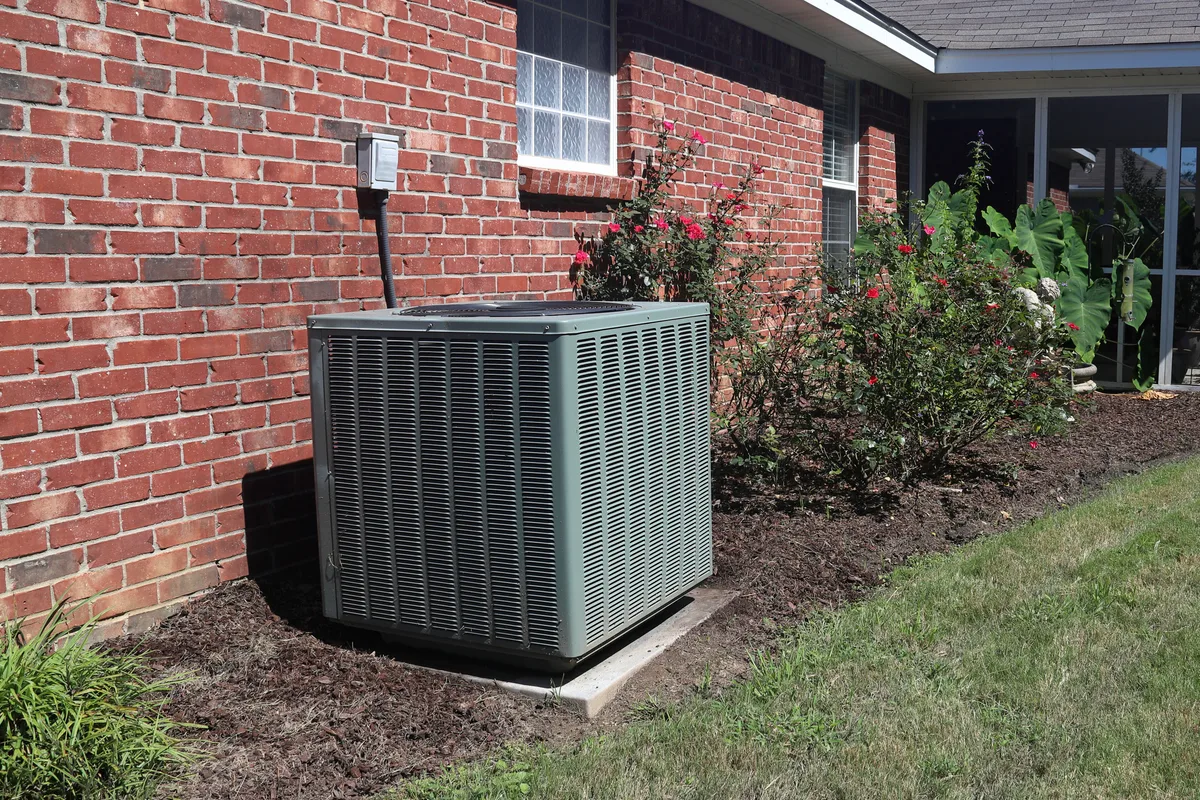
- The disconnect. The grey box on the wall next to the outdoor unit holds either a switch or a pull-out block. Pull-outs get removed for cleaning and put back upside down, which on many models is the Off position, or they get left out altogether.
- Fuses in the disconnect. Fused disconnects hold two cartridge fuses. One blown fuse leaves the unit dead or humming, and it blew for a reason.
Fused disconnects are more common on older installations, and after decades outdoors their clips corrode and run hot. Discolouration or a melted smell at that box is a reason to stop and call rather than swap a fuse.
Then the signal: the low-voltage wire to the outdoor unit
The 24 V cable runs from the furnace control board, out through the wall with the copper lines, to the contactor in the condenser. It is thin, it is exposed for the last metre, and it is the most fragile part of the system. A string trimmer nicks it at the base of the unit, mice and squirrels chew it, and sun-baked insulation cracks where it bends. A break means the contactor never gets told to close, while a short between the two conductors blows the fuse on the furnace board.
You can look along the cable for a cut or bare copper without touching it. Splicing or replacing it is quick work for a technician; the important part is finding out whether the short also took out the fuse or the transformer.
The float switch: a blocked drain shuts off cooling on purpose
Many furnace coils have a condensate float switch, a safety switch, in the drain pan or the drain line. When the drain blocks with slime and the water rises, the float lifts and opens the cooling signal, which stops the outdoor unit and leaves the blower running. It is doing its job: the alternative is water through the furnace and across the floor.
Look for water standing in the pan or the trap, or a small device on the drain fitting with two wires on it. Clearing the line restores cooling, and how to unclog an AC drain line covers the method. If it blocks every summer, a proper drain line cleaning runs $150–$350.
Faults that need a technician: contactor coil and the board fuse
- Failed contactor coil. The contactor is an electromagnet; when its 24 V coil burns open, the signal arrives and nothing pulls in. Replacement is $150–$350.
- Blown fuse on the furnace control board. Most boards carry a 3 A or 5 A automotive-style blade fuse protecting the 24 V circuit. Swapping it is easy, and pointless until the short that blew it is found; a second fuse will go the same way.
- Failed transformer. With no 24 V at all, the thermostat may be blank as well, and neither half of the system responds properly.
- Failed capacitor. If the outdoor unit hums and nothing turns, the capacitor is the usual cause, at $150–$350.
Where the ESA line is, and what to do while you wait
Resetting a breaker once and pushing a disconnect back in are homeowner jobs. Past that point it is electrical work. In Ontario, wiring repairs on the 240 V circuit, a replacement disconnect or a new breaker fall under the Electrical Safety Authority's rules and belong with a licensed contractor. A breaker that trips a second time is reporting a short or a failing compressor behind it, and why an AC trips the breaker explains what that usually turns out to be.
Set the thermostat to Off. Running the blower alone does no harm, but leaving the thermostat calling for cooling keeps 24 V on a circuit that may be shorted. Write down what you found: breaker position, disconnect in or out, water in the pan, any hum from the outdoor unit. Those four notes shorten the diagnosis.
ZK Mechanical charges $90–$150 for the diagnostic visit and folds it into the repair. We trace the 24 V circuit from the board to the contactor before replacing any part, so a chewed wire is not billed as a new contactor. Read more on AC repair or book a visit; the phone line is (647) 801-1252.