
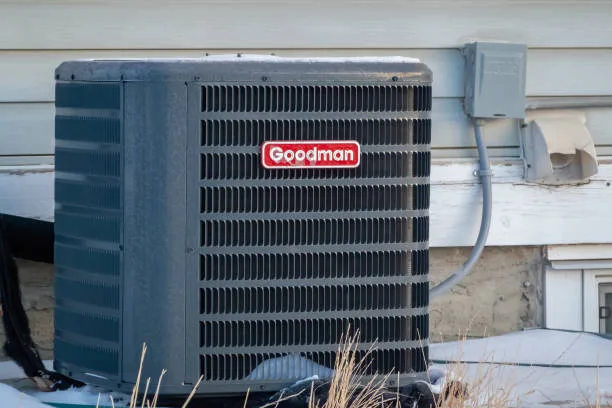
Lakefront humidity in Oakville and Burlington changes how an air conditioner should be sized, and it pushes in the opposite direction to most people's instinct: close to the water you usually want a smaller unit, not a bigger one. The onshore breeze keeps afternoon temperatures down along Lakeshore Road while doing nothing at all about the moisture in the air, so the heat load falls and the moisture load does not. Pick equipment by square footage and you land oversized, cycle short, and end up with a house that is cold and damp at the same time.
Two Loads, Not One: Temperature and Moisture
An air conditioner does two separate jobs. The sensible load is lowering the air temperature. The latent load is pulling water vapour out of that air by condensing it on a cold coil and sending it down the drain. They are measured separately in a proper load calculation, and equipment is rated for both.
The catch is that moisture removal only happens while the coil has been cold and air has been moving across it for a sustained period. The first few minutes of a cycle mostly cool the metal. A system that reaches setpoint and stops after six minutes has barely started dehumidifying, no matter how many tons it is.
What the Lake Actually Does to a House South of the QEW
- Lake Ontario warms slowly. Through late spring and early summer the water stays far colder than the air, and on hot afternoons an onshore breeze develops that keeps Bronte, Coronation Park, Old Oakville, Kerr Village, Roseland and downtown Burlington several degrees below what inland Alton Village, north Glen Abbey or Milton are recording on the same day.
- That breeze arrives wet. It is cool air with a high dew point, so the relief you feel outdoors is temperature relief only — the moisture load on the house is unchanged or worse.
- Mornings hold fog and heavy dew along the shoreline well into June, and everything porous in the house — carpet, upholstery, drywall, stored paper — takes moisture on and gives it back in the evening once the breeze drops.
- Older lakefront houses have below-grade basements sitting in ground that stays cool all summer. Warm humid air meeting a cool foundation wall condenses on it, which is the real source of the musty smell that usually gets blamed on the air conditioner.
- The same house built a few kilometres inland runs a higher afternoon temperature and a slightly lower moisture load, which is why one sizing rule cannot serve both ends of the same city.
Why an Oversized Air Conditioner Makes a Damp House Worse
An oversized unit drives the air temperature to setpoint quickly, satisfies the thermostat, and shuts off long before the coil has drained any meaningful amount of water. You get the temperature you asked for and none of the dryness, so the house feels clammy at 22°C. The usual reaction is to drop the thermostat further, which costs money and makes the cycles even shorter.
- Cooling cycles that end after well under 10 minutes on a hot afternoon, when a right-sized system on a July day runs 15 to 20 minutes at a stretch — the first several minutes of any cycle only chill the coil metal, so a short cycle removes almost no water.
- Cool rooms that still feel sticky, and bedding or towels that never quite dry out.
- Little or no water coming from the condensate drain on a humid day, which is the most direct evidence there is.
- A musty edge to the air, and mildew appearing on basement surfaces and in closets on outside walls.
- Short cycling is also hard on the compressor, so the oversized unit does not even last as long as the right one would.
How We Size an Air Conditioner in Roseland, Bronte or Old Oakville
- Run a full heat gain calculation on the actual house: orientation, glazing area and glass type, shading, insulation levels, air tightness, and the exposure a lakefront lot with no windbreak really gets.
- Treat the existing equipment as evidence rather than as a target. If the old unit ran nearly constantly and the house was still humid, it was not too small — the ducts or the moisture sources were the problem.
- Measure what the duct system can actually deliver. A larger coil cannot help a return that cannot feed it, and adding capacity to a starved system just moves the bottleneck.
- Set the blower toward the lower end of the manufacturer's airflow range per ton for humid conditions. Slower air across the coil means a colder coil surface and more water removed, at a small cost in raw cooling capacity.
- Size to the calculated load and then choose the nearest available equipment size — near the lake that usually means rounding down rather than up.
- Confirm the indoor coil is a matched, listed combination with the outdoor unit, because a mismatched pair changes both capacity and moisture removal.
Free quotes, written pricing.
The general method, without the lakefront correction, is laid out in our AC sizing guide. What changes south of the QEW is the ratio between the two loads, not the arithmetic.
Equipment That Dehumidifies Instead of Just Cooling
If there is one equipment decision that matters most for a damp lakefront house, it is variable capacity. A two-stage or inverter-driven condenser spends most of the season running at part load for long stretches instead of blasting and stopping, which is precisely the run-time profile that removes water. It also holds a steadier temperature, which people notice more than they expect.
- A variable-speed indoor blower, so the system can drop airflow deliberately when the thermostat calls for dehumidification.
- A thermostat with an actual humidity target and a dehumidify mode, not just a temperature setpoint and a fan switch.
- Sealed return ductwork. A return running through a damp basement or crawl space pulls humid air straight into the system, and no amount of capacity fixes that.
- Efficiency ratings tell you about running cost, not about dryness. A high-efficiency single-stage unit that is a size too large still short-cycles and still leaves the house damp.
When a Dehumidifier Beats a Bigger Air Conditioner
When the house is already at the temperature you want and still feels damp, more cooling capacity is the wrong tool. A ducted whole-home dehumidifier at $1,500–$3,000 installed removes moisture without overcooling the house, and it keeps working in shoulder season when it is muggy outside but too cool to run the air conditioner at all — exactly the September pattern along the Oakville and Burlington shoreline.
It is also the right answer for a finished lower level in a Roseland or Bronte bungalow, where the moisture is coming through the foundation rather than through the windows. Cooling that space harder just makes the walls colder and the condensation worse. See whole-home dehumidifiers for how they tie into the existing ductwork, and why a house stays humid with the AC on for the diagnostic order we work through.
If the Same Equipment Also Has to Heat
Sizing gets harder the moment cooling and heating share one machine. A cold-climate heat pump chosen to carry the winter heat loss of a lakefront two-storey is frequently larger than that house needs for cooling in July, which reintroduces the oversizing problem in the season where humidity matters most.
Two ways out. Choose an inverter-driven unit with a wide turndown range, so the same equipment can run at a fraction of capacity on a humid August afternoon. Or go dual fuel and let the gas furnace carry the coldest hours, which frees you to size the heat pump closer to the cooling load. Either way, the July moisture load belongs in the sizing conversation from the start, not as an afterthought once the January number has been settled.
We work both sides of Bronte Creek from the shop on North Service Road, and on a first visit to a damp lakefront house we would rather measure the load and the ductwork than talk about tonnage. Start with air conditioning in Oakville or air conditioning in Burlington, or send us the details of your home and we will tell you honestly whether the answer is a smaller unit, better ducts, or a dehumidifier.
Frequently asked questions
Should my air conditioner be smaller because I live near the lake?
Often, yes. The lake breeze holds down afternoon temperatures near the shoreline, which lowers the cooling load, while the moisture load stays high. Sizing to a calculated heat gain rather than to square footage usually produces a smaller unit that runs longer and dehumidifies properly.
My house is cold but sticky. Is the AC too small?
Almost always the opposite. A unit that reaches setpoint and shuts off quickly never runs long enough to condense water out of the air. Check how long the cycles last and whether the condensate drain is producing water on a humid day.
Will a bigger air conditioner fix a humid basement?
No. Basement dampness in a lakefront home usually comes through the foundation from cool, moist ground, and more cooling makes those surfaces colder and the condensation worse. A dedicated dehumidifier tied into the ductwork is the correct tool.
Is a variable-speed system worth the extra money here?
For a home south of the QEW with a real humidity problem, it is the equipment upgrade we recommend most confidently. Long part-load cycles remove far more moisture than a single-stage unit of the same capacity, and the house holds a steadier temperature.
What indoor humidity should I aim for in summer?
Aim for 45 to 55 percent relative humidity in summer: comfortable at 22 to 24°C, and low enough to keep mould and dust mites in check. A cheap hygrometer in the main living space settles the argument. If the temperature is right and the humidity sits well above that band, the problem is run time or moisture load, not cooling capacity.