
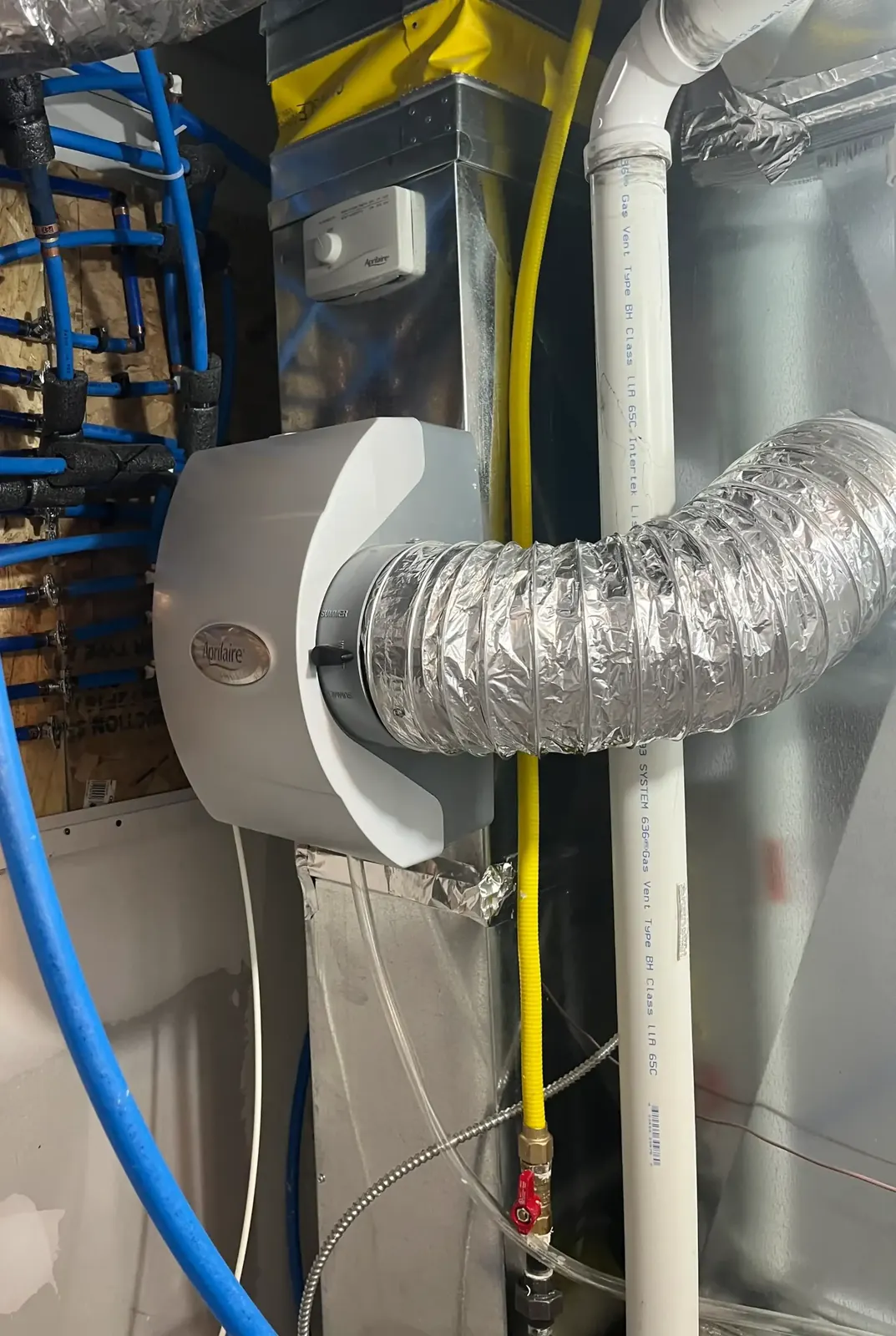
A bungalow furnace replacement in Aldershot is usually less about the furnace than about the ductwork it bolts onto. The streets off Plains Road, running from the LaSalle Park waterfront up toward the Royal Botanical Gardens and the Burlington–Hamilton boundary, are dominated by 1950s and 1960s bungalows and side-splits on generous lots, and most still run the trunk-and-branch system the original furnace was designed around. A new furnace on an untouched sixty-year-old duct layout will be quieter and cheaper to run — but it will not fix the back bedroom.
What Aldershot Bungalows Have in Common
- A single-storey plan of roughly 1,000 to 1,400 square feet on the main floor, almost always over a full basement.
- One large return grille in the central hallway, and no return duct in any bedroom.
- Rectangular trunk ducts hung tight under the joists with round branches feeding floor or baseboard registers.
- A masonry chimney, often on a gable end wall, that historically vented both the furnace and the water heater.
- Wide side yards by current standards, which means the outdoor unit for air conditioning has somewhere sensible to go without a negotiation over setbacks.
- Later additions — a rear family room, a sunroom, or a carport closed in as living space — fed by one long branch that was never going to be enough.
The Existing Furnace Is Almost Always Oversized
The original equipment was sized for a draughty, barely insulated house burning fuel through a much less efficient appliance. Since then most of these bungalows have picked up attic insulation, replacement windows and a good deal of accidental air sealing, so the actual heat loss today is far below what the old nameplate suggests. Replacing like for like on input rating carries sixty years of obsolete assumptions forward.
Oversizing is not a harmless margin of safety. It produces short cycles and temperature swings, a noticeable whoosh at every start-up, and a blower moving more air than the old branches can pass. It also hurts in summer, because the same air handler drives the cooling coil and a system that cannot run long cycles cannot pull moisture out of the house. The honest method is a heat loss calculation on the house as it stands today — the reasoning is set out in can a furnace be too big for my house.
Ductwork: What to Keep, What to Fix, What to Replace
Keep the trunks, fix the returns. Galvanised sheet metal does not wear out, and the main rectangular runs in an Aldershot bungalow are usually sound and reasonably sized for a modern furnace. Almost every comfort complaint in these houses traces back to return air rather than supply.
- Fix: seal the plenum and the first joints with mastic or foil tape rather than cloth duct tape, which dries out and lets go. Leakage at the furnace is leakage you paid to heat.
- Fix: give the bedrooms a return path. A dedicated return duct is best; where the wall cavity will not allow it, a transfer grille or a jump duct over the door does most of the job for a fraction of the disruption.
- Fix: fit balancing dampers on the branches. In a bungalow the register nearest the furnace takes far more than its share, and that is why the far end of the house is cold.
- Replace: crushed runs, branches added at awkward angles during a renovation, and anything undersized that was extended to an addition.
- Add: a proper media filter cabinet. Most of these systems have a one-inch slot at the return drop; a four- or five-inch cabinet needs a bit more length there, which a bungalow basement usually has. It also means changing the filter two or three times a year rather than monthly.
Where the duct system is genuinely past saving, replacing it is a defined job with a defined price, and it belongs on the quote as its own line rather than buried in an allowance — see ductwork installation.
Adding or Replacing Central Air on a Bungalow
Free quotes, written pricing.
A bungalow is one of the easiest houses in Ontario to air condition. Everything is on one floor, the duct runs are short, and there is no stack effect fighting the supply the way there is in a two-storey. The evaporator coil sits on the furnace plenum, the line set follows the basement joists to an exterior wall, and the condenser goes on a pad beside the house.
The catch is the return again: a cooling coil adds resistance to the airflow, so a duct system that was merely adequate on heat can feel weak on cooling. That is the moment to deal with the return, not two summers later. Do not simply match the tonnage of the old condenser either — Aldershot fronts onto Burlington Bay and the moisture that comes with the water changes the sizing math, which we cover in lakefront humidity and AC sizing. If both units are near the end of their lives, doing them together typically saves $1,000–$2,500 versus two separate installs, because the labour and the sheet-metal transitions overlap.
Basements, Sunrooms and Closed-In Carports
The basement is the most-used bonus space in an Aldershot bungalow and the worst-served by the original design. Supply registers down there were usually an afterthought and returns are typically absent altogether, which is why a finished basement is cold in January and clammy in July. The fix is dedicated supplies at the perimeter, at least one return at the far end from the furnace, and a damper so the basement is not quietly stealing conditioned air from the main floor in summer — the details are in HVAC for finished basements.
Sunrooms and carport conversions are a different problem. They usually sit on a slab with minimal insulation and a lot of glass, and no branch duct you can run will ever satisfy them on a cold morning. A single ductless head at $4,000–$7,000 installed handles the room properly on both heating and cooling, and it does not drag the rest of the house off balance the way an over-extended duct run does. The test is simple: if a room needs its own thermostat to be comfortable, it needs its own equipment.
The Chimney and the Water Heater
When a high-efficiency furnace moves to plastic sidewall venting, the water heater is left alone in a masonry flue that was sized for two appliances drawing together. An oversized cold flue does not draft properly for a single small appliance, which is a combustion safety issue rather than a preference. The two accepted answers are a correctly sized stainless liner or converting the water heater to a power-vent unit at the same time. Either way it belongs on the furnace quote, not in a phone call the week after the install.
How We Quote an Aldershot Bungalow
- Measure the house and run the heat loss and heat gain, rather than multiplying square footage by a rule of thumb.
- Take a static pressure reading on the existing system, which tells us whether the ducts can carry what any new equipment will produce.
- Look at the chimney, the water heater and the electrical panel before quoting, because those are where the surprise costs live.
- Price the duct work, the venting and any liner as named lines you can see, with any permit the job needs carried by us as the contractor of record.
- Handle the rebate paperwork, and tell you plainly if the system you have is worth another season.
Aldershot is about 15 minutes west of our North Service Road shop, so it is not an out-of-town call for us. Book a furnace installation in Burlington, or ask us to look at the ductwork first — on a bungalow that is usually the more useful visit, and it tells us what any new equipment will actually be bolted to.
Frequently asked questions
Do I need a bigger furnace than the one my bungalow has now?
Almost certainly not. Original bungalow furnaces were sized for a leaky, poorly insulated house, and decades of insulation and window work have cut the real heat loss. A heat loss calculation on the house today usually points to a smaller input rating with a two-stage burner.
Can I keep the 1950s ductwork when I replace the furnace?
Usually yes for the main trunks, which are sound sheet metal. The work that pays off is sealing the plenum joints, adding return paths for the bedrooms, and fitting balancing dampers. Only crushed, undersized or badly extended branches genuinely need replacing.
Why is one bedroom always colder in my bungalow?
Two reasons, usually together: that room is at the far end of the trunk with no balancing damper redirecting air toward it, and it has no return, so closing the door pressurises it and blocks the supply. A jump duct or transfer grille plus balancing fixes most of them.
Is central air or a ductless system better for a bungalow?
If the ductwork is sound, central air is the better value for whole-home cooling in a single-storey house because the runs are short and the coil sits on the existing furnace. Ductless makes more sense for a sunroom, a closed-in carport or an addition the ducts cannot reach.
Does my water heater need work when I replace the furnace?
If both currently vent into a masonry chimney, yes. A high-efficiency furnace leaves the water heater alone in an oversized cold flue, which will not draft safely. Plan on either a properly sized liner or a power-vent water heater as part of the same job.