
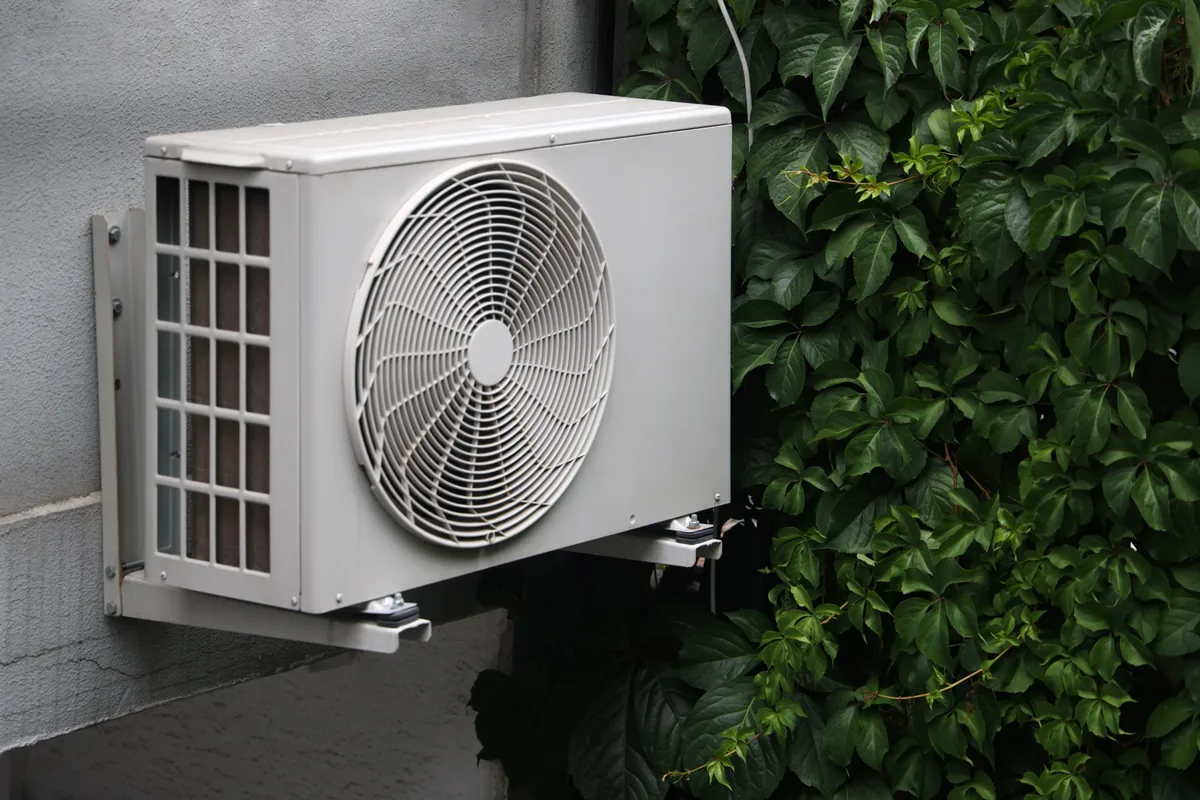
Heat pumps perform in Hamilton winters better than their reputation suggests, provided the unit is a cold-climate model and the house has a sensible plan for the coldest nights. A modern inverter heat pump keeps producing heat far below freezing, gradually loses capacity as the temperature falls, and pauses periodically to melt frost off its outdoor coil. What decides whether that feels seamless or annoying in Hamilton is local: how many winter hours sit in the mild band, how damp the air is coming off the harbour and up the escarpment, and whether the gas furnace is still there to take the extremes.
What a Hamilton Winter Actually Asks of the Equipment
The mental picture most homeowners carry is a -22°C night in February. That night exists, but it is a handful of hours out of a season. The bulk of a Hamilton heating season sits between roughly -10°C and +5°C, which happens to be the band where an inverter heat pump is at its most efficient — running long and slow at partial capacity, which is exactly what it was designed to do.
- Above 0°C: the heat pump is comfortably the cheapest heat in the house, and it modulates down instead of cycling. Most of the season lives here.
- 0°C to about -12°C: capacity tapers off and cycles lengthen. A correctly sized cold-climate unit still carries the house on its own through this range.
- Below about -15°C: output has dropped meaningfully against the house's rising heat loss. This is where the backup earns its keep, whether that is the gas furnace in a dual-fuel setup or electric elements.
Manufacturers publish capacity tables at several outdoor temperatures rather than a single rating, and those tables — not the marketing sheet — are what a proper design uses. Ask to see the capacity at your design temperature next to the calculated heat loss of your house.
The Mountain and the Lower City Are Two Different Winters
The escarpment splits Hamilton's climate as cleanly as it splits its geography. The lower city — the North End, Strathcona, Westdale, Crown Point — sits close to lake level and is moderated by Lake Ontario and the harbour, which hold heat into the early winter and hold cold into the spring. The Mountain, Ancaster, Binbrook and Waterdown sit about a hundred metres higher, and the difference shows up as colder clear nights, more wind and more snow on the ground.
Practically, the same model of heat pump installed in Binbrook accumulates more running hours in the low-capacity range than one installed a few kilometres away near Bayfront Park. That does not change the equipment choice much; it changes the balance point and how often the backup is called. Our guide to heating homes on the Hamilton Mountain and escarpment covers the rest of the geography.
Defrost: Why a Damp -3°C Is Harder Than a Dry -18°C
Frost forms on the outdoor coil whenever the coil surface is below freezing and the outdoor air carries moisture. That combination peaks a few degrees either side of zero, not at the bottom of the thermometer, and Hamilton has plenty of it — freezing drizzle, harbour fog and the low cloud that hangs on the escarpment brow. On a genuinely cold, dry night there is much less moisture in the air to deposit, so the unit may go a long stretch without a defrost.
- A defrost cycle reverses the refrigerant flow for a few minutes so the outdoor coil warms and sheds ice. The outdoor fan stops, steam rolls off the unit, and it looks alarming the first time you see it.
- Indoors you may feel a brief cool draft unless the system runs the furnace burner or an electric element through the cycle, which good controls do.
- Demand-defrost controls decide by measuring coil conditions; older timed controls defrost on a clock whether or not there is frost. The difference in a damp Hamilton winter is real.
- Normal is a defrost every 30 to 90 minutes in frosting weather, each lasting a few minutes. Continuous defrosting, or a solid block of ice at the base of the unit, is a fault or a drainage problem — not the weather.
The mechanics of the cycle, including what to do when a unit ices up in a warm spell, are in how a heat pump defrost cycle works.
Siting the Outdoor Unit for a Hamilton Winter
Free quotes, written pricing.
More cold-weather complaints trace back to where the unit sits than to the unit itself. Every defrost produces meltwater, and that water has to go somewhere other than back into the coil.
- Mount the unit on a stand clear of the local snow line — higher on the Mountain, in Binbrook and around Waterdown than in the North End, where the lake keeps ground cover thinner.
- Never under a roof valley or an eave without a gutter. Meltwater dripping onto the top of a heat pump refreezes into the fan guard.
- Give the meltwater a path away: a gravel bed or a drain rather than a flat pad that turns into an ice bowl by January.
- Keep it out of the pile the driveway plough or shovel makes, and away from the drip line of a laneway roof.
- Think about the neighbour's bedroom window on a narrow lower-city lot. The unit runs at 3 a.m. in winter, which a summer-only air conditioner never did.
Dual-Fuel: Choosing Where the Furnace Takes Over
Most Hamilton homes with gas already in the house keep the furnace and add the heat pump to it. The thermostat then holds a switchover temperature: above it the heat pump heats, below it the burner does. Two numbers matter. The first is the capacity balance point, where the heat pump can no longer keep up with the heat loss. The second is the economic balance point, where a kilowatt-hour of heat from the compressor costs more than the equivalent from gas.
The economic point moves. Alectra Utilities distributes electricity across Hamilton and Enbridge Gas supplies the gas, but neither sets the commodity price on its own — regulated electricity prices are set provincially and typically change on November 1, and gas rates are adjusted on their own schedule. That is a good annual reminder to revisit the switchover setting rather than treat it as a permanent factory value.
- Insist on a thermostat that lets the switchover point be set and changed, not one with a fixed value buried in the firmware.
- Ask for the capacity table and the heat loss side by side so you can see where your house actually crosses over.
- If you are keeping an older mid-efficiency furnace as the backup, factor its real efficiency into the comparison rather than the sticker on a new one.
Sizing, Electrical Capacity and the Older Lower City
A heat pump should be sized to the calculated heat loss and gain of the house, not to the tonnage of the air conditioner it replaces. Oversizing hurts more here than with a furnace: an oversized unit short-cycles in the mild weather that makes up most of the season, giving away the efficiency you paid for.
Electrical capacity is the other Hamilton-specific hurdle. Plenty of pre-war and post-war houses in Westdale, Crown Point and the lower city still run 60- or 100-amp services with full panels, and a heat pump with electric backup needs a dedicated 240-volt circuit and sometimes more service than the house has. A load calculation answers that before the quote, not on install day — see when a heat pump needs an electrical panel upgrade.
On cost, a 3-ton cold-climate heat pump generally installs for $9,500–$15,000 in this market, and current Ontario programs return up to $7,500 depending on the system and the fuel it replaces. That money is provincial — it comes through the Home Renovation Savings Program, not from Alectra, which distributes the electricity and does not run its own equipment rebate. We file the paperwork; what applies to a Hamilton address is set out on the Alectra and Hamilton rebates page.
What Good Winter Performance Looks Like
- The house holds its set temperature through a cold snap without you touching anything.
- The heat pump runs long, quiet cycles in mild weather rather than starting and stopping every few minutes.
- Defrost cycles come and go without a noticeable cold draft indoors.
- The backup only engages below the switchover point you chose, not every evening in November.
- The outdoor unit sits above the snow, with no ice sheet at its base in February.
If you are weighing a heat pump installation in Hamilton, we do the heat loss, show you the capacity table at your design temperature, and set the switchover before we leave. Get in touch and bring a recent gas and hydro bill — they tell us more about your house than a square-footage number does.
Frequently asked questions
At what temperature does a heat pump stop working in Hamilton?
Cold-climate models keep producing heat well below -20°C, but capacity falls as it gets colder. The practical question is not when it stops but when it can no longer match the heat loss of your house — usually somewhere below -15°C, which is where the gas furnace or electric backup should take over.
Why does my heat pump steam and stop the fan in winter?
That is a defrost cycle. The unit briefly reverses to warm its outdoor coil and shed frost, which produces visible steam and stops the outdoor fan for a few minutes. It is normal, and it happens most often in damp weather near freezing rather than on the coldest nights.
Do I need to keep my gas furnace if I install a heat pump?
You do not have to, but in a Hamilton home already connected to gas it is usually the practical choice. Dual-fuel gives you a backup with plenty of capacity on the coldest nights and lets you switch between fuels as prices change, without needing a service upgrade for electric backup elements.
Does the Mountain need a bigger heat pump than the lower city?
Not necessarily bigger, but the design should reflect the colder, windier conditions above the escarpment. Two identical houses will have different heat losses in Binbrook and the North End, and that shows up as a different balance point and more backup runtime rather than a different size class.
Should I clear snow away from the outdoor unit?
Yes. Keep the coil faces and the space beneath the unit clear so air moves through it and defrost meltwater can drain. Never chip ice off the coil with a tool — the fins and refrigerant tubing damage easily. If ice keeps rebuilding, something upstream is wrong and it needs a service visit.