
In short
A hot surface igniter is the small ceramic element that glows orange to light a gas furnace's burners. It is a wear part: silicon carbide igniters commonly last three to seven years, silicon nitride longer. If the inducer fan runs but nothing glows and the burners never light, the igniter is the first suspect, and replacement runs $200–$450.
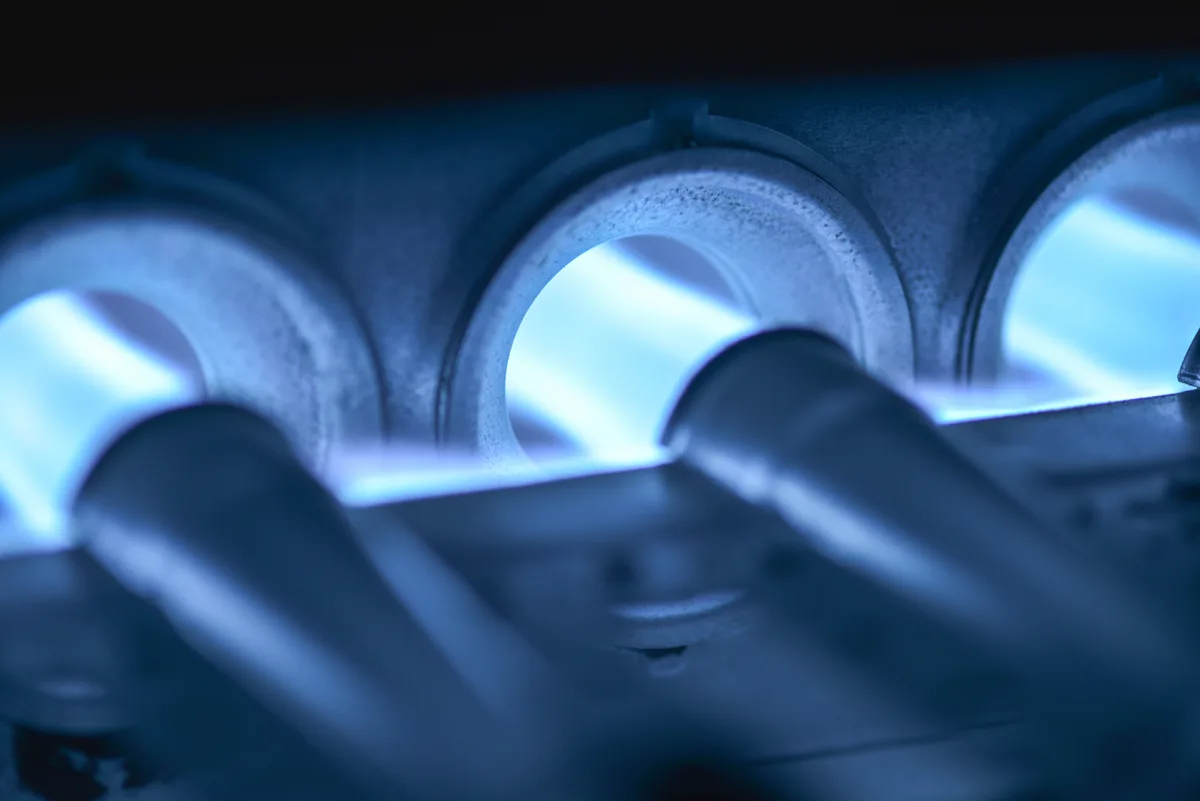
A hot surface igniter is the part that took over from the pilot light. Instead of a small flame burning all year, the furnace control board powers a ceramic element for a few seconds, the element glows orange, the gas valve opens and the burners light off it. Then the igniter switches off until the next cycle.
What a hot surface igniter does on every heating cycle
The igniter has one job: reach ignition temperature before the gas arrives. On a call for heat the inducer fan starts, the pressure switch closes, and the board powers the igniter for a short warm-up. Gas then flows across the glowing tip, the burners light, and the flame sensor at the far end of the burner row confirms that they did.
Two materials are in use. Silicon carbide igniters are the older flat, speckled grey type: inexpensive, brittle and easily damaged in handling. Silicon nitride igniters are the smaller rod or blade type fitted to most newer furnaces, and they are tougher. The replacement must match the furnace's igniter voltage, because 120-volt, 80-volt and 24-volt types exist and the wrong one either burns out fast or never gets hot enough.
Two other ignition systems are still around. Direct spark ignition lights the burners with a high-voltage spark, which you hear as rapid ticking. Intermittent pilot systems light a small pilot first, by spark or by igniter, and that pilot lights the main burners.
How a hot surface igniter fails in an Ontario winter
An igniter fails by cracking, and it cracks from use. A furnace in the GTA cycles thousands of times between October and April, and each cycle takes the element from basement temperature to above 1,000 °C and back. Silicon carbide igniters commonly last three to seven years here; silicon nitride ones usually go longer.
- The inducer fan starts, but no orange glow appears behind the burner sight glass and the burners never light.
- The furnace tries several times, then locks out and flashes an ignition-failure code.
- A hairline crack or a white, chalky spot is visible on the element.
- The glow is dull or slow to appear, and the burners light late with a soft whump.
Skin oil shortens an igniter's life. A bare fingerprint on the element creates a hot spot where it later cracks, so the part is handled by its ceramic base only. An igniter that fails again soon after replacement points at something else: the wrong voltage part, high line voltage, or a furnace that is short cycling.
What a hot surface igniter costs to replace
Replacing a hot surface igniter costs $200–$450 installed in the GTA, and it is one of the shorter furnace repairs. The spread comes from the part, since a universal silicon nitride kit and a brand-specific igniter are priced differently.
- Service call and diagnosis: $90–$150, folded into the repair if you proceed
- Hot surface igniter, supplied and installed: $200–$450
- Flame sensor cleaning or replacement, often checked on the same visit: $150–$300
The line-by-line breakdown is in how much a furnace igniter costs, and the other repair bands are on the pricing page.
What to do when the igniter will not glow
Check the furnace switch, the breaker and the filter, then stop. A furnace that clicks or hums without lighting has several possible causes, and why a furnace clicks but does not ignite walks through them. Do not pull the igniter out to look at it: it breaks when bumped, and the burner compartment is work for a licensed gas technician. On a furnace repair visit ZK Mechanical tests the igniter's resistance and the voltage reaching it before replacing anything; call (647) 801-1252 or send a service request.
Questions people ask about Hot surface igniter
Can I replace a hot surface igniter myself?
The part unplugs and is held by one or two screws, which makes it look like a homeowner job. It sits in the burner compartment of a gas appliance, though, and a wrong-voltage or badly positioned igniter causes delayed ignition, which is a small explosion of unburned gas. In Ontario, work on a gas furnace belongs to a TSSA-certified technician.
Is a silicon nitride igniter worth the upgrade?
Usually, yes. When a silicon carbide igniter fails, many furnaces can take a silicon nitride replacement kit approved for that model. The nitride element tolerates vibration, handling and voltage swings better, so it tends to outlast the original. The kit has to match the furnace's igniter voltage and mounting position, which is checked against the manufacturer's listing.
Why does my igniter glow but the furnace still will not light?
A glowing igniter with no flame means the ignition source is working and the gas is not arriving or not being lit. The usual causes are a closed gas shutoff, a gas valve that is not opening, low gas pressure, dirty burners, or an igniter too weak or too far from the gas stream. That diagnosis needs a manometer and a meter.