
In short
A flame sensor is the metal rod that tells a furnace's control board the burners are lit. When it is coated with oxide, the board loses the signal and shuts the gas off: burners light, run 3 to 10 seconds, go out, and repeat until lockout. A healthy signal is typically a few microamps; cleaning the rod usually restores it.
Burners that light, run for a few seconds and go out again are the calling card of a dirty flame sensor. It is one of the smallest parts in a furnace and one of the most common reasons for a no-heat call in the first cold week of the season.
How a flame sensor proves the burners are lit
A flame sensor works by flame rectification. The control board puts a small AC voltage on the rod; a flame touching both the rod and the grounded burner conducts, and because the burner is so much larger than the rod, current passes more easily in one direction. The board reads that as a tiny DC current, measured in microamps. No flame means no current, and the board closes the gas valve within seconds.
Two parts get mistaken for it. The hot surface igniter lights the gas and does not confirm anything. A thermocouple does a similar proving job on standing-pilot appliances, but it generates its own voltage from heat and is not interchangeable.
The symptom and the microamp reading to look for
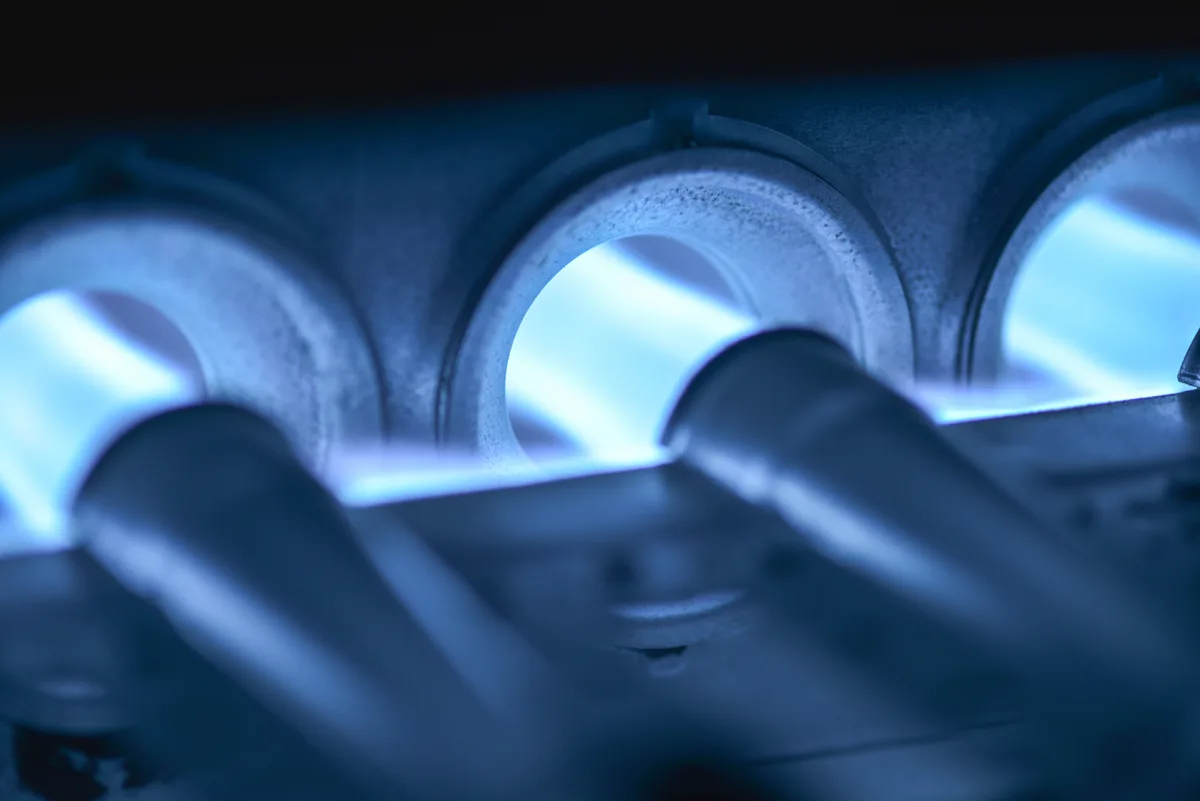
The pattern is consistent: burners light, run 3 to 10 seconds, shut off, and the furnace retries until the board locks out. A technician confirms it with a meter in series with the sensor wire.
- A healthy signal is typically a few microamps, steady while the burners run.
- Many boards drop the flame near or below about 1 microamp; the exact figure varies by board, and the manufacturer's specification wins.
- A low reading with a clean rod points elsewhere: cracked porcelain, a loose wire, a poor burner ground or a weak flame at the last burner.
The usual cause is a coating, not a failure. Over a season, combustion bakes a thin layer of oxide and silica onto the rod, and after a summer of sitting idle that layer is enough to block the signal on the first cold night. Cleaning the rod and re-measuring the signal is part of a proper furnace tune-up.
Is it safe to wait, and what can you do yourself
A furnace cycling on a dirty flame sensor is safe, because the part fails toward shutting the gas off. What you lose is heat. Check that the filter is clean and switch the furnace power off and on once to clear the lockout; if the burners drop out again, stop resetting it.
Cleaning means opening the burner compartment and removing the rod, and the reading should be measured afterward, so it is a job for a licensed gas technician.
What a flame sensor repair costs and who to call
Cleaning is the usual fix, and replacement is for a rod that is pitted, bent or has cracked porcelain. Current prices for both are on how much a furnace flame sensor costs. The visit falls under furnace repair; contact ZK Mechanical and tell us how many seconds the burners stay lit.
Questions people ask about Flame sensor
How often should a flame sensor be cleaned?
Once a year is the practical answer, as part of a fall furnace tune-up. The technician measures the flame signal and cleans the rod if the reading has slipped. Furnaces that share a room with a laundry area, stored chemicals or a recent renovation tend to foul faster, because airborne residue burns onto the rod.
Can a flame sensor be cleaned instead of replaced?
Usually. A rod that is only coated comes back to full signal after a light cleaning with a fine abrasive pad. Coarse abrasives score the surface, and a scored rod fouls again sooner. Replacement is needed when the porcelain insulator is cracked, the rod is bent out of the flame or the metal is visibly pitted.
Can a bad flame sensor cause a gas leak?
No. The flame sensor is a safety device that fails toward closing the gas valve: if it cannot prove flame, the board shuts the gas off within seconds. The small amount of gas released during a failed ignition attempt is cleared by the inducer. If you smell gas in the house, leave and call from outside; that is a different problem.