
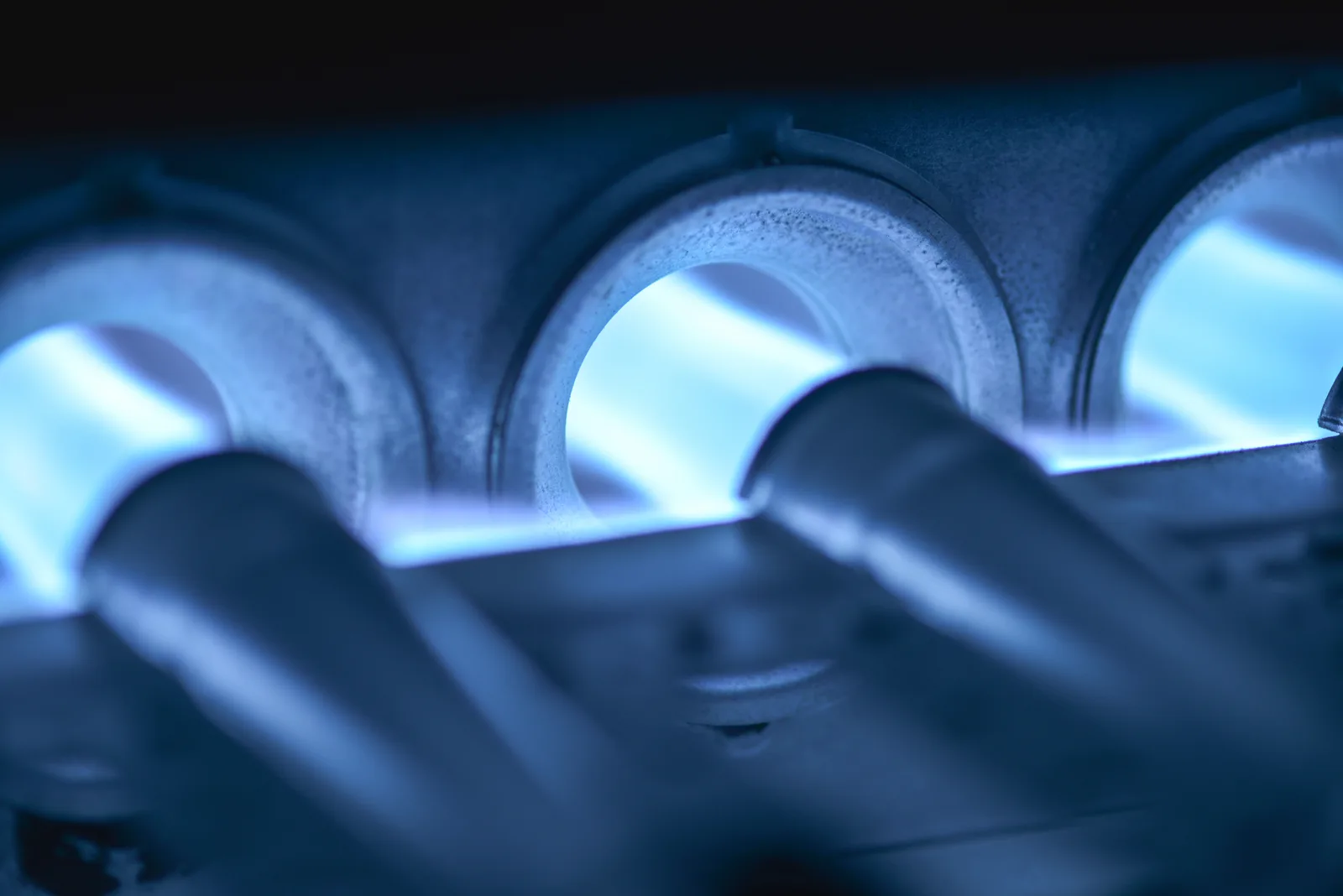
Quick answer
A furnace that ignites and then shuts off after 3 to 7 seconds is almost always failing to prove flame. The flame sensor, a metal rod in the burner flame, is coated with oxide and its signal is too weak, so the control board closes the gas valve. After 3 to 5 tries the board locks out. Power-cycle once, then book a service call.
A furnace that ignites and then shuts off after a few seconds is not short-cycling and is not failing to light. It lit. What failed is the proof: the control board gives the burners a few seconds to show that flame is present, and when no proof arrives it closes the gas valve so that unburned gas cannot pour into the heat exchanger. The furnace is doing the safe thing, and the house still gets cold.
Count the seconds: three furnace faults that look alike
- Burners light and drop out 3 to 7 seconds later, on every attempt: flame sensing, the subject of this page.
- Clicking or a glowing igniter and no flame at all: an ignition fault, covered in why a furnace clicks but does not ignite.
- Burners run for several minutes and shut off before the house is warm: overheating or restricted airflow, which is true short-cycling.
A dirty flame sensor is the cause most of the time
The flame sensor is a thin metal rod on a ceramic base, usually sitting in the flame of the burner farthest from the igniter. The board puts a small AC voltage on the rod. Flame conducts electricity better in one direction than the other, so a tiny DC current, measured in microamps, flows through the flame to the grounded burner. That current is the board's proof of flame, and the method is called flame rectification.
Over a few heating seasons the rod picks up a film of oxide and silica from combustion, and the film is an insulator. The flame is still there, but the signal sags below what the board will accept and the gas valve closes. Furnaces that draw combustion air from a laundry or workshop area coat their sensors faster, because detergent residue, fabric softener and dust bake onto the rod.
The fix is to remove the rod, clean it with a fine abrasive pad and confirm the microamp reading with a meter, or to replace it if the ceramic is cracked. The job is short, but it is inside the burner compartment, so it belongs to a licensed technician and to a visit that also checks why the signal dropped.
When cleaning the flame sensor does not fix it
- Poor burner ground. The current has to return through the burner assembly to the furnace chassis. Rust at the burner mounting screws or a loose ground wire weakens the signal as surely as a dirty rod.
- Reversed line polarity. If hot and neutral are swapped at the furnace switch or receptacle, the board cannot sense flame, and many boards flash a polarity code. It shows up after electrical work and on portable generators; see running a gas furnace on a generator.
- Flame lifting off the sensor. Dirty burners, blocked crossover ports or low gas pressure leave the flame lazy or unstable, so it never wraps the rod. Gas pressure is measured with a manometer and adjusted only by a licensed gas technician.
- A cracked sensor insulator, a damaged sensor wire or, least often, a control board that no longer reads a good signal.
After 3 to 5 failed tries the board locks out: what to check and when to call
The board does not keep trying forever: after 3 to 5 failed trials it goes into ignition lockout and stops, usually with a flashing code visible through the sight glass in the lower door. Note the code first, then turn the furnace switch off for 30 seconds and back on, one time. If the burners light and drop out again, stop there. How long a furnace lockout lasts explains what the board does next.
- Watch one start through the burner window and time it from first flame to shut-off.
- Count the flashes on the board light and compare them to the legend on the inside of the door.
- Replace a dirty filter and make sure the plastic intake and exhaust pipes outside are clear.
- Call the same day if it is below freezing outside, if the furnace is locked out, or if the lockout comes back after one reset.
- Leave the house and call Enbridge Gas from outside if you smell gas that lingers. A failed flame-proving cycle should not leave a gas odour behind.
Waiting is safe as far as the furnace goes, because the fault is the furnace failing safe; the risk is a cold house. In mild weather it can wait for a booked appointment. In a cold snap, treat it as no heat.
What a flame-sensor repair costs in Ontario
- Diagnostic visit: $90–$150, deducted from the repair if you approve it.
- Flame sensor cleaning or replacement: $150–$300.
- Gas valve, if the pressure cannot be set correctly: $500–$1,000.
- Control board, if it has stopped reading a good signal: $500–$1,200.
Most of these calls end at the first two lines of that list. ZK Mechanical's technicians hold TSSA gas licences and give a written price before any part is changed. Book furnace repair by calling (647) 801-1252 or through the contact page, and see the heating answers hub for the other ignition faults.