
Quick answer
A furnace that clicks but never lights is completing the electrical half of ignition and failing the gas half. The click is the spark generator, the gas valve solenoid or a board relay. The fault behind it is usually a dirty flame sensor, a cracked hot surface igniter, a fouled spark electrode, a closed gas cock, or a pressure switch that never proved draft.
When a furnace clicks but does not ignite, the start-up sequence is getting partway through and stalling. Two questions narrow it down fast: what does the click sound like, and when in the cycle does it happen? A rapid tick-tick-tick like a barbecue lighter is a spark electrode; a single firm clunk is the gas valve pulling open or a relay closing on the control board. Everything after that noise depends on gas arriving, lighting, and being seen.
What the clicking noise is
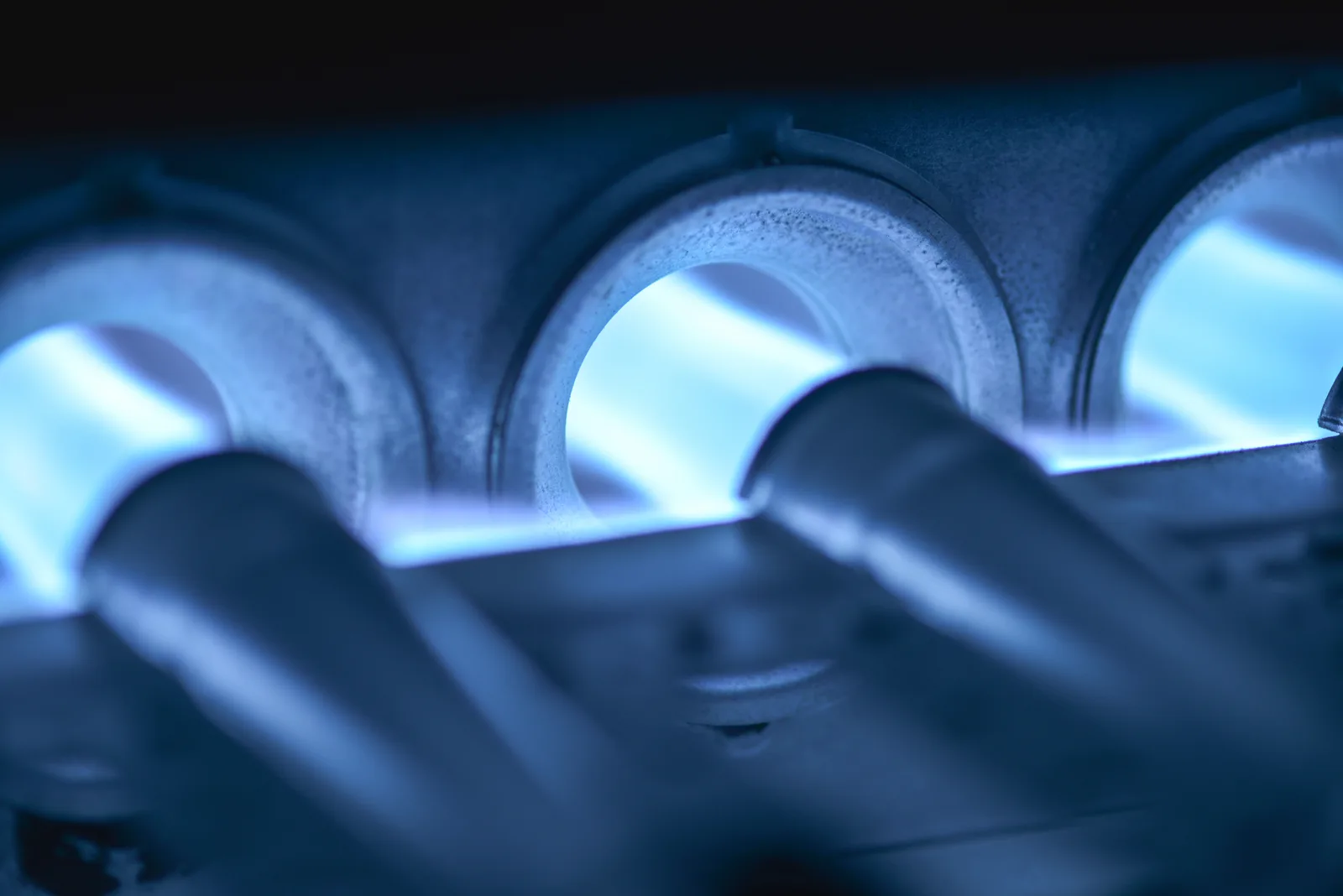
Residential furnaces light one of two ways. Intermittent-pilot models fire a spark at a small pilot burner, and that spark is audible — a fast, insistent ticking for a few seconds at the head of each cycle. Hot-surface models make no spark at all: a ceramic element glows orange, the gas valve opens with a soft click, and the burners cross-light from one end of the tray to the other. Knowing which one sits in your basement tells you what a click is worth.
There is a third click worth separating out. Relays on the control board snap when they energize the inducer or the blower, and a board cycling through a failed trial makes that same noise on a loop. A click every half-minute or so with nothing else happening means the board is retrying, not sparking.
The faults that stop ignition after the click
- A dirty flame sensor. The burners light for three to seven seconds, the gas shuts off, and the furnace tries again — the rod is coated and the board never confirms flame. See what a flame sensor costs.
- A cracked or worn hot surface igniter. A meter across a healthy element shows a low, finite resistance; an open reading means it will never glow no matter how many trials the board runs.
- A spark electrode out of position. The gap between electrode and pilot hood is about an eighth of an inch, and a bent bracket or carbon on the tip either kills the spark or throws it to ground.
- No gas at the burner. The shut-off cock beside the furnace gets closed during a renovation and forgotten, or the whole house is out — check whether the range and water heater still work.
- A pressure switch that never closed. The board refuses to open the gas valve without proof of draft, so you get inducer noise, a click, and silence. Why a pressure switch keeps failing follows that path.
What to check yourself, in order
Start with the free things. Confirm the thermostat is on Heat and set above room temperature, check that the blower door is latched properly, and see whether other gas appliances still work. Then pull the filter: if it is grey and stiff, replace it, because a starved furnace trips limits and muddies every other symptom.
Next, read the light. The board stores the reason it stopped trying, and on many furnaces that memory survives only until power is cut — so write the flash pattern down before you touch the switch. Our page on reading the furnace status light explains how to count it, and how to reset a furnace covers the power cycle itself.
What ignition repairs cost in the GTA
- Flame sensor cleaned or replaced: $150–$300, and the most common ending to this call.
- Hot surface igniter: $200–$450, part and labour together.
- Pressure switch: $250–$500; a draft inducer motor behind it runs $400–$900.
- Gas valve: $500–$1,000 — less common, and worth weighing against the age of the furnace.
- Diagnostic visit: $90–$150, credited toward the repair if you go ahead with it.
Why this call clusters on the first hard freeze
Furnaces idle from April to October, and the first sustained cold night is when a marginal igniter or a coated sensor finally gives up. It is not bad luck. The part was already failing in March and nobody noticed, because the furnace was only running twice a week by then. Booking a tune-up in October instead of January is the cheap version of this problem.
There is a local wrinkle. Houses close to the lake in Bronte and Aldershot pull damp air through the burner compartment all shoulder season, and a sensor rod in a humid basement oxidizes faster than the same rod in a tight, dry 2000s build up in Alton Village. Same furnace, same age, different service interval.
If the furnace is clicking and the house is sliding toward 15°C, treat it as an urgent call rather than a next-week one. ZK Mechanical stocks flame sensors, universal igniters and common pressure switches on the van, so most of these end in one visit at a price agreed before anything comes apart. Book furnace repair across Burlington, Oakville and Hamilton, or tell us what it is doing and we will tell you what it usually turns out to be.