
Quick answer
To reset most furnaces, set the thermostat to Off, flip the power switch beside the furnace (or its breaker) off, wait 30 seconds, then turn the power and thermostat back on and give it up to five minutes to run through its start-up sequence. If it locks out again, read the flashing light on the control board before resetting a second time — repeated resets hide the fault instead of fixing it.
The answer to “how do I reset my furnace” is that a reset is a power cycle, and it clears exactly one thing: a lockout. A modern furnace that fails to light three times in a row, or sees a safety switch open, stops trying and waits — usually about an hour — before it will attempt to run again. Cutting the power and restoring it clears that timer. It does not fix whatever caused the lockout, which is why the steps below include reading the fault first.
The standard furnace reset, step by step
- Turn the thermostat to Off, or drop the setpoint well below room temperature, so the furnace is not mid-call when you cut power.
- Find the furnace power switch. It looks like a light switch, mounted on the cabinet or on the wall or joist beside it, often with a red or white cover plate. Flip it off.
- If there is no switch, use the breaker labelled furnace or HVAC in the electrical panel. Push it fully off — not just to the tripped middle position — and back on.
- Wait 30 seconds. Some boards need the full pause to drop their memory of the lockout.
- Restore power, set the thermostat back to Heat and a few degrees above room temperature, then wait. A normal start takes a couple of minutes: the inducer fan spins up first, the igniter glows, the burners light, and only then does the main blower start.
- Watch the small window in the lower door. A steady light means the furnace is content; a flash pattern means it faulted again.
Where the reset button is, and why to press it only once
Most furnaces do not have a reset button at all; the power switch is the reset. The button people find is the flame rollout switch: a small round disc with a centre pin, mounted near the burners, that trips when flame spills out of the burner box instead of drawing into the heat exchanger. If it has tripped, the pin sits proud and pressing it re-arms the switch.
Press it once. If it trips again, stop: a rollout switch trips for reasons that matter — a blocked flue, a plugged heat exchanger, a failed inducer or a crack in the exchanger — and holding it in or bypassing it turns a safety device into a carbon monoxide risk. The same goes for a high-limit switch that resets on its own: if the furnace keeps hitting the limit, something is choking airflow. Read how to tell if a heat exchanger is cracked before you decide it is nothing.
Why furnaces go into lockout in the first place
The lockout you are clearing is nearly always one of three things, and each one leaves a code on the board's light that tells a technician where to start:
- Failed ignition — the burners tried to light and the flame sensor never confirmed a flame, which points to a dirty sensor or a weak igniter. Why a furnace clicks but will not ignite covers that side.
- Pressure switch never closed — the inducer could not prove a draft, usually because of a blocked or iced vent.
- Limit opened — the furnace overheated behind a clogged filter or a bank of closed registers.
Write the flash pattern down before you cut the power, because many boards forget it the moment they lose 24 volts. Our page on what a flashing furnace light means explains how to count it.
When a reset will not help
- The furnace is completely dead — no light in the window, no hum, no click. Check that the blower door is seated (the door switch cuts all power) and the breaker; after that it is a transformer, a board fuse or the board itself.
- It resets, runs one cycle and locks out again. Stop resetting; you are burning through the igniter's remaining life.
- You smell gas, hear a boom on ignition, or your CO alarm has sounded at any point. Leave and call from outside.
- A high-efficiency furnace with water around it — the condensate float switch will keep opening until the drain is cleared. Why a furnace leaks water covers that fix.
- It has been through a power surge and the light behaves randomly. Boards do not recover from surge damage with a reset.
Resetting after a power outage
After a Burlington Hydro or Alectra outage, most furnaces restart on their own once power returns, because the thermostat is still calling. The exception is a furnace that was mid-ignition when the lights went out; the board may log a failed trial and sit in lockout. Do the full power cycle above. During an ice storm a one-second flicker is enough to leave a furnace waiting an hour for no reason, so check the light before you assume the worst.
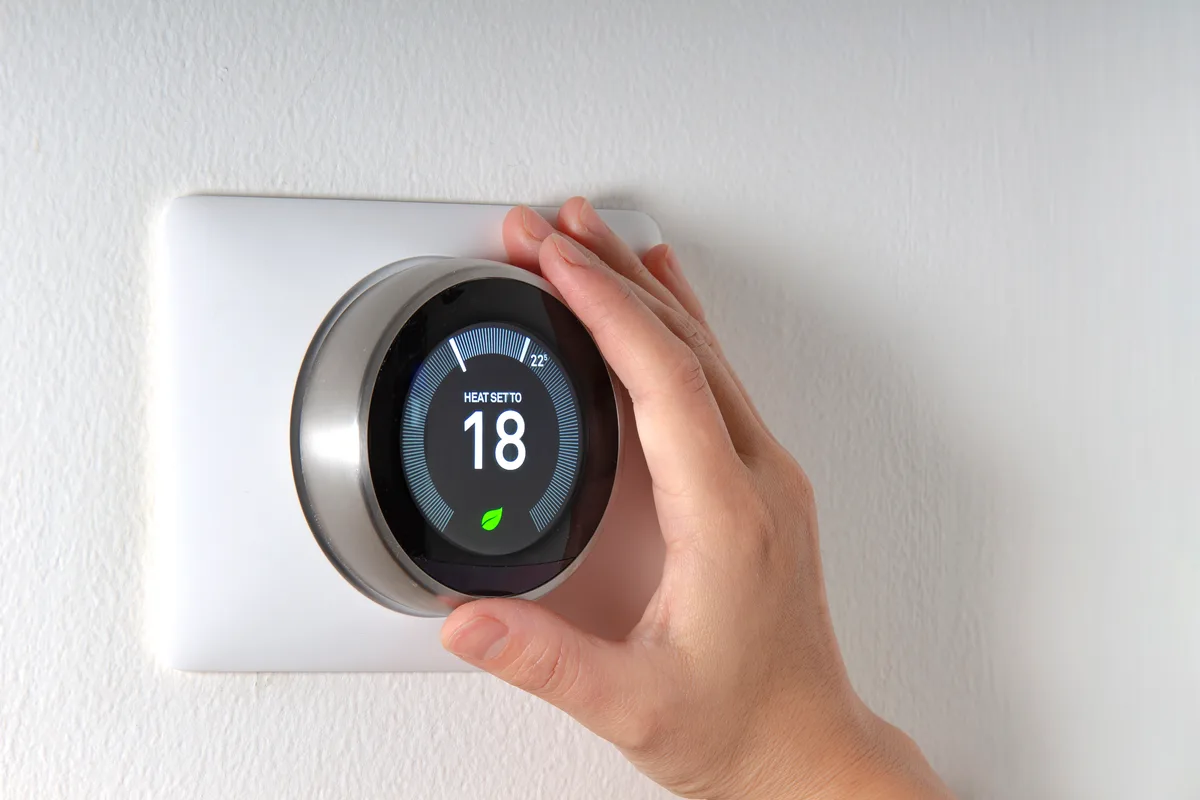
Smart thermostats add a wrinkle: an ecobee or Nest that lost power may reboot into a schedule setback and not be calling for heat at all. Raise the setpoint by hand before you assume the furnace failed.
If the reset holds, you are done, but note the code and mention it at your next tune-up. If it does not, ZK Mechanical carries the common igniters, sensors and switches on the van so a lockout is usually fixed in one visit, priced up front — most fixes land at $150–$450. Call (647) 801-1252 for furnace repair across the GTA and Hamilton or request a visit here.