
In short
A furnace gas valve is the 24-volt valve that lets gas reach the burners only when the control board calls for it, and regulates the pressure they receive: about 3.5 in. w.c. for natural gas and about 10 in. w.c. for propane. Replacing or adjusting one is licensed gas work in Ontario. Replacement runs $500–$1,000.
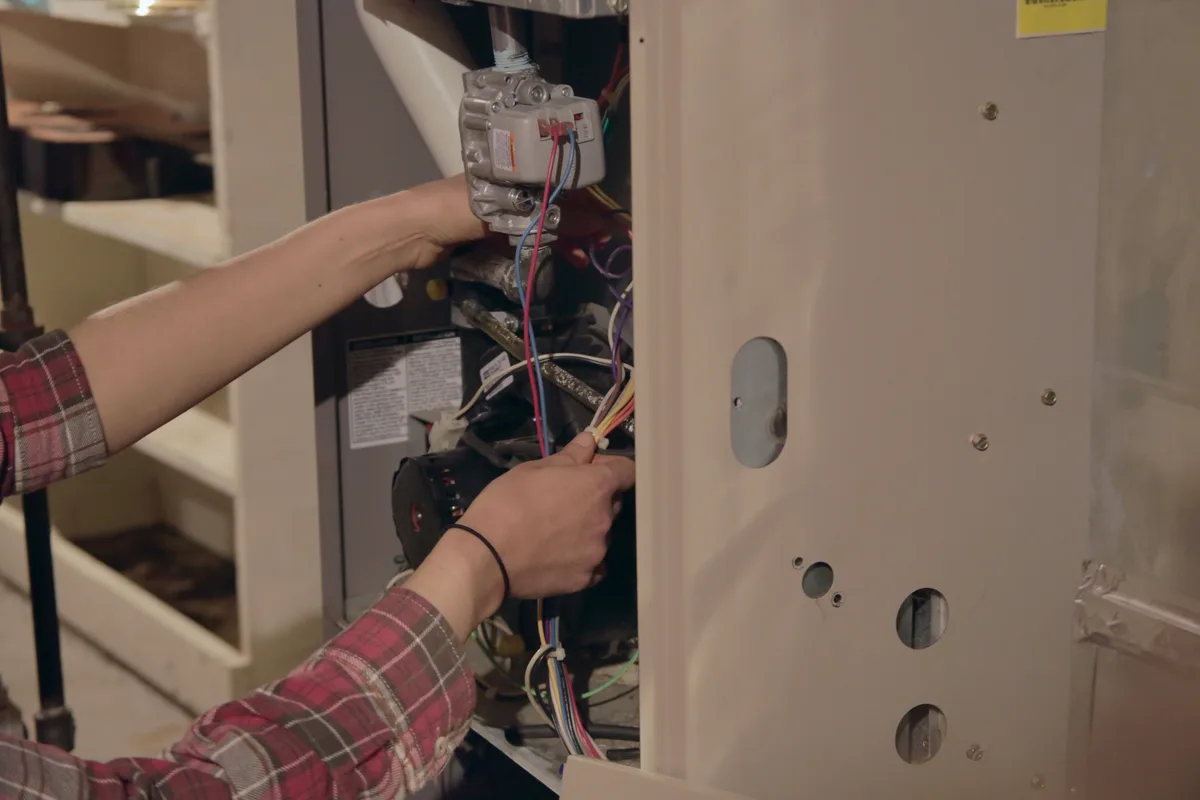
Between the gas pipe and the burners sits the furnace gas valve, a metal block with a pair of low-voltage wires, an on/off switch or knob and two small pressure test ports.
What a furnace gas valve does
The gas valve shuts gas off completely when the furnace is idle and regulates its pressure when the furnace is firing. Inside are two valve seats in series, so one leaking seat cannot pass gas by itself, plus a built-in regulator. Once the igniter is hot, the control board sends 24 volts to the valve, both seats open, and gas flows to the manifold and out through the burner orifices. When the board loses the flame signal or the thermostat is satisfied, the 24 volts drops and the valve springs closed.
Three types are in service. A single-stage valve is either open or closed. A two-stage valve has a low-fire and a high-fire setting. A modulating valve varies its output in small steps to match the heat the house needs.
The number to look for: manifold pressure
Manifold pressure is the gas pressure between the valve and the burners, and it sets how much fuel the furnace burns. For natural gas it is typically about 3.5 in. w.c., and for propane about 10 in. w.c. The exact figure for a given furnace is on its rating plate. A technician connects a manometer to the valve's outlet port and adjusts the regulator with the burners running.
Pressure set too high over-fires the furnace and overheats the heat exchanger. Pressure set too low gives a weak flame and a furnace that underperforms. Homes on propane in rural Caledon, Kilbride, Campbellville and rural Flamborough need the valve and burner orifices converted for propane, because a natural gas setup fed propane is badly over-fired.
How a gas valve fails, and what gets ruled out first
A failed gas valve usually shows as an igniter that glows with no flame following, or a valve that clicks with no gas flowing. Other faults produce the same symptoms, so the valve is tested last, not first. A technician checks, in order:
- Gas supply: the appliance shutoff, the meter, and the inlet pressure at the valve while other gas appliances are running.
- Whether 24 volts reaches the valve terminals during the ignition trial. No voltage points to the board, a safety switch or the wiring.
- Whether pressure appears at the outlet port when the valve is energized. Voltage in and no gas out is a failed valve.
- Whether the valve closes fully. A valve that passes gas when it should be shut is replaced on the spot.
The homeowner's version of that checklist is in why a furnace clicks but does not ignite.
Who can replace a gas valve in Ontario, and what it costs
Replacing or adjusting a gas valve is regulated gas work. Under O. Reg. 212/01 and CSA B149.1 it is done by a TSSA-certified gas technician, a G2 or a G3 working under supervision, and it is not a homeowner part swap. Gas valves are not rebuilt in the field. They are replaced, leak-tested and set with a manometer.
- Gas valve replacement, including leak test and pressure set-up: $500–$1,000
- Diagnosis before any part is ordered: $90–$150, applied to the repair when you go ahead
Other repair bands are on the pricing page. If you smell gas, leave the house first and call Enbridge Gas or 911 from outside. For a furnace that will not light, book furnace repair at (647) 801-1252 or request a visit.
Questions people ask about Furnace gas valve
Can a furnace gas valve be repaired or cleaned instead of replaced?
No. A gas valve is a sealed, certified safety device, and manufacturers do not supply internal parts for it. A valve that sticks, leaks through or will not open on a proper 24-volt signal is replaced as a unit. Tapping on a stuck valve to get it going is a sign it has failed, not a fix.
How long does a furnace gas valve last?
Often as long as the furnace. A gas valve has no scheduled replacement interval and is one of the less common furnace failures. Dirt or moisture in the gas line, water dripping onto the valve and electrical surges are what shorten its life. That is why a technician looks for the reason a valve failed before fitting a new one.
Does a new gas valve need adjusting after it is installed?
Yes. A replacement valve comes with a factory setting that has to be confirmed on your furnace. The technician checks inlet pressure, sets manifold pressure to the rating plate with a manometer, leak-tests every joint that was opened and watches several ignition cycles. On a propane furnace the valve also needs the correct conversion parts.