
In short
A limit switch is the furnace's overheat protection: a heat-sensing switch beside the heat exchanger that cuts the burners when the air gets too hot and leaves the blower running. A limit that trips repeatedly is nearly always reporting low airflow, not a bad switch. The number to check is the temperature-rise range printed on the furnace rating plate.
Every gas furnace has a limit switch, and it is the reason an overheating furnace shuts its burners off instead of damaging itself. It works like a thermostat that knows one instruction: too hot, burners off.
What a limit switch does inside the furnace
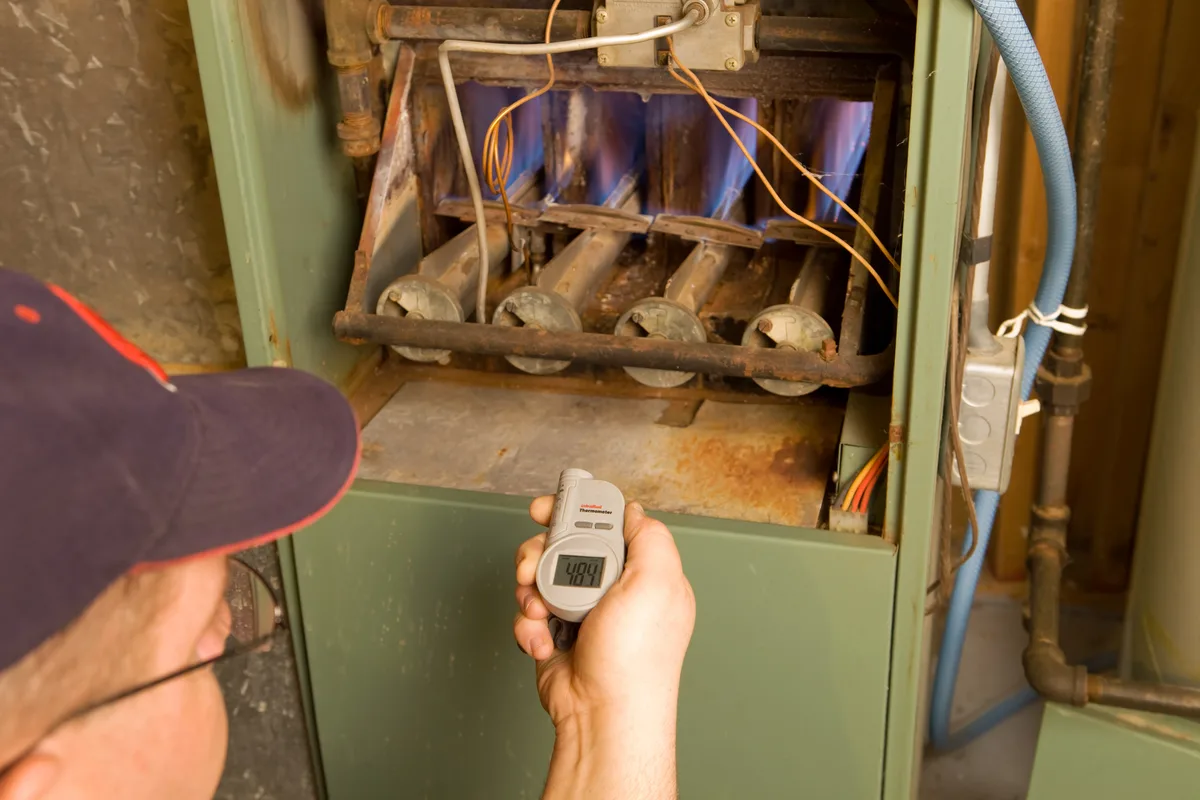
The limit switch opens an electrical circuit when the air around the heat exchanger passes a set temperature. Its sensing disc or probe sits in the hot air just above or beside the exchanger. When it opens, the control board closes the gas valve, keeps the blower motor running to carry the heat away, and relights the burners once the switch has cooled and closed again.
Most limit switches reset themselves. The board counts the trips, and on many furnaces several in a row cause a lockout and a limit-open fault code on the LED. Older furnaces used a combined fan-and-limit control with a dial; newer ones use a small fixed-temperature disc or probe with its opening temperature stamped on it.
Why a limit switch trips: airflow first, the switch last
A tripping limit switch is a symptom of too little air crossing the heat exchanger, and the switch is rarely the faulty part. What you notice is the burners cutting out partway through a cycle while the fan keeps blowing, then relighting a few minutes later. That pattern is one form of short cycling. The causes, most common first:
- A clogged filter, or a high-MERV filter too restrictive for the ductwork.
- Supply registers closed, or covered by furniture and rugs.
- Return ducts too small for the furnace, typical of older GTA homes that got a bigger furnace on the original ductwork.
- A dirty blower wheel, a weak blower capacitor or a blower set to the wrong speed.
- A plugged air conditioning coil sitting above the furnace.
- Burners over-fired by gas pressure that is set too high.
It shows up most in deep cold. At -15 °C the furnace runs long, back-to-back cycles, and an airflow problem that went unnoticed in November becomes a furnace that cuts out every few minutes in January.
The number to check: temperature rise on the rating plate
Temperature rise is the difference between the air entering the furnace and the air leaving it, and the acceptable range is printed on the rating plate inside the burner compartment. A plate might read 19–36 °C (35–65 °F). A technician measures return and supply air with the burners at steady state, and a reading above the range means too little air or too much gas. Duct restriction is then confirmed with a static pressure test.
What a limit switch repair costs and when to call
The switch is an inexpensive part and swapping it is a short job, so the bill follows the cause. Most furnace repairs in the GTA run $150–$800, with a $90–$150 diagnostic visit credited toward the fix, and the other bands are on the pricing page. A new switch on a furnace that still overheats will trip again within days.
Change the filter and open every register first. If the burners still cut out, book furnace repair instead of resetting the furnace again and again, because each overheat stresses the heat exchanger. Never bypass or jumper a limit switch. Call (647) 801-1252 or send us the fault code and what the furnace is doing.
Questions people ask about Limit switch
Can I reset a furnace limit switch myself?
The main limit has no button: it closes again by itself once the furnace cools. If the board has locked out, switching the furnace power off for a minute and back on clears it, and that is reasonable to do once after changing a dirty filter. Some furnaces also have a manual-reset limit on the blower housing. If it trips again, stop and call.
Is it safe to keep running a furnace that trips its limit switch?
The switch is doing its job, so the furnace is not about to catch fire. Each trip is still an overheat, and repeated overheating is what cracks heat exchangers and wears out the switch contacts. Treat it as a repair to book this week, not a quirk to live with until spring.
What is the difference between a limit switch and a rollout switch?
A limit switch senses the temperature of the air around the heat exchanger, resets by itself and usually points to an airflow problem. A rollout switch sits beside the burners, senses flame escaping the burner area and has to be reset by hand. A tripped rollout points to a venting or combustion fault and is the more serious of the two.