
In short
Static pressure is the resistance to airflow in a duct system, measured in inches of water column. Total external static pressure (TESP) adds the return-side and supply-side readings at the furnace. Most residential furnaces are rated for a maximum of about 0.5 in. w.c.; readings near 0.8 and above mean a restriction such as undersized returns, a dirty coil or a restrictive filter.
Think of it as blood pressure for your ducts. What is static pressure in HVAC? It is the push of air against the duct walls, and it rises whenever the blower has to force air through something tight: a small return, a dense filter, a dirty coil. A technician reads it with a manometer and two small probes, and the number says more about how your system will perform than the brand on the cabinet does.
What static pressure measures and how TESP is taken
Readings are in inches of water column (in. w.c.), a very small unit: 1 in. w.c. is about 0.036 psi. The technician takes one reading where air enters the furnace and one where it leaves, through small test ports. The return side reads negative (suction) and the supply side positive. Added together with the signs ignored, they give total external static pressure, or TESP: the resistance the blower sees outside its own cabinet.
The rating plate on the furnace or air handler lists the maximum external static pressure it was designed for, and on most residential furnaces that is about 0.5 in. w.c. Extra readings on either side of the filter and the cooling coil show the pressure drop across each one. That is how the restriction is located instead of guessed at.
What the static pressure number means
- At or under the rating-plate maximum (about 0.5 in. w.c. on most furnaces): the ducts suit the equipment.
- Between about 0.5 and 0.8: restricted. This is common, and worth tracing before it costs a motor.
- Near 0.8 and above: a serious restriction. Expect noise, weak airflow at the far rooms and safety trips.
High static shows up in ways homeowners already notice: whistling at the return grille or filter slot, a roar from the furnace, bedrooms at the end of a long run that never get enough air, a furnace that trips its high-limit switch and short-cycles, an AC coil that freezes. With a variable-speed ECM blower there is a hidden cost as well. The motor speeds up and draws more power to hold airflow against the restriction, runs hot, and fails early.
Why GTA houses run high static pressure
Many houses in the 1950s bungalows and 1970s to 1990s subdivisions of Burlington, Hamilton and Mississauga have ducts sized for the older, smaller blower that was installed originally, often with a single central return. Since then the house has gained a new furnace that moves more air, an AC coil in the plenum and a dense 1-inch pleated filter. Each adds resistance to ducts that were never enlarged.
- Undersized or too few return ducts, the most common cause in older subdivisions.
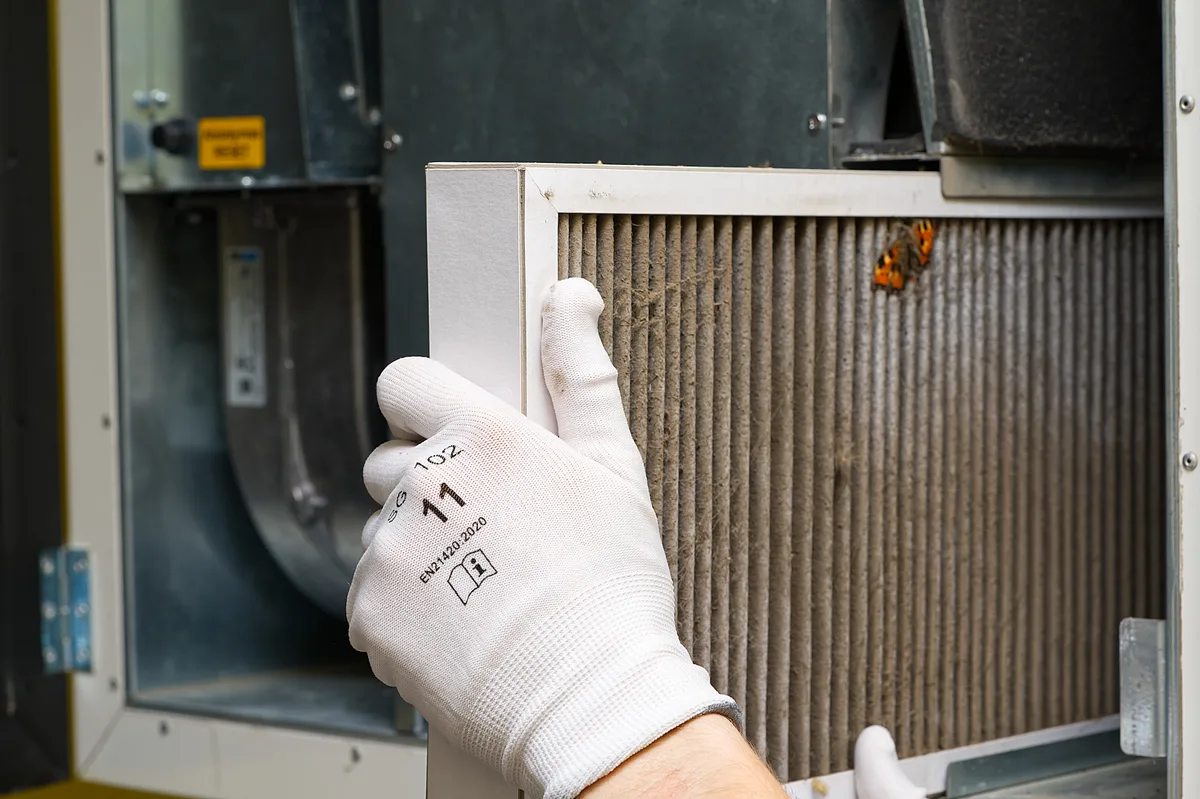
- A high-MERV 1-inch filter; see whether a furnace filter can be too restrictive.
- A dirty evaporator coil or a dirty blower wheel.
- Closed or blocked supply registers and crushed flex duct.
- Undersized supply trunks or sharp fittings right at the furnace outlet.
Noise at the grilles is often the first clue, and why vents whistle covers that symptom.
How high static pressure is fixed and what it costs
The fix follows the readings. If the drop is across the filter, a 4- or 5-inch media filter cabinet gives the same filtration with far less resistance. If it is across the coil, the coil is cleaned. If it is in the ducts, the answer is sheet metal: an added return air drop, a larger return trunk, or reworked fittings at the plenum.
- Diagnostic visit with static pressure readings: $90–$150.
- Duct modifications: quoted in writing after measurements, since the price follows how much sheet metal is added and how accessible the basement ceiling is.
Ask for a static pressure reading before any new furnace, AC or heat pump is quoted. New equipment on restricted ducts inherits the problem, and a blower motor worked that hard does not last. Book ductwork installation and modification or contact ZK Mechanical for a duct assessment, and ask for the TESP numbers in writing. More airflow terms are defined in the HVAC glossary.
Questions people ask about Static pressure
What is a normal static pressure for a home furnace?
Use the rating plate on your unit as the reference. On most residential furnaces the maximum total external static pressure is about 0.5 in. w.c., and a system reading at or below that is in good shape. Many existing homes measure higher. A reading around 0.8 or more means the blower is working well outside its design range.
Can I measure static pressure myself?
The tool, a digital manometer with static tips, is inexpensive, but the test means drilling ports in the ductwork and plenum, and a hole in the wrong spot can puncture the AC coil or its drain pan. Interpreting the result also needs the blower table for your model. It is a quick add-on to a tune-up, so most homeowners have it done then.
Will a bigger furnace or AC fix weak airflow?
No. Larger equipment needs more airflow through the same ducts, which raises static pressure and makes the noise, the hot and cold rooms and the limit trips worse. Weak airflow is fixed on the duct side: more return, larger trunks, a less restrictive filter, a clean coil. Size the equipment to the heat loss, then make the ducts fit it.