
In short
A blower motor is the motor in the bottom of the furnace that moves air through the ducts in every season. It runs for heating, for air conditioning and whenever the fan is set to on. A motor that hums without spinning often needs only a capacitor at $250–$500; a full blower motor replacement runs $500–$1,500 depending on the motor type.
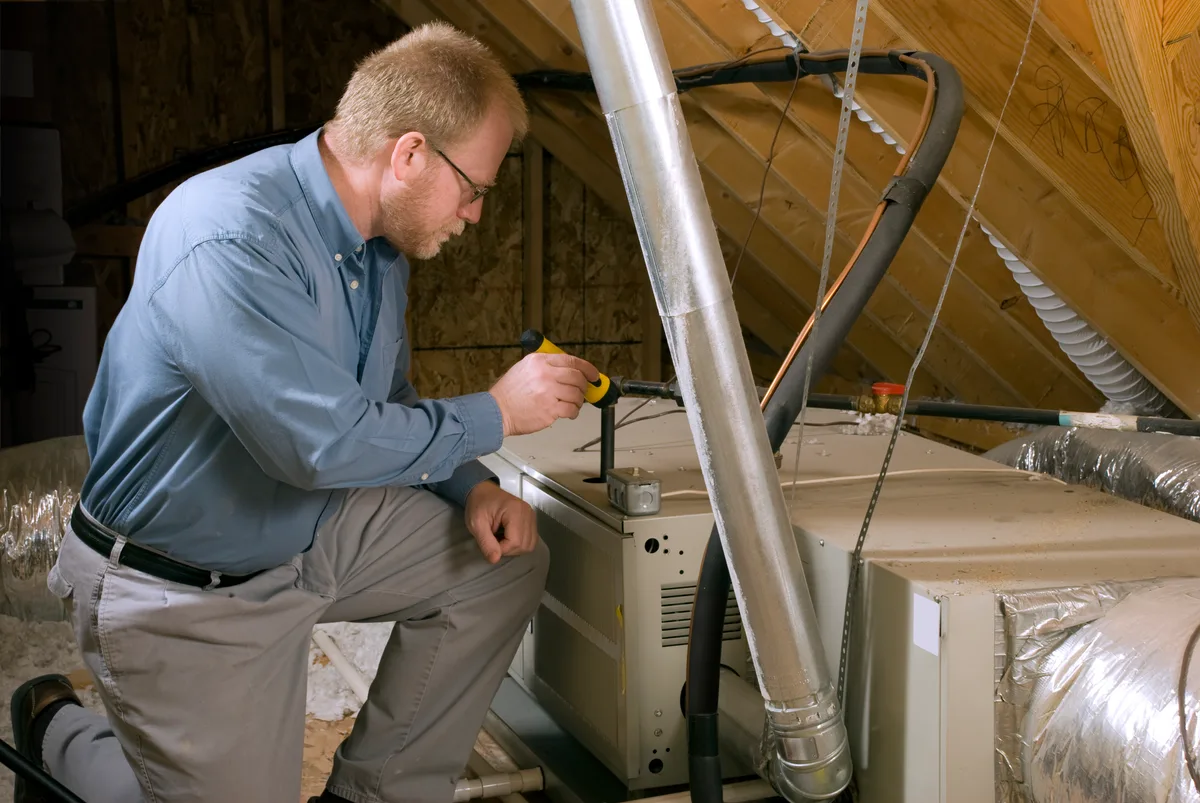
Heat from the burners goes nowhere without the blower motor, the largest motor in the furnace and the one that moves air through your ducts.
What a blower motor does in summer and winter
The blower motor turns a squirrel-cage wheel that pulls air in through the return ducts and filter, then pushes it across the heat exchanger and out the supply ducts. In an Ontario house it works both seasons. In winter it carries heat off the heat exchanger, and in summer it pushes the same air across the air conditioner's evaporator coil above the furnace. With the thermostat fan set to on, it also runs between cycles.
That makes it the hardest-working motor in the heating and cooling system by hours. Nearly all residential furnaces now use direct drive, with the wheel mounted on the motor shaft. Belt-drive blowers, with a separate motor, pulleys and a belt, survive on some very old furnaces and need belt and bearing attention.
PSC or ECM: the two motor types and how each fails
Furnace blower motors come in two types, and the type decides how they fail and what they cost. A PSC motor is the older fixed-speed design that relies on a run capacitor; when the capacitor weakens the motor hums, starts slowly or overheats, and the capacitor is the cheap fix. An ECM motor is the electronically controlled type on most newer furnaces. It uses far less electricity, and it usually fails at its control module, not its windings.
- Humming from the furnace with no air at the registers.
- A burning or hot-electrical smell from the vents.
- Weak airflow on a clean filter.
- Squealing or grinding from worn bearings.
- Burners that light, run briefly and shut down on high limit.
What a failed blower does to the rest of the system
A dead or weak blower shows up as a different fault depending on the season. In January the burners light, no air moves, and the furnace trips its limit switch over and over. In July the evaporator coil gets no warm air across it, drops below freezing and becomes a block of ice. In either season, shut the system off at the thermostat, because running it risks the heat exchanger in winter and the compressor in summer.
What a blower motor costs to replace
A blower motor replacement runs $500–$1,500, and a capacitor alone is far less. The rows below are the published bands:
- Run capacitor on a PSC motor: $250–$500
- Blower motor replacement: $500–$1,500, with PSC motors at the low end and ECM motors or modules at the high end
- Blower compartment cleaning as an add-on: $75–$150
The breakdown by motor type is in how much a furnace blower motor costs. A squealing bearing caught early is a smaller repair than a seized motor, so a new noise is worth a call before the heat or cooling stops. Book furnace repair at (647) 801-1252 or describe the noise and when it happens.
Questions people ask about Blower motor
Is it bad to run the furnace fan all the time?
It does no harm to the motor beyond adding hours. With an older PSC motor, continuous fan shows up on the hydro bill; with an ECM motor the cost is small. In summer, a fan left on between cooling cycles can blow moisture off the wet coil back into the house and raise humidity, so auto is usually the better setting then.
Can I upgrade a PSC blower motor to an ECM?
On many furnaces, yes. Retrofit ECM motors are made to replace PSC motors and cut the electricity the blower uses, which matters most if the fan runs many hours a year. The retrofit does not turn a single-stage furnace into a variable-speed one. Whether it pays back depends on the furnace's age, so ask for both options on the quote.
Why does my blower keep running after the burners shut off?
For a minute or two, that is normal: the control board runs the blower after the flame goes out to carry leftover heat off the heat exchanger. If it never stops, check that the thermostat fan setting is on auto. A blower that still runs nonstop points to an open limit circuit or a stuck relay on the board.