
In short
Return air is the air a forced-air system pulls back from the rooms to the furnace or air handler through return grilles, often called cold air returns. A system can only deliver as much air as it can pull back, so undersized or blocked returns cause weak airflow, noise and overheating. Decision rule: fix the return side before buying bigger equipment.
Return air is the half of a forced-air system nobody looks at: every cubic foot the furnace blows out of a supply register has to travel back to the blower before it can be heated or cooled again. The path home runs through the large grilles on walls and floors, into the return ducts and through the filter.
What return air does in a forced-air system
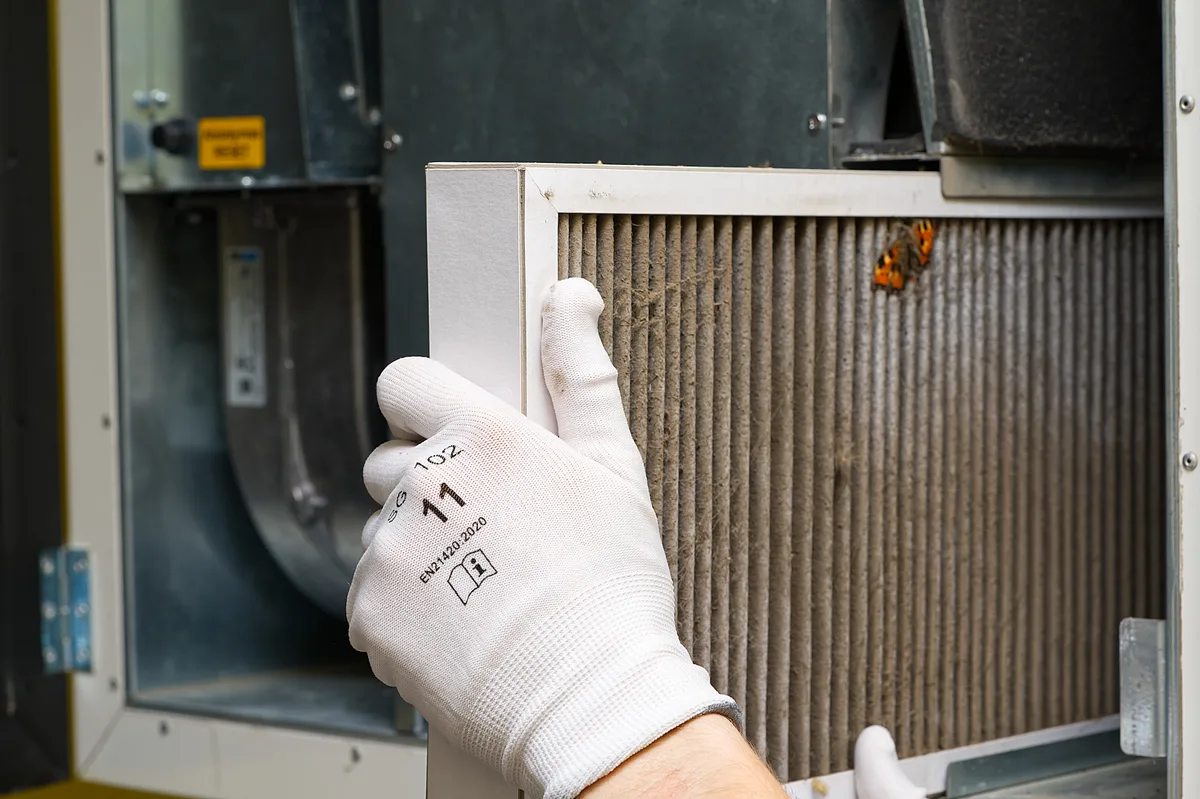
Return air closes the loop, and the blower can only push out as much air as it can pull in. Return grilles are the larger ones with no damper lever, set low on the wall in older houses and often high on the wall upstairs in newer ones. The filter always sits on the return side, just ahead of the blower.
Because return ducts run under suction, any gap leaks inward. A leaky return in a basement, a garage wall or an attic pulls dusty, unconditioned air into the system.
Why older GTA houses run short of return air
Many houses here were built with too few returns for the way they are used now. A 1950s–60s bungalow or a 1970s–90s subdivision two-storey often has one central return in the hallway and none in the bedrooms, so closing a bedroom door cuts that room off from the blower. Upstairs rooms suffer most in July, which is one reason the second floor is so hot in summer.
Finished basements have the opposite problem. Supply runs were cut into the ceiling when the basement was finished, but no return was added, so the warm air has no route back and the room stays cold in winter. Many of these houses also use panned returns, where sheet metal is nailed across the bottom of a joist bay instead of a sealed duct, and those leak along their whole length.
Signs the return side is starving the blower
A starved return shows up as noise, pressure and overheating. Look for these:
- A return grille that whistles or roars when the fan runs
- Bedroom doors that pull shut or resist opening while the system is on
- A filter bowed inward or sucked out of its rack
- A furnace that shuts its burners off on the limit switch, cools down and relights
- An air conditioner coil that ices over on humid days
- High static pressure when a technician measures across the furnace
Two rules cover most of it. Never park a couch, a bed or a rug over a return grille. Add return capacity before paying for larger equipment, because a bigger furnace on the same starved return runs hotter and louder. The steps in how to improve airflow to one room start on the return side for that reason.
What a return air fix costs and when to call
A furnace tripping its limit or a frozen coil is a service call today: the diagnostic visit is $90–$150, folded into the repair if you proceed. Adding a return is duct work, and its price depends on whether the ceiling below is finished, how far the new run travels and whether a wall cavity can carry it. That gets priced in writing after a static-pressure test, not from a phone description.
New returns, enlarged return drops and replacement of panned joist bays are part of our ductwork installation work. Contact ZK Mechanical with the age of the house and which rooms are uncomfortable.
Questions people ask about Return air
Why are they called cold air returns?
The name comes from houses heated by gravity and early forced-air furnaces, where return grilles sat at floor level to collect the cool air that had sunk. The same grilles carry return air in summer, when it is the warmest air in the room. The term describes the grille's history and location, not the temperature of what flows through it.
Does every bedroom need its own return?
A return in every bedroom is the ideal, and newer houses are built that way. Where there is one central return, each closed room needs a way to pass air back: a transfer grille above the door, a jumper duct through the ceiling or a generous gap under the door. Without one, the room pressurizes and its supply airflow drops.
Is it safe to add a return grille in the furnace room?
Not without a check by a licensed gas technician. A return opening near a natural-draft water heater or an older furnace can pull the room below the pressure in the chimney and draw flue gases back down the vent. Sealed-combustion appliances are less exposed, but the draft should be confirmed with the blower running before any return is cut in.