
Quick answer
A blinking light on a mini-split is the unit reporting its status. A slow, steady blink in heating mode is usually defrost or standby and clears without help in about 15 minutes. A repeating pattern of counted flashes, or a letter-and-number code on the display, is a fault code. Record the pattern, switch the breaker off for 5 minutes, and call a technician if the same code returns.
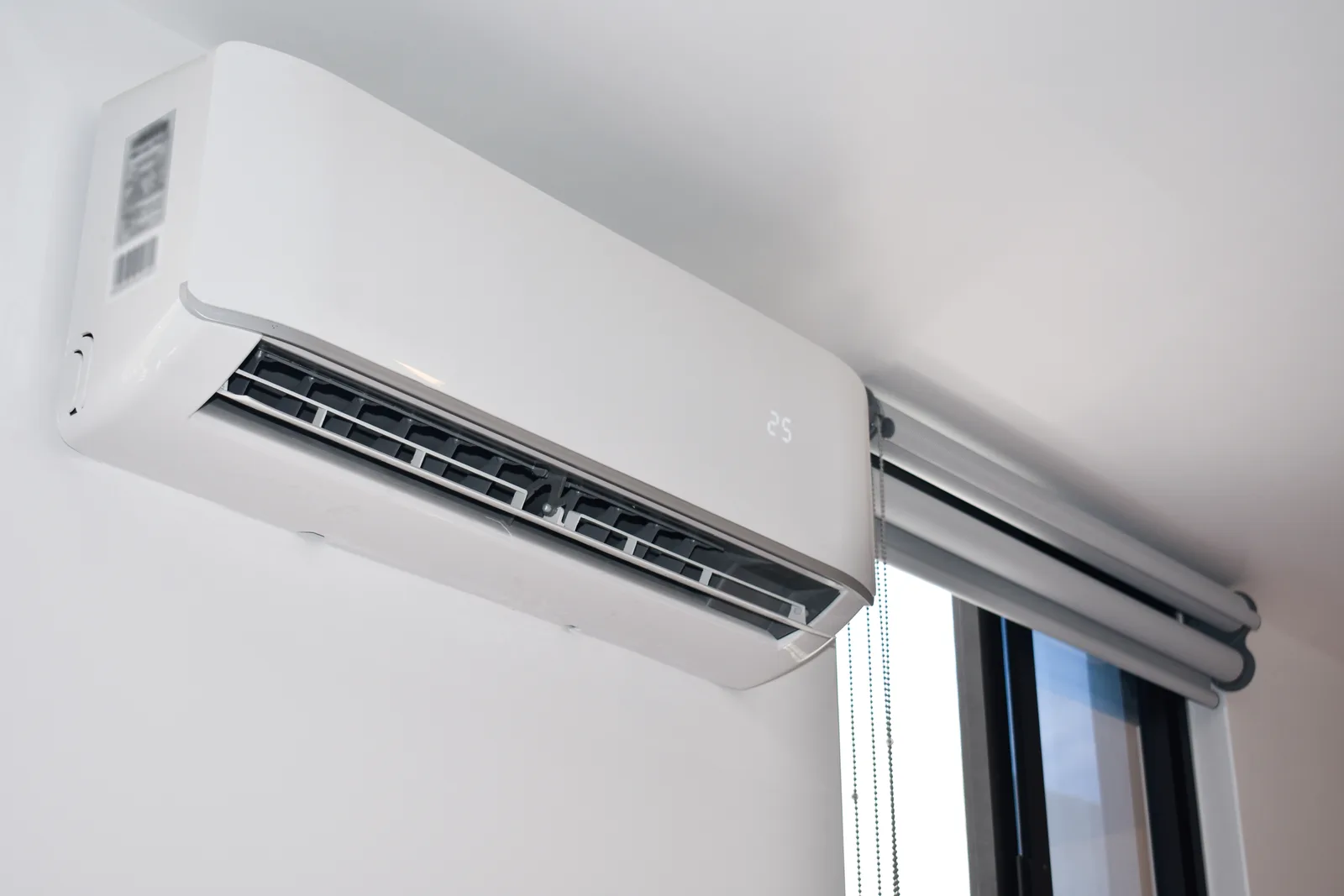
If the light is blinking on your mini-split, count before you touch anything. The lamps on the indoor head are the unit's only way to tell you what it is doing, and the pattern is the message: which lamp, how many flashes, and whether it repeats. A reset wipes that message. Thirty seconds of phone video pointed at the head gives a technician the code even if the blinking has stopped by the time anyone arrives.
Blinks that are normal: defrost, standby and reminders
Not every blink is a fault. In heating mode the outdoor unit has to melt frost off its coil every so often, and many heads signal that pause with a slowly flashing operation lamp while the indoor fan stops. Fujitsu wall units flash the OPERATION lamp slowly during automatic defrost, and Gree-built units show H1 on the display. The lamp goes steady again when warm air returns, typically after 15 minutes at most.
On a multi-zone Mitsubishi, a flashing operation lamp on one head often means standby: another head is calling for the opposite mode, and the outdoor unit can only heat or cool at one time. Set every head to the same mode and the flashing stops. Other harmless signals include a filter-cleaning reminder, a Wi-Fi adapter light in pairing mode and, on many Fujitsu models, the two lamps flashing alternately after a power interruption.
Blink patterns that are fault codes
A pattern that repeats while the unit refuses to start, or a lamp that flashes while the head blows room-temperature air, is a stored fault. Most of them fall into four families.
- Indoor-outdoor communication error: the two units have lost their signal. Causes run from a loose terminal or a wire chewed by mice to a failed circuit board. Daikin reports it as U4 and Gree-built units as E6.
- Thermistor fault: one of the small temperature sensors on the coil, the room-air intake or the outdoor unit is reading open or shorted. The part is inexpensive, but the unit will not run without a believable reading.
- Refrigerant or pressure protection: the unit has shut itself down because pressure or temperature went out of range, most often from a low charge, a blocked coil or a failed fan. Daikin shows a refrigerant shortage as U0.
- Fan motor, compressor and board faults: each has its own code, and these are the ones that most often need parts.
How to read the code on Mitsubishi, Daikin, Fujitsu and Gree-built units
Each manufacturer keeps the code in a different place. Daikin remotes have a self-diagnosis mode: hold the CANCEL button for about five seconds, then press it repeatedly until the head answers with one long beep, and the code on the remote's screen at that moment is the fault. Fujitsu heads count it out, with the OPERATION and TIMER lamps each flashing a set number of times. Mitsubishi heads flash the operation lamp in a counted pattern, and the outdoor board carries its own diagnostic lights.
Gree-built units, which are sold under many private labels, print the code on the head's display. Codes vary by model and year, so treat any chart as a starting point and the label inside the front panel or the installation manual as the final word. Our brand guides list the common ones: Mitsubishi error codes, Daikin error codes, Fujitsu error codes and Gree mini-split error codes.
The safe reset: breaker off for five minutes
One power reset is safe and worth trying once the pattern is recorded. Turn the unit off with the remote, switch off its breaker at the panel or the disconnect beside the outdoor unit, wait five full minutes so the boards discharge, then restore power. Expect a delay of about three minutes before the compressor starts; that pause is built in.
- Check first: record which lamp is flashing, how many times, and any code on the display.
- Check first: confirm every head on a multi-zone system is set to the same mode.
- Check first: wash the filters and make sure nothing blocks the outdoor unit, snow in winter or leaves and fluff in summer.
- Check first: do the five-minute breaker reset once, and only once.
- Check first: put fresh batteries in the remote if the head beeps but ignores commands.
When a returning code needs a technician
If the same code comes back after one reset, stop resetting. A protection code means the unit is shutting down to save its compressor, and each forced restart runs it in the condition it was trying to avoid.
- Call now if the code returns the same day, or immediately on restart.
- Call now if the breaker trips when the mini-split tries to start.
- Call now if there is ice on the indoor coil or on the lines at the outdoor unit.
- Call now if you smell something hot or electrical at the head.
- Call now if the blinking began right after a power surge or a thunderstorm.
A diagnostic visit runs $90–$150 and is credited toward the fix. A sensor or a wiring repair sits at the low end of the usual $150–$800 repair range, while boards and refrigerant leaks sit at the top of it or above. Refrigerant work in Ontario has to be done by a technician carrying an ODP card.
Tell us the brand, the model from the rating label on the indoor head and the pattern you recorded, and we can often narrow the fault down before the van leaves Burlington. ZK Mechanical services Mitsubishi, Fujitsu and Daikin systems; details are on the ductless mini-split page, or get in touch at (647) 801-1252.