
Quick answer
A mini-split leaking water inside almost always has a drain problem: a condensate hose blocked with slime, an indoor head mounted without slope, or a drain run that is kinked or climbs uphill inside the wall. Less often a lift pump has failed or a frozen coil is melting. Turn the unit off, protect the wall and floor, and have the drain cleared; most fixes cost $150–$450.
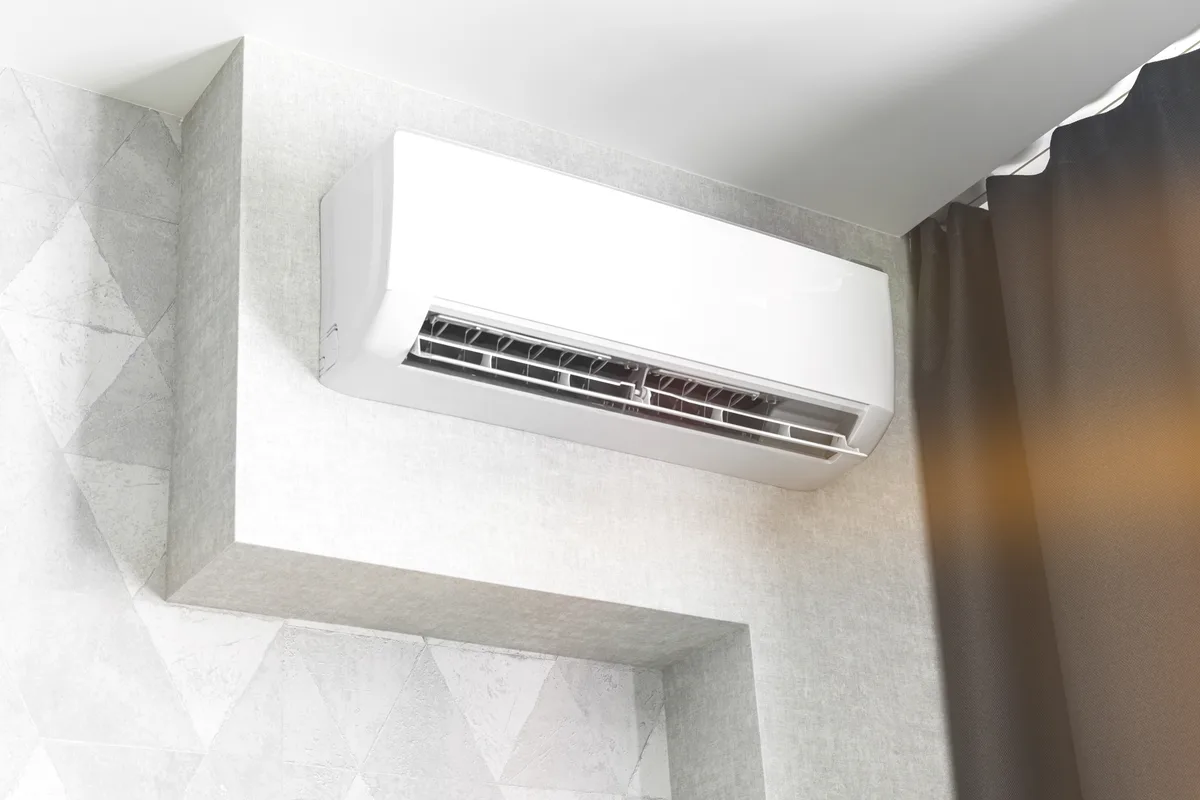
The reason your mini-split is leaking water inside is that condensate has stopped leaving the way it was meant to. In cooling mode the indoor coil pulls litres of water a day out of humid air. That water drops into a shallow pan behind the coil and runs out through a drain hose about as thick as your thumb, bundled with the refrigerant lines through the wall. When anything along that path blocks, tilts or freezes, the pan overflows down the wall or drips off the front louvre.
Shut the mini-split down and protect the wall first
Turn the head off at the remote as soon as you see water, because every minute of cooling adds more. Water behind the unit soaks the drywall and the insulation under it long before a stain shows in the paint.
- Switch the unit off, or to FAN only if you can see ice on the coil, so the ice melts without the compressor adding to it.
- Lay towels along the baseboard, set a tray or bucket under the drip, and move electronics and furniture away from the wall.
- Slide out the mesh filters and wash them if they are grey with dust.
- Go outside and find the end of the drain hose. It should be open, pointing down and clear of soil, mulch and standing water.
- If the end is plugged with slime or an insect nest, clear it by hand or hold a wet/dry vacuum on it for a minute.
- Do not push wire up the hose or pour bleach into the head: the hose joint behind the unit pulls apart easily, and bleach attacks the aluminium coil.
The usual causes: a blocked hose, a slimed pan or no slope
A blocked drain accounts for most indoor leaks. Dust that gets past the filters mixes with the constant moisture and grows into a jelly-like slime that coats the pan and plugs the hose. The head has to hang level, or tipped very slightly toward its drain outlet; one mounted with the drain side high holds water at the far end until it spills. Inside the wall, a hose that is kinked at the sleeve, sags into a belly or climbs uphill on its way out traps water the same way.
Installation errors show up in the first humid summer, not on day one. A unit can run dry through a mild June and overflow in the first sticky week of July, when humidity off Lake Ontario multiplies the amount of condensate the coil makes. If the leak began in the unit's first or second cooling season, the mounting slope and the drain route are the first things to check.
Lift pumps on interior walls, and frozen coils that melt
A head on an interior wall has no downhill path to the outside, so a small condensate lift pump pushes the water up and over to a drain. These pumps have a float switch that sticks when slime builds up and a motor that eventually wears out. The warning signs are a pump that buzzes louder than it used to, runs constantly, or goes silent while the head is still cooling. A condensate pump is a replaceable part, and the price depends on where it was hidden: in the line-set cover, above a ceiling or inside the head.
A frozen coil leaks in a different pattern. Clogged filters or a low refrigerant charge let the coil drop below freezing, ice builds across the fins, and when the unit cycles off the melt runs past the edges of the pan. You will see frost through the louvre, feel weak airflow and get water in bursts instead of a steady drip. Clean filters cure the first cause; the second is a refrigerant leak that needs a technician, covered in why a mini-split stops cooling.
A sweating line-set is not a drain leak
Water that appears beside or below the head, with a dry pan and a clear drain, is often condensation on the refrigerant lines. Both copper lines on a mini-split run cold in cooling mode, so both must be wrapped in foam insulation along their whole length. Where the insulation was cut short, split or left off at the connections behind the head, the bare copper sweats inside the wall and the stain shows up 30 cm or more from the unit. The fix is re-insulating the lines and sealing the wall sleeve, not clearing a drain.
In heating mode the indoor head produces no condensate at all. Water indoors in January therefore points to rain or snowmelt tracking in along the line-set through a wall hole that was never sealed.
What a mini-split leak repair costs, and when to call the same day
- Clearing and flushing a blocked condensate drain: $150–$350 in most homes.
- Finding and fixing a refrigerant leak behind a frozen coil, then recharging: $300–$800 and up.
- Re-hanging a head, re-routing a drain through the wall or replacing a lift pump: quoted in writing after we see the install.
- The $90–$150 diagnostic fee is folded into the repair if you proceed.
- Call the same day if water is running down the wall or reaching the floor, even with the unit off.
- Call the same day if the leak is above an outlet, a television or a baseboard heater.
- Call the same day if the drywall under the head is soft, bubbled or stained.
- It can wait a few days if the unit is off, the drip has stopped and you have another way to cool the room.
A leak caught the day it starts is a drain cleaning; one left for a month is a drywall repair too. ZK Mechanical services Mitsubishi, Fujitsu and Daikin ductless systems from the Burlington shop and will tell you whether the cause is dirt or the way the unit was installed. Start with ductless mini-split service, see the other heat pump answers, or send us the details with a photo of the head and the drain outlet.