
Quick answer
A heat pump that will not turn on usually has a tripped breaker, a pulled outdoor disconnect, or a thermostat left in emergency heat or held off by an outdoor-temperature lockout. Check both breakers, outdoor unit and air handler, then wait five minutes for the restart delay. If power and settings are right, suspect a capacitor, contactor or inverter board: most repairs run $150–$800.
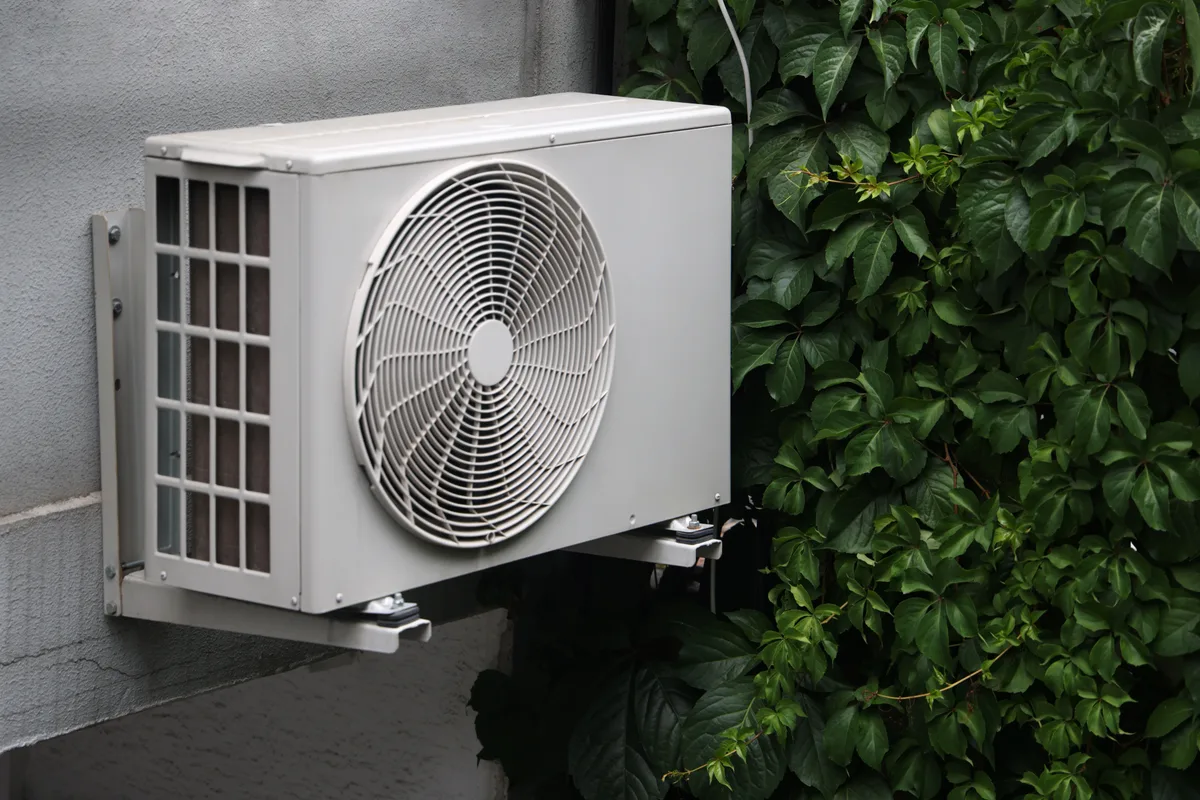
When the question is why your heat pump is not turning on, start by working out which half is dead. A ducted heat pump is two machines on two power supplies: the outdoor unit with the compressor, and the indoor air handler or furnace that moves the air. If the thermostat is blank or the indoor fan never starts, the fault is inside. If air moves indoors but the outdoor unit sits silent, the fault is outside, or a setting is holding the unit off on purpose.
Check both breakers and the outdoor disconnect before anything else
The outdoor unit and the air handler each have their own breaker, and either one can trip without the other. The outdoor unit sits on a double-pole 240-volt breaker in the main panel and has a second shut-off in a grey box on the wall beside it. An air handler with electric backup strips often carries its own breakers on the cabinet as well. The thermostat takes its 24-volt power from the indoor unit, so a blank screen points to the air handler side, not the heat pump.
- Thermostat: set it to HEAT (not EM HEAT or OFF) with the setpoint at least 2 °C above room temperature.
- Wait five minutes. Most systems hold the compressor off for about that long after a power blip or a mode change to protect it.
- Main panel: find the breaker labelled heat pump, AC or condenser and the one for the air handler or furnace. Reset a tripped one once, fully off and then on.
- Outdoor disconnect: open the box beside the unit and confirm the pull-out handle or switch is seated in the ON position. They get pulled for a service call or a siding job and never pushed back.
- Indoor unit: make sure the blower door is fully closed (a door switch cuts power when it is ajar) and the filter is not packed solid.
- Outside: clear leaves, a fallen cover or snow packed around the unit away from the coil and fan.
Thermostat settings that keep a heat pump off on purpose
Three settings will stop a healthy outdoor unit from running, and none of them is a fault. EM HEAT tells the thermostat to ignore the compressor and run only the backup heat; it is often left on after a past repair or selected by accident. A compressor lockout (ecobee calls it compressor minimum outdoor temperature) shuts the heat pump off below a chosen outdoor temperature. If that number was set too high, the unit sits idle on the first cold morning while the backup carries the house.
The third applies to hybrid systems, where a heat pump is paired with a gas furnace. The thermostat has a switchover temperature: above it the heat pump heats the house, and below it the thermostat deliberately locks the heat pump out and fires the furnace. A silent outdoor unit at -12 °C with warm air at the registers is the system doing what it was programmed to do. The dual-fuel changeover temperature is chosen from the heat pump's capacity and the price of gas against electricity, and it can be adjusted if it was set too cautiously.
What fails on a conventional heat pump versus a cold-climate inverter unit
The parts that prevent a start differ by type. A conventional single-speed heat pump starts through a contactor, a 24-volt relay that closes the 240-volt circuit, and a run capacitor that gives the compressor and fan motor their starting push. A weak capacitor shows up as a hum with no start, or a compressor running with a stalled fan. A pitted contactor clicks or chatters and never pulls in.
A cold-climate inverter unit has neither part in that form. An inverter board drives the compressor at variable speed, and the outdoor and indoor units talk to each other over a communication wire. When the board fails, or the signal is lost to a chewed, corroded or loose wire, the unit stays off and stores a fault code on the outdoor board or the controller. Write the code down before you cut the power, because a reset often clears it.
- Diagnostic visit: $90–$150, credited to the repair when you go ahead.
- Capacitor or contactor on a conventional unit: $150–$350, usually done on the first visit.
- Most other heat pump no-start repairs: $150–$800, depending on the part and how long it takes to reach.
- Inverter board or communication fault: quoted in writing once the code is read, because the board is specific to the brand and model and may still be under the manufacturer's parts warranty.
Is it safe to wait, and when to call now
If your backup heat works, the house is safe and the repair can wait for a normal appointment. Switch the thermostat to EM HEAT so the backup runs alone, and read when to use emergency heat for what that costs to run. With no working backup in freezing weather, treat a dead heat pump as urgent.
- Call now if a breaker trips a second time after one reset. Leave it off: repeated resets push current through a shorted compressor or wire.
- Call now if you smell burning or see scorch marks at the disconnect or the outdoor unit.
- Call now if the outdoor unit hums or buzzes but neither the fan nor the compressor starts.
- Call now if the same fault code comes back after a power reset.
- Call now if there is no backup heat and the indoor temperature is dropping.
ZK Mechanical diagnoses conventional and inverter heat pumps across Burlington, Oakville, Milton and Hamilton, and gives you the price in writing before any part is replaced. A new breaker or supply wiring is work for a licensed electrical contractor under Electrical Safety Authority rules, and we say so plainly when that is where the fault sits. See heat pump repair for how a visit runs, browse more heat pump questions, or book a diagnostic on (647) 801-1252.