
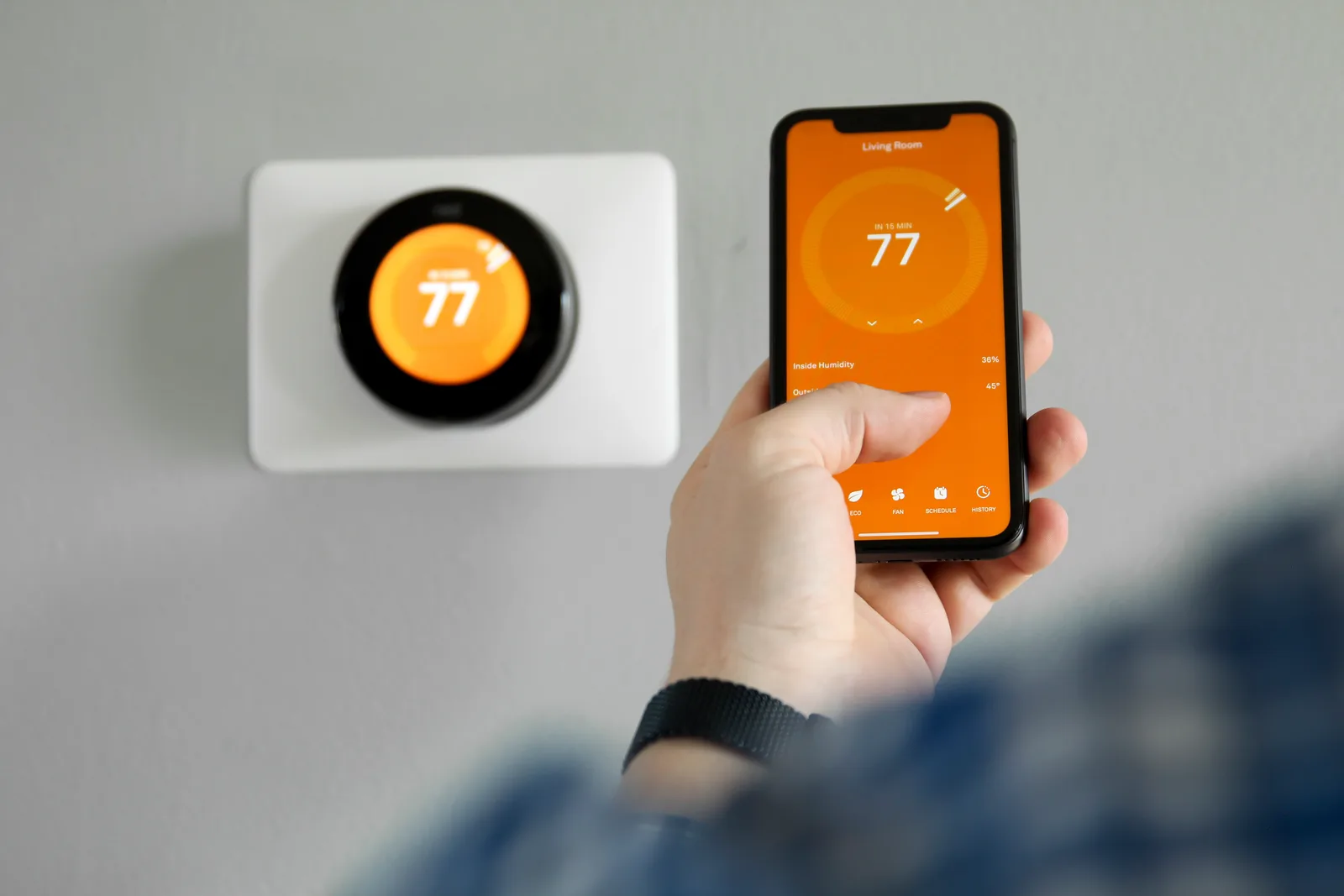
The right heat pump thermostat settings are boring on purpose: choose a temperature between 20°C and 21°C and leave it alone. Setting a heat pump back overnight the way you would a gas furnace usually costs more than it saves, because the morning recovery gets paid for with electric backup heat at two to three times the running cost of the heat pump itself. A heat pump wants to run long and steady, and a setback schedule asks it to sprint.
What Happens During Recovery, Which Is Where the Money Goes
The thermostat calls for backup heat. When a heat pump thermostat sees the room sitting more than a degree or two below setpoint, or falling behind against a timer, it stages in auxiliary heat: electric resistance elements in the air handler, or the gas furnace on a dual-fuel system. Resistance heat turns one unit of electricity into exactly one unit of heat, while the heat pump, even on a cold Ontario morning, typically returns two to three units of heat for the same electricity.
So a three-degree morning recovery buys an hour of the most expensive heat available in the house, and hands back the overnight saving with interest. This is also why some households see a bill jump after replacing a furnace with a heat pump and keeping the identical schedule. Nothing broke; the schedule did.
The Settings That Actually Matter
- One setpoint, 20–21°C, all day and all night. If you insist on some setback, cap it at a single degree.
- Aux heat differential, sometimes called compressor droop: how far the room may fall behind before backup engages. Setting it to 1.0–1.5°C rather than the factory default keeps resistance heat out of ordinary operation.
- Aux lockout temperature: an outdoor temperature above which backup heat is simply not permitted, so resistance elements cannot fire on a 2°C afternoon the compressor had well in hand.
- Compressor lockout: the outdoor temperature below which the heat pump stops and backup takes over entirely. On a modern cold-climate unit this belongs far lower than most installers leave it.
- Fan on Auto. Continuous fan blows room-temperature air across a cold coil between cycles and convinces people the system has failed.
- Emergency Heat: off, always, unless the outdoor unit is physically broken. That mode locks out the compressor and runs the house on resistance heat alone.
Supply Air at 35°C Feels Cool, and That Is Normal
It is not a fault, it is a different delivery temperature. A gas furnace pushes air out of a register somewhere around 50–60°C in short blasts. A heat pump delivers roughly 32–40°C air for much longer stretches. Hold your hand over the register and it will feel cool, because your skin sits near 33°C. The room still reaches setpoint; what changed is the sensation, not the result.
The instinct that follows — raise the setpoint to get more heat — is precisely the move that triggers auxiliary heat and a large bill. Leave the number where it is and let the run time do the work. Why a heat pump runs constantly approaches the same reflex from the other direction.
Dual Fuel: Setting the Switchover Point
The switchover, or balance point, is an economic decision rather than a mechanical one. On a hybrid system the heat pump covers the mild two-thirds of the season and the gas furnace takes the cold nights, and where you draw that line depends on what a kilowatt-hour costs you against a cubic metre of gas. In Ontario the crossover usually lands somewhere between about 0°C and -5°C, but it genuinely moves with rates and with how efficient your particular equipment is at low temperature.
Free quotes, written pricing.
Two practical notes. The thermostat has to actually support dual fuel, or the system needs an outdoor sensor and a proper changeover control — a furnace thermostat wired for a single heat stage cannot manage it. And the two heat sources must never run at the same time; if you feel gas heat while the outdoor unit is turning, the wiring is wrong and it needs sorting out. Best thermostats for heat pumps covers which models handle reversing valves and multi-stage backup properly.
Time-of-Use, ULO and the One Argument for Scheduling
Ontario's Ultra-Low Overnight rate plan is the exception that argues for a schedule. Customers of Burlington Hydro, Oakville Hydro and Alectra Utilities can choose among tiered, time-of-use and Ultra-Low Overnight pricing, and the ULO plan prices overnight electricity far below the afternoon on-peak price in exchange for a higher on-peak rate. On that plan, gently lifting the setpoint overnight and letting the house coast through the late-afternoon peak can genuinely save money — the reverse of conventional setback advice.
Check your own utility's current plans and prices before building a schedule around it, because the arithmetic depends entirely on the spread between the rate periods and those change. What does not change is the rule about ramp rate: move the setpoint in small steps, well ahead of when you need it, so the compressor does the work instead of the backup elements. What a heat pump costs to run in Ontario walks through the numbers.
Cold Snaps, Defrost and What Not to Touch
- Below roughly -20°C, leave the system entirely alone. Auxiliary heat is meant to contribute at that point — that is the job it was installed for.
- Steam rising off the outdoor unit for a few minutes, several times a day, is a defrost cycle rather than a failure.
- During defrost the indoor air may briefly feel cool and backup heat may run to compensate. Both are normal and both are short.
- A sheet of ice built up at the base of the unit is not normal. That is a drainage problem and it wants attention before it damages the coil.
- Do not switch to Emergency Heat because the house seems cool. That is the most expensive button on the thermostat and it turns your heat pump off.
The version of this question we field most in January is answered in should I turn off my heat pump in extreme cold.
How to Tell Whether Backup Heat Is Running
Watch the thermostat display and the supply air, because backup heat rarely announces itself. Most heat pump thermostats show an aux heat or auxiliary indicator when resistance elements are energized, and some show it only in the equipment status screen rather than on the home display. If yours reports runtime by stage, that report is the honest record of how the season actually went.
- Supply air that suddenly feels hot rather than mild usually means the resistance elements have engaged behind the coil.
- An aux or auxiliary indicator showing during ordinary mild weather points at a differential or lockout setting rather than at a failing heat pump.
- A step change in the electricity bill between two similar months, with no change in weather or occupancy, is worth checking against the runtime report before anyone talks about new equipment.
- On dual fuel, the giveaway is the furnace burner firing while the outdoor fan is still turning, which means the changeover logic is not doing its job.
- Long compressor cycles with no aux at all, on a cold day, is the picture you actually want to see.
Most of the heat pumps we get called to look at for high bills turn out to be correctly installed machines running a furnace schedule with factory backup settings nobody adjusted. Half an hour at the thermostat fixes it. If yours is new and nobody walked you through the staging setup at commissioning, ask us — and if you are still weighing the system itself, heat pump installation describes what a proper commissioning should include.
Frequently asked questions
Should I turn my heat pump down at night?
Generally no. The overnight saving is usually smaller than the cost of the morning recovery, because recovery brings in electric backup heat that runs at two to three times the heat pump's cost per unit of heat. If you want to try a setback anyway, keep it to one degree and use a thermostat with adaptive recovery so it ramps gradually.
What is the difference between auxiliary heat and emergency heat?
Auxiliary heat runs alongside the heat pump when the compressor alone cannot keep up, which is normal on very cold days. Emergency heat shuts the compressor off entirely and heats the house on backup alone, and it is meant only for when the outdoor unit is broken. Running Em Heat by choice means paying resistance rates for heat the compressor could have supplied.
What temperature should a heat pump be set to in winter?
Somewhere between 20°C and 21°C, held steady. The precise number matters far less than the steadiness, because the heat pump is at its most efficient maintaining a temperature rather than recovering to one. Set it where the house is comfortable and then leave the thermostat alone for the season.
Why is my heat pump blowing cool air?
Because heat pump supply air is delivered at a lower temperature than furnace air — roughly 32–40°C, which feels cool against skin at 33°C. It is only a fault if the room temperature is falling. A brief cool spell during a defrost cycle is also normal and lasts a few minutes.
Does a smart thermostat work with a heat pump?
Only if it is specified for one. A heat pump thermostat needs to drive the reversing valve and stage auxiliary heat separately, which a basic furnace thermostat cannot do. Look for explicit heat pump and dual-fuel support, configurable backup lockouts, and an adjustable differential rather than a fixed one.