
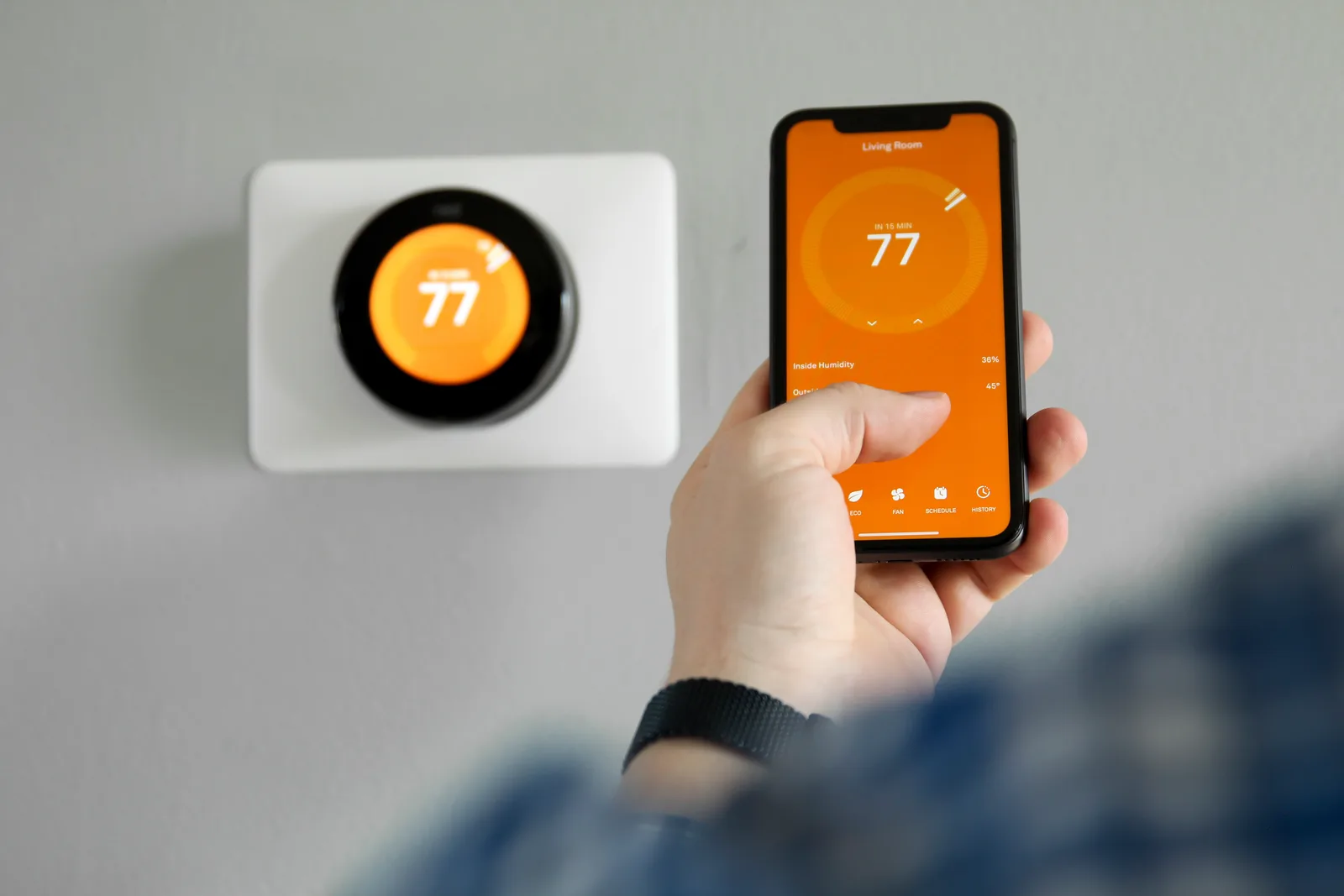
The best smart thermostats for heat pumps are the ones that can do three jobs a furnace thermostat never had to: drive the reversing valve, decide when backup heat is allowed to switch on, and resist the urge to save you money with deep overnight setbacks. In practice that shortlist is ecobee's current line, Honeywell Home's T6 Pro and T10 Pro, and — if you have an inverter-driven ductless or communicating system — the manufacturer's own controller. Google Nest works on a conventional ducted heat pump, with limits worth knowing before you buy.
What a Heat Pump Asks of a Thermostat
- A reversing valve output. Heat pumps switch between heating and cooling by reversing refrigerant flow, controlled from the O or B terminal. Most brands energize O in cooling; a few, including Rheem and Ruud equipment, use B. Wire it backwards and the system heats when you ask for cooling.
- Backup heat staging. Electric strip heat or a gas furnace connects through W, W2 or E. The thermostat has to know that this stage is expensive and treat it as a last resort rather than a second gear.
- Outdoor temperature awareness. Lockouts only work if the control knows how cold it is outside, either from an internet weather feed or a wired outdoor sensor.
- Patience. Heat pumps produce comfort with long, low-output run times. A thermostat tuned for a furnace will short-cycle a heat pump or trigger backup heat every recovery.
Aux Heat Lockout Is the Setting That Saves Real Money
Electric backup heat converts one unit of electricity into one unit of heat. A cold-climate heat pump in a Halton winter typically returns two to three units of heat for the same electricity. Every hour the strips run instead of the compressor therefore costs you two to three times as much, which is why the single most valuable feature on this whole list is control over when backup heat is permitted.
ecobee exposes this directly in its threshold settings — a minimum outdoor temperature below which the compressor is locked out, and a maximum outdoor temperature above which auxiliary heat is not allowed. Honeywell Home's T6 Pro and T10 Pro handle multi-stage heat pumps and dual-fuel with adjustable droop and staging, and the professional models accept a wired outdoor sensor for switchover. Google Nest gives you a heat pump balance setting that trades comfort against savings, which works, but with less granularity than the other two.
If Your Heat Pump Is Ductless or Communicating, Read This First
This is the mistake we get called out to correct most often. The Mitsubishi, Fujitsu and Daikin heads that go into Bronte additions, Glen Abbey bonus rooms and Old Oakville houses with no ducts are inverter-driven: the compressor varies its speed continuously and the indoor unit talks to the outdoor unit over a communication line. A generic 24-volt thermostat cannot join that conversation.
Wire a standard smart thermostat to one of those systems through a simple relay interface and it will run the equipment as if it were a fixed-speed unit, throwing away the modulation you paid for. Use the manufacturer's control — Mitsubishi's wired controllers and kumo cloud, Daikin One+, or the approved third-party interface for your specific model. Some fully communicating ducted heat pumps from the major furnace brands are the same story: they want their own matched thermostat.
Dual-Fuel Systems Need a Thermostat That Can Referee
Free quotes, written pricing.
A hybrid setup — heat pump paired with a gas furnace — is common around here because it keeps the furnace as backup instead of adding electric strips. The thermostat's job is to pick which appliance runs at a given outdoor temperature: heat pump above the switchover point, furnace below it, and never both at once, because furnace heat blowing across an operating outdoor coil is wasted.
That switchover point should be set from your own numbers rather than a default. Work out where the heat pump stops being cheaper than gas using the method in our guide to heat pump running costs in Ontario, then set the thermostat there. Some equipment handles the switch through its own dual-fuel kit and outdoor sensor rather than through the thermostat, so confirm which one is in charge before anybody changes a setting.
The Shortlist
- ecobee (current Smart Thermostat line) — the most complete heat pump control available to homeowners: explicit compressor and auxiliary lockouts, remote room sensors, and settings you can actually reach without a dealer tool.
- Honeywell Home T10 Pro — the choice when the house needs multiple zones or the installer wants a wired outdoor sensor rather than a weather feed. Its smaller sibling, the T6 Pro, covers most single-zone heat pumps and dual-fuel setups.
- Google Nest Learning Thermostat — fine on a straightforward ducted heat pump with one stage of backup, attractive on the wall, and the easiest sell in a house that already runs on Google. Less control over lockouts.
- Manufacturer controls (Mitsubishi, Daikin, Fujitsu, and the communicating lines from the ducted brands) — not optional on inverter or communicating equipment. This is the one case where the third-party thermostat is the wrong answer at any price.
Wiring, the C-Wire and the $75 Rebate
Heat pumps need more conductors than a furnace-only system did, so the old thermostat cable is sometimes the limiting factor. Most heat pump installations already pull a fresh cable, and any of these thermostats needs a common wire for steady power. If the run is short and accessible, replacing the cable during the install costs far less than adding an adapter afterwards.
One piece of paperwork worth catching: a qualifying smart thermostat earns a rebate under the Home Renovation Savings Program, at an amount that depends on the channel you claim through, and the smart thermostat rebate page covers what qualifies. Check that the model is on the program's list before you buy it.
Verdict: Who Should Choose Which
- Ducted cold-climate heat pump with electric backup: ecobee, with the auxiliary lockout set during commissioning rather than left at default.
- Dual-fuel heat pump and gas furnace: ecobee or a Honeywell Home T6 Pro or T10 Pro, whichever your installer can configure properly — and confirm in writing where the switchover temperature is set.
- Ductless mini-split or any communicating system: the manufacturer's controller, full stop.
- A house already running Google speakers and cameras, with a simple ducted system: Nest is a reasonable choice, provided somebody sets the heat pump balance rather than leaving it in the middle.
- Multiple zones or a large multi-level house: the T10 Pro, or a manufacturer control with room sensors.
Whichever thermostat goes on the wall, resist the temptation to set it back overnight the way you did with the furnace — our post on heat pump thermostat settings explains what deep setbacks cost you. If you want it wired and configured properly with the equipment, see our heat pump installation service or get in touch.
Frequently asked questions
Will any smart thermostat work with a heat pump?
No. The thermostat has to support a reversing valve output (O or B) and separate auxiliary heat staging, and it should be able to lock out backup heat by outdoor temperature. Inverter-driven ductless systems and fully communicating ducted heat pumps go further and require the manufacturer's own controller — a generic thermostat forces them to run at fixed speed and wastes the modulation you paid for.
What is auxiliary heat lockout and why does it matter?
It is a setting that prevents electric backup heat from running above a chosen outdoor temperature. Backup strips deliver one unit of heat per unit of electricity, while the compressor delivers two to three, so unnecessary auxiliary heat multiplies your winter electricity use. Setting the lockout at commissioning, rather than leaving factory defaults, is the difference between a heat pump that saves money and one that does not.
What temperature should a dual-fuel system switch over to gas?
At the outdoor temperature where gas becomes cheaper than the heat pump for your specific rates, not at a default value. Compare the cost of a delivered kilowatt-hour from each fuel using your own bills, then set the switchover there. Capacity matters too — if the heat pump can no longer keep up on the coldest nights, the furnace should take over regardless of price.
Do I need a C-wire for a heat pump thermostat?
Effectively yes. Wi-Fi thermostats need continuous power, and heat pumps use more control conductors than a furnace-only system, so there is rarely a spare wire to borrow. Most heat pump installations include a new thermostat cable, which is far cheaper done during the install than retrofitted later. If the cable run is buried in finished walls, adapters exist but a fresh cable is always the cleaner fix.