
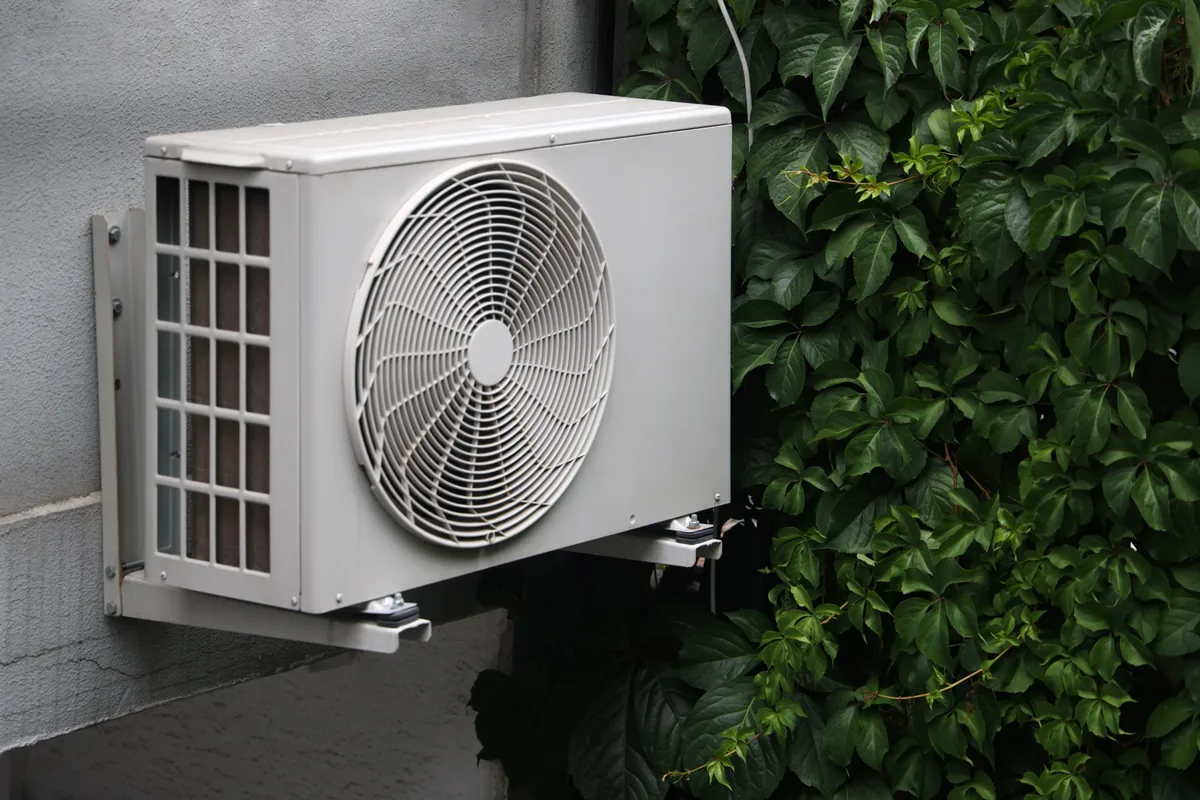
What a heat pump costs to run in Ontario is not a single number, and anyone who gives you one without looking at your bills is guessing. It is a ratio between two prices you already pay: the cost of a kilowatt-hour of heat from natural gas and the cost of a kilowatt-hour of heat from electricity after the heat pump multiplies it. This page gives you the arithmetic, the seasonal performance to plug into it, and the fixed charges that quietly decide the outcome.
The Two-Line Calculation That Settles It
Take your Enbridge Gas bill and add up everything you pay to get gas delivered, then divide by the cubic metres used to get an all-in price per cubic metre. A cubic metre of natural gas holds roughly 10.3 kilowatt-hours of energy, and a 96% furnace delivers about 9.9 of them into the house. So dividing your all-in price per cubic metre by ten gives you, close enough, the cost of one kilowatt-hour of gas heat.
Now take your hydro bill, work out your all-in price per kilowatt-hour the same way, and divide it by the heat pump's coefficient of performance — the number of units of heat it produces per unit of electricity. That is the cost of one kilowatt-hour of heat pump heat. Compare the two figures. Everything else on this page is about what COP to use and which charges belong in the all-in price.
What COP a Cold-Climate Heat Pump Actually Delivers Here
COP is not fixed; it falls as it gets colder, because the outdoor coil has less heat to work with. For a properly sized cold-climate air-source unit in this region, a reasonable set of working numbers is around 3 in mild autumn and spring weather, roughly 2 to 2.5 through a typical January day, and somewhere near 1.5 to 1.7 when the thermometer drops toward -20°C. Defrost cycles shave a little off the seasonal average, and electric backup heat runs at exactly 1.
That distribution is why the seasonal average matters more than the worst night. Most of an Ontario heating season is spent between -5°C and +8°C, not at the design temperature, so the hours that dominate your bill are hours the heat pump handles efficiently. Geography shifts this a little too: lakeshore neighbourhoods in Burlington and Oakville hold a degree or two above the Hamilton Mountain and Flamborough on a still, clear night, and those degrees land in the efficient part of the curve.
Your Electricity Plan Changes the Answer
- Time-of-use: winter weekday mornings and early evenings are on-peak, midday is mid-peak, and nights and weekends are off-peak. A heat pump runs hardest through the cold morning peak, which is the worst possible overlap.
- Tiered: you pay one price up to a monthly threshold and a higher price beyond it. The residential winter threshold is 1,000 kWh per month, and a whole-home heat pump can push a house past it in January that never came close before.
- Ultra-low overnight: a very cheap window overnight, a cheap weekend, and an expensive weekday evening peak. It rewards houses that can shift load into the night — a well-insulated home with a slab or a large thermal mass benefits more than a leaky one.
- Your local utility — Burlington Hydro, Oakville Hydro or Alectra Utilities in Hamilton — bills the same regulated energy prices, but delivery charges differ between them, which is why the all-in figure from your own bill beats any published rate.
The Fixed Costs Almost Everyone Forgets
Free quotes, written pricing.
If you keep a gas meter for a furnace, water heater, stove or fireplace, you keep paying the monthly customer charge whether you burn much gas or not. A hybrid system therefore saves less than the fuel arithmetic suggests, because that fixed charge does not shrink. Households that go fully electric — heat pump, heat pump water heater, induction range — remove the meter and the charge along with it, and that removal is often worth more than a few percent of efficiency.
On the other side of the ledger, the federal consumer carbon charge on natural gas was removed in April 2025, which lowered the variable cost of gas heat across Ontario. Any comparison written before that date overstates the heat pump's advantage against gas. It is one of the reasons we insist on running the numbers with a current bill rather than a spreadsheet from a few years ago.
Where the Savings Are Not Ambiguous
The arithmetic above can go either way against an efficient gas furnace. It does not go either way against electric resistance heat or oil. A heat pump replacing baseboards or an electric furnace cuts the electricity used for heating by roughly half to two-thirds, because you are moving from a COP of 1 to a seasonal average around 2.5. In a baseboard-heated townhouse or a house still burning oil in rural Flamborough, the heat pump is the cheapest heat available and the payback question is straightforward.
- Baseboard or electric furnace: large, reliable savings — this is the strongest case in Ontario.
- Oil: large savings, plus you stop maintaining a tank and arranging deliveries.
- Propane: usually strong savings, with the same caveats about backup capacity on the coldest nights.
- Efficient gas furnace: depends entirely on your two rates and whether you keep the gas meter. Sometimes a modest saving, sometimes a wash, occasionally worse.
What Improves the Running Cost After Installation
- Set the auxiliary heat lockout properly. Backup strips at COP 1 will quietly erase the savings if they are allowed to run whenever recovery is slow.
- Stop deep setbacks. Recovering 4°C at 6 a.m. usually calls in backup heat, which costs more than the setback saved.
- Keep the filter and the outdoor coil clean; both cost capacity and therefore COP.
- Keep snow and ice clear around the outdoor unit so defrost water can drain and air can move through the coil.
- Check your rate plan once a year — moving between tiered, time-of-use and ultra-low overnight is free and can matter more than any equipment tweak.
Verdict: Whose Bills Go Down and Whose Do Not
Households heating with electricity, oil or propane save money running a heat pump in Ontario, and the colder the house, the more they save. Households with a working high-efficiency gas furnace should treat the running cost as roughly a wash and buy for the other reasons — cooling included in the same equipment, lower carbon, and a rebate that takes a large bite out of the installed price. A 3-ton cold-climate heat pump installs for $9,500–$15,000 and current Ontario programs return up to $7,500, which changes the purchase decision far more than a few cents per kilowatt-hour.
For a deeper look at the equipment side of the decision, read heat pump vs furnace in Ontario or our answer on how much electricity a heat pump uses, and gas vs electric heating in Ontario runs the same arithmetic against baseboards, propane and oil. When you want the calculation done on your actual bills and your actual house, see our heat pump installation service or ask us to run the numbers.
Frequently asked questions
Is a heat pump cheaper to run than a gas furnace in Ontario?
It depends on your two rates. Divide your all-in gas price per cubic metre by ten to get the cost of a kilowatt-hour of gas heat, then divide your all-in electricity price per kilowatt-hour by the heat pump's COP. Against electric baseboards or oil the heat pump wins clearly. Against an efficient gas furnace it is often close, and keeping the gas meter for other appliances narrows the gap further.
How much does a heat pump raise my electricity bill in winter?
Enough to notice, because heating that used to appear on the gas bill now appears on the hydro bill. The specific risk in Ontario is the tiered plan's 1,000 kWh monthly winter threshold — a whole-home heat pump can carry a January past it for the first time. Households that switch usually see the gas bill fall by more than the hydro bill rises, but the two bills move in opposite directions.
Does a heat pump still save money at -20°C?
At that temperature a cold-climate unit is running near a COP of 1.5 to 1.7, so it is still delivering more heat than the electricity it consumes, but the margin over gas has gone. Very few Ontario hours are that cold, which is why the seasonal average matters more than the worst night. In a dual-fuel system this is the point where a properly configured thermostat hands the job to the furnace.
Does backup heat make a heat pump expensive to run?
It can, and it is the most common reason a heat pump underperforms its estimate. Electric backup produces one unit of heat per unit of electricity, against two to three from the compressor, so unnecessary hours of auxiliary heat multiply the cost of that heat. Setting an outdoor temperature lockout for auxiliary heat during commissioning is the fix, along with avoiding deep overnight setbacks.