
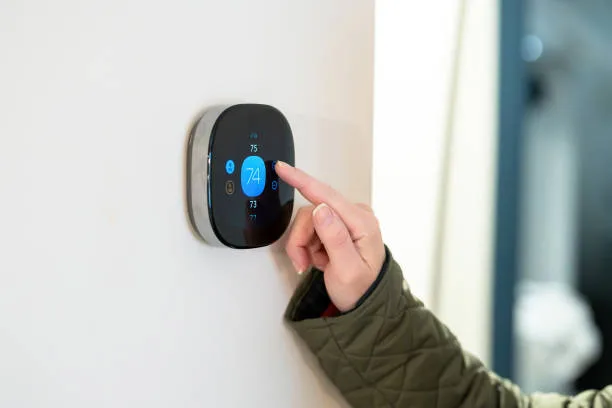
The best thermostat settings for a Canadian winter are 20–21°C when you are home and awake, 17–18°C overnight and while the house is empty, and never below 16°C if you are away for days. A 3°C setback is the sweet spot: deep enough to matter on the bill, shallow enough that a correctly sized furnace can recover it before you need the house warm. Everything beyond those numbers is about your particular house — its vintage, its ductwork and which floor you sleep on.
One caveat before the detail: this is furnace advice. If you heat with a heat pump the strategy inverts and an overnight setback usually costs you money, which we cover in heat pump thermostat settings.
Why Setback Works: Heat Loss Follows the Temperature Gap
Your house loses heat in proportion to the difference between inside and outside, so shrinking that difference shrinks the loss. On a -10°C night, holding 21°C means maintaining a 31-degree gap across every wall and window. Dropping to 18°C makes it a 28-degree gap. That is roughly a tenth less heat leaving the building for those eight hours, every night, right through the season.
The same arithmetic explains why setback pays more in a draughty house than a tight one, and more in February than in November. The colder and leakier the situation, the more those three degrees are worth.
The Four Settings Worth Programming
- Home and awake: 20–21°C. Most people are comfortable at 20°C once the humidity is right, because dry air at 20°C feels closer to 18°C.
- Asleep: 17–18°C. Sleep quality generally improves in a cooler room, and this is the longest uninterrupted block of the day.
- Out of the house on a weekday: 17–18°C, with the recovery timed to finish before you walk in rather than to begin then.
- Away for more than a couple of days in winter: 16°C is the floor. Below that, water lines in exterior walls, garages and unheated crawl spaces are at risk, and most home insurance policies carry conditions about maintaining heat in an unoccupied home.
Cancel the Setback When It Drops Below -20°C
On the coldest nights, hold one temperature and leave it there. Furnaces in Halton and Hamilton are sized against the design temperature in the Ontario Building Code's climatic data for the municipality — a cold night, not an extreme one. When the actual overnight low runs well past that, the furnace has no spare capacity left to claw back three degrees in the morning, so it simply runs flat out for hours and the house still feels cold. You have paid for continuous run time and collected none of the setback benefit.
That same night is when pipes freeze and when a furnace that had been fine finally quits. If yours is fifteen years old or more, a January cold snap is a poor moment to discover its limits, and the warning signs are worth reading before the season rather than during it.
Where the Advice Breaks: Two-Storey Subdivision Houses
Stratification eats the setback. In the 1970s to 1990s two-storeys through Millcroft, Headon Forest and Glen Abbey, the second floor typically sits 2–3°C cooler than the main-floor hallway where the thermostat hangs, because the returns are all downstairs and the supply runs to the bedrooms are the longest in the system. Programming 17°C at the thermostat can therefore mean 15°C in a back bedroom over the garage by five in the morning.
Free quotes, written pricing.
Two fixes, in this order. First, balance the system — set the dampers in the basement trunk and close the basement supplies down slightly in winter so more air reaches the top floor. Second, use the thermostat's circulate setting for a few minutes each hour to mix the floors instead of raising the setpoint for the whole house. When one room is always the offender, why one room is always cold works through the diagnostic order.
What a Smart Thermostat Adds, and What It Does Not
- Adaptive or early-start recovery: the thermostat learns how long your house takes and begins early, so 21°C arrives at 6:30 rather than starting then. This is the single feature that makes a setback schedule livable.
- Geofencing: genuinely useful for households with irregular schedules, close to pointless for a fixed weekday routine.
- Remote sensors: the answer to the stratified two-storey above, because you can average the hallway with the coldest bedroom instead of guessing.
- Runtime reporting: the honest measure of whether a change helped, and the only one that is not a feeling.
- What it does not add is capacity. A smart thermostat on an undersized, dirty or badly ducted system just documents the problem in higher resolution.
If you are choosing between the two most common models, ecobee vs Nest compares them specifically for Ontario homes, including how each one handles remote sensors and staged equipment.
Condos and Fan Coils Are a Different Machine
In a condo running a two-pipe fan coil, your thermostat has far less authority than you think. The building circulates either hot or chilled water through the risers and switches over seasonally, so on a warm January afternoon your fan coil may be able to deliver warm air or nothing at all, with no third option.
Setback strategy in that situation is mostly about fan settings and about not fighting a south-facing wall of glass all afternoon. Building rules also govern what an owner may change, and condo HVAC sets out what is normally the unit owner's responsibility and what belongs to the corporation.
A Weekday Schedule You Can Copy
Four periods is all a normal weekday needs, and more than four usually means the thermostat is fighting itself. Adjust the clock times to your household, keep the temperatures, and let adaptive recovery handle the ramp.
- 6:00 a.m. — 21°C, reached by the time the first person is up rather than beginning to climb then.
- 8:30 a.m. — 17–18°C once the house empties, held through the working day.
- 4:30 p.m. — back to 20–21°C, timed so the recovery finishes before anyone walks in cold and turns the dial to 24°C in frustration.
- 10:30 p.m. — 17–18°C for the overnight block, which is the longest and therefore the most valuable setback of the day.
- Weekends — usually two periods rather than four, with the daytime setback removed entirely if the house is occupied.
The single most common programming mistake is treating those clock times as when heating starts rather than when the temperature should already have arrived. On a cold morning in an average two-storey, the furnace may need the better part of an hour to move the house three degrees, so a 6:00 a.m. schedule without early-start recovery delivers a comfortable house at seven and a cold shower at six.
None of these settings will rescue a furnace that short-cycles, a filter last changed in the spring, or duct runs that never reached the far bedroom in the first place. If your bills climbed this winter while your habits stayed the same, why heating bills spike is the place to start, and we are glad to take a look at what the system is actually doing.
Frequently asked questions
Is it cheaper to leave the heat at one temperature all day?
For a gas furnace, no. A house loses heat faster the warmer it is kept, so hours spent at a lower temperature always cost less than hours spent at a higher one, and the energy used during recovery does not cancel that out. The exception is a heat pump, where recovery often runs on expensive electric backup heat.
What temperature should I set when away for a week in winter?
16°C is a sensible floor, and lower is a false economy given what a burst pipe costs. Have someone check the house, know where the main water shut-off is, and read the unoccupied-home condition in your insurance policy before you leave, because the required check-in interval differs between insurers.
How much does turning the thermostat down actually save?
It depends on how leaky your house is and how cold it is outside, because the saving comes from reducing the indoor-outdoor temperature difference. A 3°C setback on a cold night cuts heat loss by roughly a tenth for the hours it is in effect. Older, draughtier houses see more benefit than tight new builds.
Why does my house feel cold at 21°C?
Usually low humidity, cold surfaces, or air movement. Dry air pulls heat off your skin faster, single-glazed windows and uninsulated exterior walls radiate away from you even in a warm room, and a draught along the floor reads as cold regardless of the air temperature. Fix the humidity first because it is the cheapest of the three.
Should the fan be on Auto or On in winter?
Auto for most houses. Continuous fan operation mixes the floors, which helps in a stratified two-storey, but it also moves room-temperature air through the ducts between heat calls and can feel draughty. If you want mixing without the draught, use the circulate setting that runs the blower for a set number of minutes each hour.