
Replacing an oil furnace in Ontario is mostly a gas versus heat pump decision, and one question settles it before any others: is there a natural gas main on your road? Where there is, converting to gas is normally the cheapest heat available and the conversion is well-trodden. Where there is not — the situation on a lot of rural Flamborough, north Burlington and Milton addresses — a cold-climate heat pump with electric or fuel backup beats both a new oil furnace and a propane conversion on running cost, and it is the route Ontario and federal programs are actively paying people to take.
Step One: Find Out Whether Gas Is Genuinely Available
The question is not whether there is gas in the area. It is whether there is a main in front of this property and what a service connection to it would cost. Enbridge Gas will confirm both, and the answer changes address by address along a rural road. A long private run across a deep lot is priced by the metre, and we will not publish a figure for it because it is entirely site-specific.
Ask for the connection quote in writing before you compare anything else, and check what else it drags in: where the meter can sit, the clearances its regulator vent needs from your windows and vent terminals, and the piping from the meter into the house. Our gas line installation service covers what that work involves once the utility has done its part at the road.
The Oil Tank Is Its Own Project, Not a Footnote
Fuel oil systems in Ontario fall under TSSA. A distributor is required to have your system comprehensively inspected on a fixed cycle — every 10 years — and can refuse to deliver to a system that does not comply. Tank age and location also drive what an insurer will write, and an underground tank is a liability most buyers and most insurers will not take on.
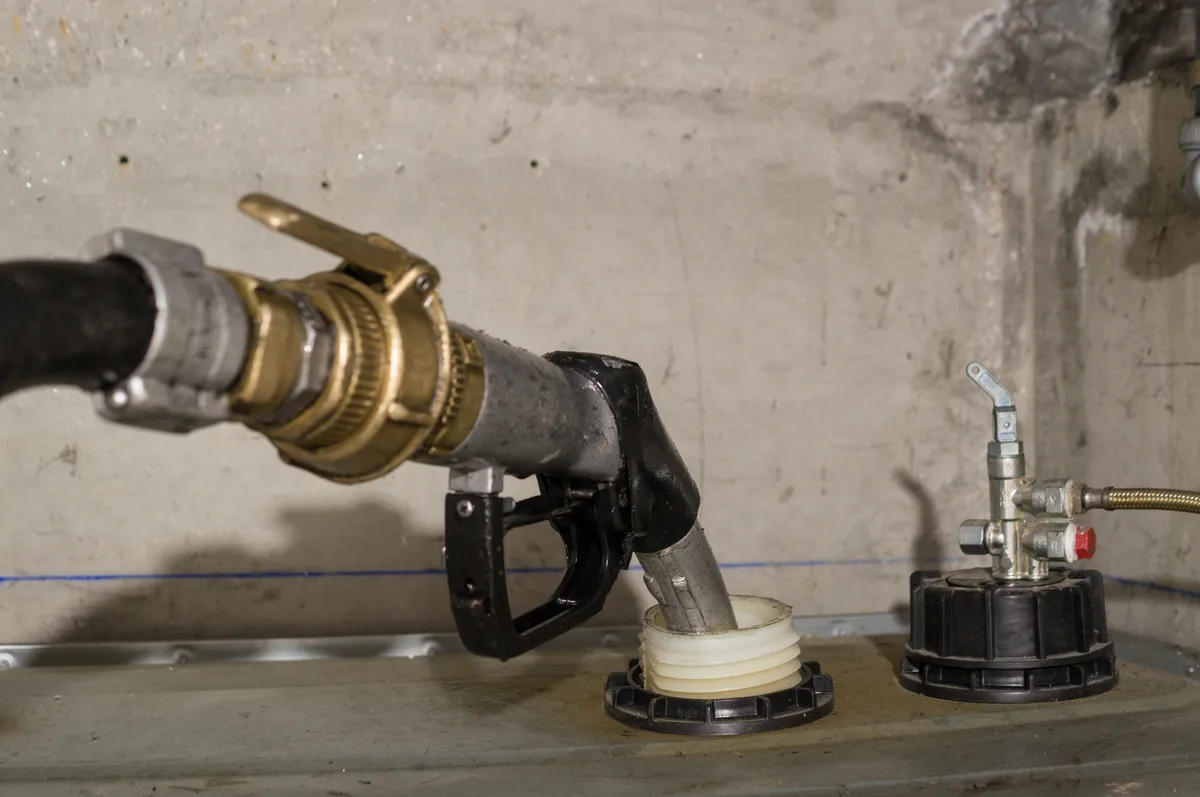
So decommissioning belongs in the scope of the replacement, not in a conversation next spring. The tank is drained and cleaned, the fill and vent piping comes off the wall, the tank is removed or cut up for disposal, and you keep the documentation for your insurer and your eventual buyer. If there is staining under the tank or on the floor slab, raise it at the quoting stage — a contaminated site is a different project entirely, and discovering it during a house sale is the worst possible timing.
Option One: Convert to a Natural Gas Furnace
This is the straightforward one where the main exists. A 95 percent or better condensing furnace goes in, vents in plastic out a sidewall, drains its condensate, and takes gas from the new meter. The oil furnace and tank leave, and the chimney is assessed for whatever is left on it.
Ductwork is rarely the obstacle: oil furnaces move a lot of air through generously sized trunks, so the existing system usually handles a gas furnace without modification, though we still measure static pressure rather than assume. Budget $4,500–$7,500 for the high-efficiency install itself, and note that a gas furnace on its own earns no rebate under the current Ontario program — the money goes to electrification.
Option Two: Cold-Climate Heat Pump
Free quotes, written pricing.
This is the strongest option wherever there is no gas main, because oil is an expensive way to buy heat and a cold-climate heat pump delivers several units of heat for each unit of electricity across most of an Ontario winter. Backup comes either from electric elements in the air handler or from keeping a fuel-fired furnace for the deep cold.
Two rural realities shape the design. First, the electrical service: a farmhouse with a well pump and a septic pump already on a 100-amp panel needs a proper load calculation, and sometimes a service upgrade before any equipment is ordered. Second, outages. Full electric strip backup is a large load for a portable generator, while a fuel-fired furnace needs only its blower and controls. If your road loses power regularly, that argues for keeping a combustion backup rather than going all-electric. Expect $9,500–$15,000 for a three-ton cold-climate system, within a wider band of $6,000–$16,000 before rebates depending on size and electrical work.
The Rebates That Exist Specifically for Oil-Heated Homes
- The federal Oil to Heat Pump Affordability program was the grant written for exactly this switch, and it stopped taking applications on July 31, 2026. Applications filed before that date are still being processed, and what those applicants have to finish is set out on the program page.
- Ontario's Home Renovation Savings Program pays a higher heat pump rebate to homes that do not heat with natural gas, and an oil-heated house sits in that higher tier. The amounts are set by the program and revised periodically, so take them from the program page rather than from a contractor's brochure.
- Across systems, current Ontario rebates run $500–$7,500, and the paperwork is filed as part of the installation rather than left with you.
- Converting from oil to gas does not unlock the same support. The programs are aimed at electrification, so the gas route competes on running cost and simplicity rather than on incentives.
Option Three: Propane. Option Four: Another Oil Furnace.
Propane is a genuine option where there is no main and you want a familiar forced-air system — mechanically it is a gas furnace with different orifices and a tank in the yard, and we cover the specifics in our guide to propane furnaces for rural Flamborough and Halton.
A new oil furnace is the weakest of the four. You keep the deliveries, the tank inspection cycle, the annual nozzle and filter service, and the insurance questions, and you collect no rebate for any of it. It makes sense in a narrow case: the tank was recently replaced, the ducts and chimney are sound, the budget is fixed, and the house is not one you plan to sell soon. Do not compare fuels on price per litre — compare them on delivered cost per unit of energy, which our propane page works through, because a litre of oil and a litre of propane are not the same amount of heat.
Verdict: Which Route Fits Which House
- Gas main on the road and sound ductwork: convert to a condensing gas furnace, remove the tank, and keep the option of adding a heat pump later as a hybrid.
- No gas main: a properly sized cold-climate heat pump, with the backup chosen around your electrical service and your outage risk. The federal oil-to-heat-pump grant written for exactly this house stopped taking applications on July 31, 2026, so budget around the provincial per-ton rebate at the higher non-gas rate.
- No gas main, a large draughty rural house and frequent outages: heat pump for the running cost, propane furnace for the deep cold and for the nights the power is out and the generator is running.
- A new oil furnace: only with a recent tank, a fixed budget and no near-term sale — and go in knowing oil equipment narrows your buyer pool later.
- In every case, settle the tank decommissioning and the chimney in the same written quote as the furnace. Those two items are where oil conversions go over budget.
We work across rural Halton and the Hamilton concessions as well as the towns, and we will price the gas conversion and the heat pump against each other for the same house rather than steering you to one. Start with our heating service, or ask for both quotes and we will run the load calculation before either.
Frequently asked questions
Can I keep my oil furnace as backup for a heat pump?
Yes, and it is a common transitional setup. The heat pump carries the mild and moderate weather while the oil furnace fires only below the balance point, which cuts your oil consumption dramatically without a second appliance purchase. The conditions are that the tank is compliant and insurable and the furnace is in good order, because you are keeping the tank rules along with the equipment.
What happens to the old oil tank?
It gets drained, cleaned and removed as part of the job, with the fill and vent piping taken off the exterior wall and the openings made good. Keep the documentation — insurers and buyers ask for it. An underground tank is a bigger exercise involving excavation and soil assessment, and any sign of staining or odour around the tank needs to be raised before work is scheduled, not during.
Is propane cheaper to run than oil?
It depends on delivered prices in your area, which move through the season, so compare your own invoices rather than a published claim. Do it on energy content, not volume: a litre of propane carries roughly two-thirds of the energy in a litre of heating oil, so a lower price per litre does not automatically mean lower cost per hour of heat. Propane equipment is cheaper to service and burns cleaner, which is a separate point in its favour.
Will a heat pump keep a rural farmhouse warm without gas or oil?
It can, provided it is sized from a real heat-loss calculation rather than from the old furnace's rating, and provided the backup is adequate. Older rural houses are frequently draughty with additions on them, which makes the calculation more important, not less. Where the electrical service or the outage risk rules out full electric backup, pairing the heat pump with a propane furnace gives you the same comfort with a smaller electrical demand.