
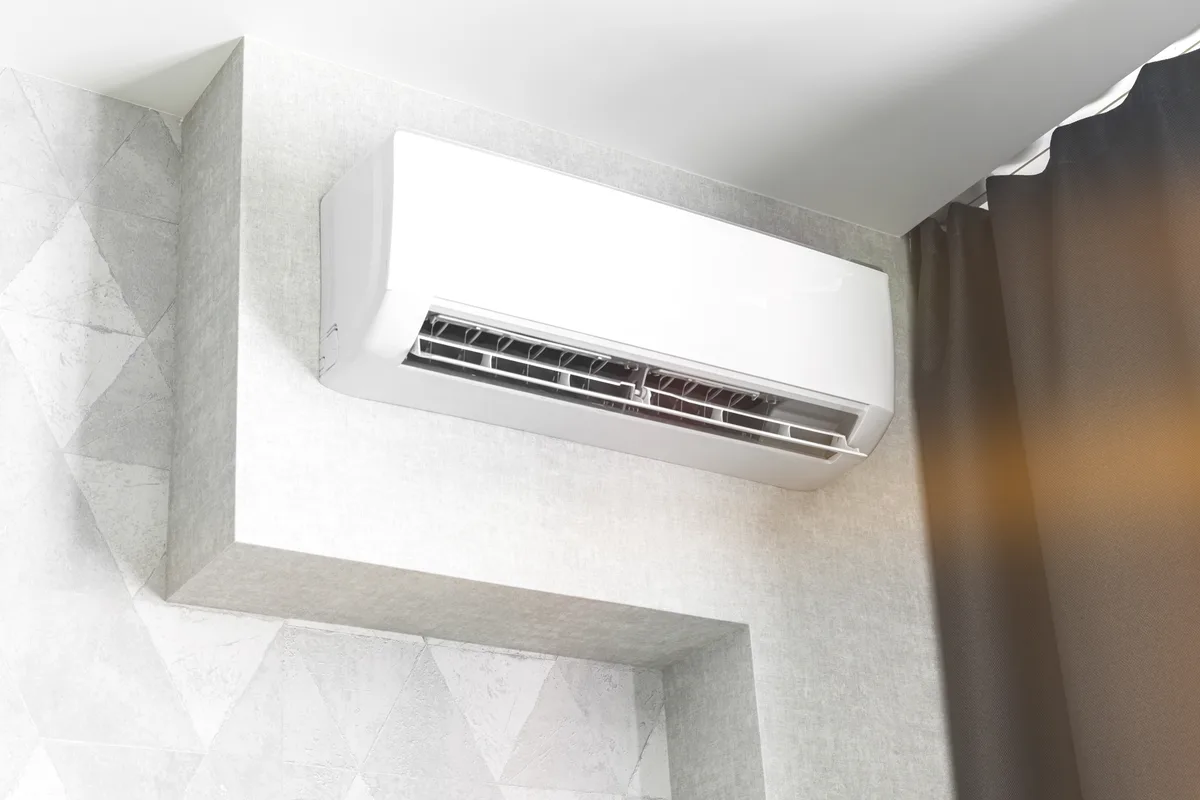
Single-zone vs multi-zone mini-split: which to install depends on two things you can measure, the number of rooms and the size of the smallest one. For one or two rooms, separate single-zone systems are the better install: each outdoor unit can throttle down to match a small room, and each carries the higher efficiency rating. Multi-zone earns its place at three or more rooms, when outdoor wall space, panel capacity or the look of the house rules out a row of outdoor units. The rule we use on quotes: any room whose load sits below the multi-zone outdoor unit's minimum output gets its own single-zone system.
How single-zone and multi-zone mini-splits differ
A single-zone system is one outdoor unit, one indoor head and one line set between them. A multi-zone system is one larger outdoor unit feeding two to five heads, each on its own line set, or more heads through a branch box. Both use an inverter compressor, both heat and cool if you buy the heat pump version, and both need a condensate drain at every head.
The difference that matters is what the compressor does when only part of the system is calling. On a single-zone unit the compressor serves one room and nothing else. On a multi-zone unit one compressor has to satisfy a living room at dinner time and a single bedroom at 2 a.m., and those are very different jobs.
The minimum capacity problem: why multi-zone systems short-cycle
Every inverter compressor has a floor, a lowest output it can hold without shutting off. A 9,000 BTU/h single-zone unit can typically turn down to somewhere between 1,500 and 3,000 BTU/h. A three- or four-port outdoor unit commonly bottoms out several times higher, and it carries that floor no matter how few heads are running.
Picture one small bedroom calling on a mild September night. The room may need less than 2,000 BTU/h, the outdoor unit cannot go that low, so it overshoots, shuts off, waits and starts again. That is short-cycling, and it is the built-in weakness of a multi-zone system sold as one head per room.
- The outdoor unit starts and stops every few minutes when only one head is on.
- The bedroom head blows cold, goes quiet, then blows cold again, and the humidity never settles.
- Idle heads feel slightly warm in heating mode, because some refrigerant still passes through them while another room is calling.
- Hydro use runs higher than the efficiency rating on the label suggested.
The minimum is a published number. Ask for the submittal sheet for the exact outdoor unit, or look the model up on the NEEP cold-climate heat pump list, which shows minimum and maximum capacity at several outdoor temperatures. Then compare that floor with the load of your smallest room from a proper mini-split sizing calculation.
Efficiency, cold-weather capacity and rebates are set per matched combination
Multi-zone combinations usually rate lower than the same brand's single-zone units, on both seasonal efficiency and heating output in deep cold. A single-zone flagship is one compressor tuned to one coil. A multi-zone outdoor unit has to work with many possible mixes of heads, and its ratings reflect that compromise.
The rating also belongs to the combination, not to the outdoor unit alone. AHRI certifies each outdoor model with a specific set of indoor heads, and swapping one head can change the SEER2 and HSPF2 on the certificate. Ask for the AHRI reference number for the exact combination on your quote.
That number matters for money too. Under the Home Renovation Savings Program a heat pump has to appear on Natural Resources Canada's qualified products list, approval has to come before the install, and the work has to be done by a participating contractor. Do not assume the multi-zone version qualifies because the single-zone unit in the same brochure does; our Ontario heat pump rebates page explains how to check.
Free quotes, written pricing.
One outdoor unit or several: circuits, line sets and redundancy
Fewer boxes outside is the real argument for multi-zone. One outdoor unit means one pad or wall bracket, one dedicated circuit and one disconnect, which matters on a narrow side yard or a 100-amp panel with two free slots. Three single-zone systems mean three outdoor units, three circuits and three spots where a neighbour's window or the lot line has to be considered.
- Electrical: each outdoor unit needs its own dedicated circuit and a disconnect beside it, wired by a licensed electrical contractor under an ESA notification. Several single-zone units can fill a panel that one multi-zone unit would not.
- Line sets: every manufacturer limits the length and height of each line set, and multi-zone units add a limit on the total. A single-zone outdoor unit sits right outside the room it serves; with multi-zone, every line has to travel back to one spot, across the house if need be.
- Branch boxes: larger multi-zone systems split the refrigerant in a branch box in the basement or attic. It adds joints, needs to stay accessible for service, and is one more place a leak can start.
- Redundancy: if the compressor or inverter board fails on a multi-zone system, every room is down until the part arrives. With separate systems you lose one room and the rest of the house carries on.
- Placement: outdoor units need clear airflow, a mount above the snow line if they heat in winter, and somewhere defrost water can drain without icing a walkway.
A multi-zone system also holds all of its refrigerant in one circuit. A leak at any flare fitting empties the whole system, and finding it means checking every head and every joint. On single-zone systems a leak is confined to one room's equipment.
What single-zone and multi-zone mini-splits cost installed
- Single-zone (one indoor head): $4,000–$7,000 installed
- Dual-zone: $7,500–$11,000 installed
- Three to four zones: $10,000–$16,000+ installed
- Cold-climate heat pump models add roughly $500–$1,500 per zone
Two single-zone installs usually total somewhat more than one dual-zone system. The gap narrows when the two rooms sit at opposite ends of the house and a multi-zone layout would need long line sets. Line-set length, how the lines are concealed, condensate pumps, electrical work and brick versus siding move the price inside each band; general figures for all our work are on the pricing page.
Which Halton and Hamilton houses suit each layout
- One room that never worked, such as a bonus room over the garage, a sunroom, a finished attic or a home office: single-zone, every time.
- A 1950s–60s bungalow with a boiler and radiators: one head in the main living area and one for the bedroom end. Two single-zone systems usually beat one dual-zone here, because the bedroom load is small.
- A pre-war brick two-storey with no ducts, limited outdoor wall space and a tight panel: this is where multi-zone makes sense, with the smallest bedrooms sharing one slim ducted head and not getting a head each.
- A rural home on electric baseboards beyond the gas mains in Caledon or Flamborough: heating is the main job, so low-temperature output decides it. Single-zone cold-climate units in the main rooms keep the strongest cold-weather capacity.
Houses that already have ducts are a different question, and our guide to air conditioning without ductwork compares ductless against the other no-duct options.
Verdict: single-zone for one or two rooms, multi-zone only when the house forces it
- Install single-zone systems if you are conditioning one or two rooms, if any room is a small bedroom or office, if winter heating is the main purpose, or if you want one failure to cost you one room.
- Install multi-zone if you need three or more heads, the rooms are all medium to large, and outdoor space or panel capacity cannot take several units. Size the outdoor unit to the load, not to the sum of the head sizes.
- Mix them when the house calls for it: a multi-zone unit for the main living spaces and a separate single-zone unit for the one small or distant room.
ZK Mechanical services Mitsubishi, Fujitsu and Daikin ductless systems from our Burlington shop, and quotes are free and in writing. Ask us to list the outdoor model, each head, the AHRI number and the minimum capacity, so the layout can be checked against your smallest room. See our ductless mini-split service, or book a quote.
Frequently asked questions
Can I add another head to a multi-zone mini-split later?
Only if the outdoor unit was bought with a spare port and enough capacity for the extra head. A two-port unit cannot become a three-port unit, and a full system would need its outdoor unit replaced. If a future room is likely, either leave a port spare and accept a higher minimum output today, or plan a separate single-zone system for that room.
Can one head heat while another head cools?
No. A residential multi-zone heat pump runs every head in the same mode, because all of them share one compressor and one refrigerant circuit. If a south-facing office needs cooling in April while a north bedroom wants heat, one of them waits. Separate single-zone systems do not have that limit, since each has its own outdoor unit.
Is one multi-zone unit cheaper to run than several single-zone units?
Usually not. Matched single-zone units carry higher efficiency ratings, and they can turn down far enough to run steadily in a small room. A multi-zone unit serving one head at a time spends much of its life cycling at its minimum output, which wastes electricity. The multi-zone advantage is installation cost and outdoor space, not the hydro bill.
Does each mini-split outdoor unit need its own breaker?
Yes. Each outdoor unit runs on a dedicated circuit sized to its nameplate, with a disconnect beside the unit, and the indoor heads take their power from the outdoor unit. Three single-zone systems therefore need three circuits. On a full panel that can mean a subpanel or a service upgrade, which belongs in the quote before you choose a layout.