
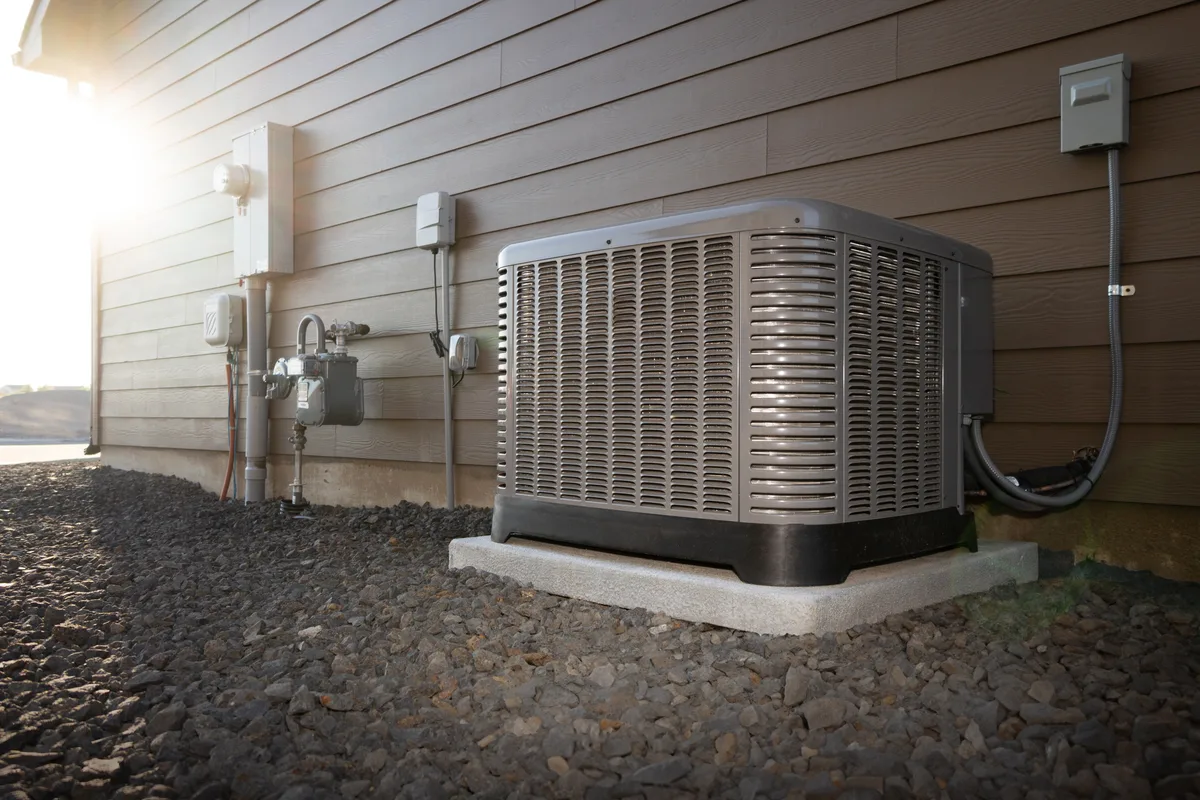
Single-stage vs two-stage vs variable-speed air conditioners differ in one thing, how many output levels the compressor has, and that decides humidity, noise and repair cost more than it decides the hydro bill. Single-stage runs at 100% or not at all. Two-stage runs at roughly 65–70% most of the time and steps to 100% on the hottest afternoons, and a variable-speed inverter modulates anywhere from about 25–40% up to 100%. For most two-storey homes near Lake Ontario, two-stage on a furnace with an ECM blower is the right buy; variable-speed pays when the furnace can communicate with it and humidity or noise is the complaint.
What the compressor does at each stage count
- Single-stage: one speed. The contactor closes, the compressor and fan run flat out, the thermostat is satisfied in ten or fifteen minutes, and everything stops. The starting parts are a run capacitor and a contactor, both generic and inexpensive.
- Two-stage: a scroll compressor with an unloading solenoid that lets it pump at about two-thirds capacity, or at full. The thermostat or furnace board calls low stage first and adds high stage only when low cannot hold the setpoint.
- Variable-speed: an inverter drive board turns household power into variable-frequency power and spins the compressor at whatever speed the load needs. Trane, for example, lists its 18 TruComfort unit at 30–100% capacity. The outdoor fan and, on matched systems, the indoor blower follow the compressor.
Why long, slow cycles remove more humidity
An air conditioner dries the air only while the indoor coil is cold and wet. For the first several minutes of a cycle the coil is still cooling down and the water it collects has not begun to drain. A single-stage unit that satisfies the thermostat in ten minutes spends much of its run time in that start-up phase, and the water left on the fins can evaporate back into the house once it stops.
A two-stage or variable-speed unit on low runs two or three times longer for the same cooling. The coil stays below the dew point, water drains steadily to the condensate line, and indoor humidity settles nearer 50% than 60%. In a July week when the air off Lake Ontario sits heavy over Burlington and Oakville, that is the gap between a house that feels cool at 24°C and one that feels sticky at 22°C.
The furnace blower decides whether staging works
Low stage only dries the air if the blower slows down with it. An air conditioner wants roughly 350 to 400 CFM of airflow per ton. Cut the compressor to two-thirds and leave the blower at full speed, and the coil runs warmer, so it cools the air without wringing much water out of it. A fixed-speed PSC blower in an older furnace cannot slow down on command.
That makes the indoor half of the quote as important as the outdoor unit. A two-stage condenser needs a furnace with an ECM blower and a board that accepts a two-stage cooling call. A variable-speed condenser usually needs a matched communicating furnace or air handler and the manufacturer's own control, though a few inverter models are built to run from ordinary 24-volt thermostat wiring.
- Is the existing furnace blower a PSC, a constant-torque ECM or a variable-speed ECM?
- Does the thermostat cable have a spare conductor for the second stage, or will a new cable be pulled?
- Which control runs the system, and is it included in the price?
SEER2 ranges and outdoor sound levels by type
Manufacturer listings for current R-454B and R-32 models fall into three bands. The figures are for matched systems under the manufacturer's test conditions, and the sound ratings for staged and inverter units are taken at the lowest speed.
Free quotes, written pricing.
- Single-stage: about 13.4 to 17 SEER2, and roughly 71 to 73 dB(A) outdoors.
- Two-stage: about 16 to 18 SEER2, and around 67 dB(A).
- Variable-speed: about 18 to 26 SEER2, and 55 to 60 dB(A) at minimum speed on the quietest models.
A 10 dB difference is heard as roughly double the loudness, so the step from a single-stage unit to a good inverter is obvious from a patio chair. What the efficiency gap is worth in kilowatt-hours is a separate calculation, and our 14 vs 16 vs 18 SEER comparison works it through for an Ontario summer.
Repair costs after the warranty ends
More stages mean more electronics, and electronics are what fail expensively. On a single-stage unit the common failures are a capacitor or a contactor at $150–$350, parts that ride on every service truck. A two-stage unit adds the unloader solenoid and a second-stage call, but otherwise it repairs like a single-stage.
A variable-speed unit replaces the contactor and capacitor with an inverter drive board. An ordinary control board replacement runs $400–$800; an inverter board costs more than that, is specific to the model, and has to come through the manufacturer's distributor, so the unit can sit idle for days in a heat wave. Power surges, heat and moisture are what kill these boards. Register the warranty on time and ask what the labour coverage is, because a parts warranty does not pay the technician.
What each type costs installed in the GTA
Central air conditioning runs $3,500–$7,500 installed when the ducts are already there. Single-stage sits at the low end of that band, two-stage in the middle, and variable-speed with its communicating control at the top. If the furnace also has to change to give the new condenser a suitable blower, a combined furnace and AC replacement typically runs $7,500–$11,500.
No current Ontario program pays a rebate for a central air conditioner on its own, at any stage count. If the furnace is being replaced in the same job, its stage decision follows similar logic, and our furnace staging comparison covers that side.
Verdict: which stage count to put on the quote
- Buy single-stage if the house is a small bungalow or townhouse, the load calculation gives a size the ducts handle easily, the furnace has a PSC blower that is staying, or you expect to sell within five years.
- Buy two-stage if the house has two storeys, the upstairs runs warm and humid, and the furnace has or will have an ECM blower. This is the right answer for most detached two-storey homes.
- Buy variable-speed if the condenser sits near a bedroom window or a neighbour's patio, someone in the house is sensitive to humidity, and the matched communicating furnace and control are going in with it. Without the matched indoor equipment you are paying for capacity steps the system cannot use.
Sizing still comes first. An oversized two-stage unit short-cycles on low the same way a single-stage unit does on high, so the stage question should be answered after a load calculation, not before it. ZK Mechanical quotes all three types in writing, and you should expect the blower, the control and the AHRI-matched rating to be named on any quote you compare; see our air conditioner installation service or ask for a quote.
Frequently asked questions
Can I put a two-stage air conditioner on my existing furnace?
Yes, if the furnace has an ECM blower and a control board with a second-stage cooling terminal, and the thermostat cable has a spare wire. On an older furnace with a fixed-speed PSC blower the compressor will still stage, but the airflow will not drop with it, so you lose most of the humidity benefit. In that case buy single-stage or replace both.
Is a variable-speed air conditioner worth it in Ontario's short summer?
Not for the electricity savings alone. The cooling season is too short for the kilowatt-hours saved to repay the price difference. It is worth it when the unit sits close to a bedroom or a neighbour, when humidity is a health or comfort issue, and when the matched communicating furnace is part of the job. Otherwise two-stage gives most of the comfort for less.
Do variable-speed air conditioners break down more often?
They have more parts that can fail, and the parts cost more. The inverter board and the communicating control have no generic substitute, so a failure after the warranty ends is a larger bill and sometimes a wait for stock. The compressor itself is treated more gently, because it ramps up slowly and avoids the hard starts a single-stage compressor takes every cycle.
Will a two-stage or variable-speed AC fix a hot second floor?
It helps, because long low-speed cycles keep air moving between floors for more hours of the day. It will not fix ducts that cannot deliver enough air upstairs. If the supply runs to the second floor are undersized or there is no upstairs return, the duct problem has to be solved first, whichever stage count you buy.