
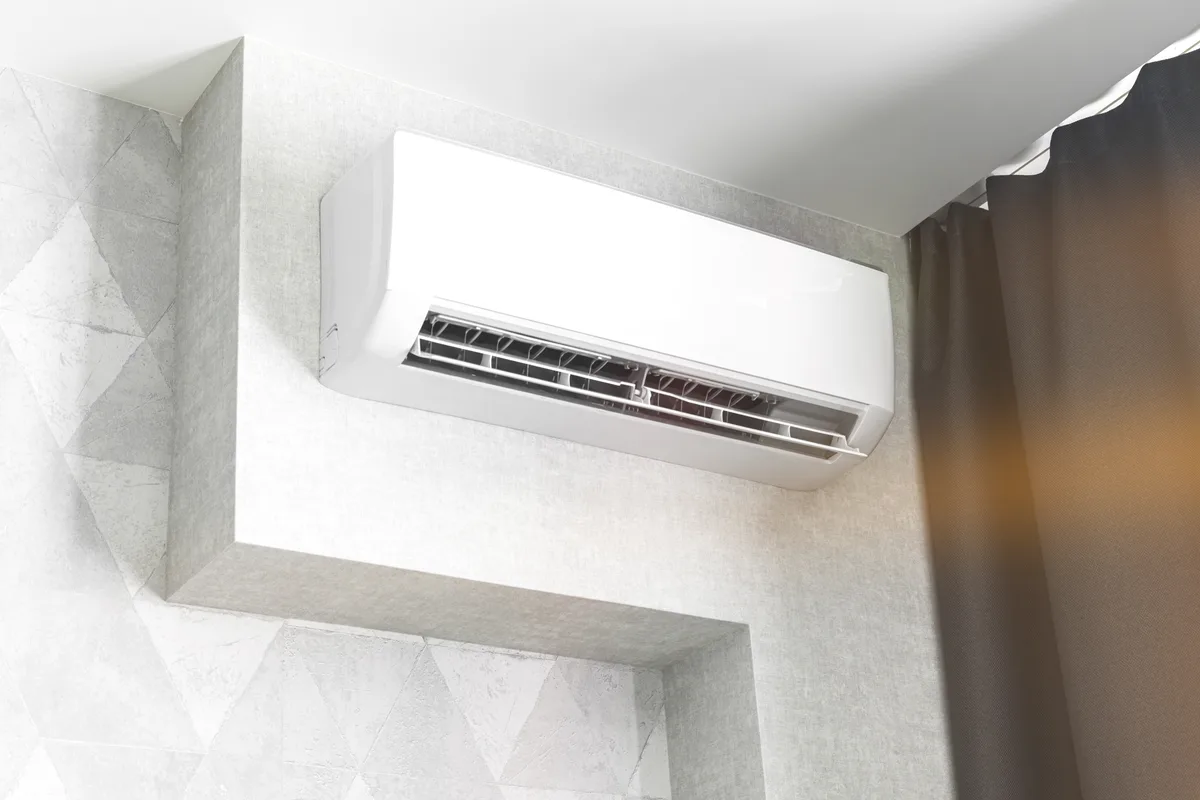
Air conditioning for a house without ductwork has four genuine answers: ductless mini-splits, a small-duct high-velocity system, a compact ducted mini-split hidden in a closet or knee wall, and window units. For a century home in Westdale or Dundas, or a brick house in Old Oakville heated by hot-water radiators, ductless is usually where it lands — $4,000–$7,000 installed for one zone, $7,500–$11,000 for two, and $10,000–$16,000+ for three or four. Retrofitting conventional ductwork into a finished house is possible but rarely the cheapest route to a cool bedroom.
Why Your House Has No Ducts, and Why That Matters
The reason shapes the answer. Pre-war brick houses in Westdale, Kerr Village, Dundas and Old Oakville were built with hot-water or steam radiators, so there was never an air distribution system to add a coil to. Some 1970s and 1980s builds, and a great many additions, used electric baseboard for the same reason of low installation cost. Condominium suites run fan coils fed by a building loop, which is a distribution system but not one you get to modify.
In a radiator house the heat is already handled well, so you are shopping for cooling alone — which changes the economics against a forced-air house where one system does both. In a baseboard house you are often better off buying a cold-climate ductless system that does both jobs and lets you stop paying resistance-heat rates, as our comparison of heat pumps and air conditioners explains.
Option 1: Ductless Mini-Splits
An outdoor condenser connects by a slim refrigerant lineset to one or more indoor heads mounted high on a wall, in a ceiling cassette, or as a low console. Each head has its own thermostat and its own capacity, and a multi-zone system shares a single outdoor unit between them.
- Single zone: $4,000–$7,000 installed. Dual zone: $7,500–$11,000. Three to four zones: $10,000–$16,000+. Cold-climate models add roughly $500–$1,500 per zone and give you winter heat as well.
- The install is genuinely minimal — a 75 mm hole per head, a lineset, a condensate line and an electrical circuit. In a plaster house that is a real advantage over cutting chases.
- Each head conditions the space it can see. A bedroom with the door closed needs its own head, which is why room count drives price more than square footage does.
- The visible box bothers some people more than others. Ceiling cassettes and low-wall consoles cost more and blend better in a period interior.
- Lineset covers run on the outside brick. Plan the route before install day so it follows a downspout or a corner rather than the middle of the front elevation.
The longer-form case for and against is on our ductless mini-split service page and in is a ductless mini-split worth it.
Option 2: Small-Duct High-Velocity
This is the system built specifically for houses like yours. A compact air handler in an attic or a closet feeds flexible tubing roughly the diameter of a coffee mug, which is snaked through wall cavities, closet corners and joist bays to small round outlets in the ceiling or floor. The plaster, the crown mouldings and the trim survive, which is the entire reason it exists.
The high air velocity produces aggressive dehumidification, which suits the humid stretch of a Burlington or Oakville summer near the lake. The trade-offs are real too: fewer contractors in this region install and service it, the equipment costs more per ton than ductless, you still need a home for the air handler and a condensate drain with a secondary pan if it sits in an attic, and you need at least one chase between floors. Price it if the plaster is the reason you have gone this long without cooling.
Free quotes, written pricing.
Option 3: A Compact Ducted Mini-Split
The middle path, and the one most people have never heard of. A slim, low-profile air handler tucks into a closet, a knee wall or a dropped soffit and feeds short duct runs to three or four rooms through ordinary ceiling registers. You get the look of central air in the rooms that matter without ducting the whole house.
It is the standard answer for a one-and-a-half-storey house where the bedrooms cluster upstairs under the roof, which describes a great deal of older Hamilton and Aldershot housing stock. One unit in the knee wall serves all of them. If your second floor is the only genuinely unbearable part of the house in July, start here — see why the second floor is so hot in summer. Insulate and air-seal the attic in the same project; ducts in a hot attic lose capacity fast.
Option 4: Window and Portable Units
- A window unit is the cheapest cooling that works, and for one bedroom in a rental it is a perfectly rational choice.
- Single-hose portable units perform noticeably worse than they look. They exhaust conditioned indoor air out the hose, which pulls unconditioned outdoor air in through every gap in the house to replace it.
- Twin-hose portables are better and still noisier and less efficient than a window unit of the same capacity.
- If you own a heritage-designated property, check with your municipality's heritage planner before mounting anything in a street-facing window.
- In a condominium the corporation's rules and declaration decide what can hang outside a window or sit on a balcony, and the exterior wall is common element rather than yours. Ask property management in writing before you buy anything.
What Retrofitting Real Ductwork Costs You Beyond Money
It can be done. Installers run a trunk in the basement, take a chase up through a closet on each floor, and drop branches into the rooms. What you pay in addition to the invoice is closet space, dropped soffits in the basement and the upstairs hall, and plaster repair wherever a register lands.
There is a second cost people miss. If the house is heated by a boiler, adding ducts means adding an air handler with a blower and a cased coil that you do not need for heating at all — you are buying an entire distribution system to run three months a year. For reference, central air in a house that already has good ductwork installs for $3,500–$7,500, and that gap is what the retrofit has to justify. The variables that move it are the number of storeys, whether a chase already exists, and how much plaster has to be opened and made good.
Verdict: Which Option for Which House
- Century brick with radiators and one or two rooms that are unbearable: single or dual-zone ductless. Cheapest path to the outcome you actually want.
- Whole-house comfort in a large radiator house where the plaster and trim are untouchable: small-duct high-velocity, or three to four ductless zones if you can live with the heads.
- One-and-a-half-storey with hot upstairs bedrooms: a compact ducted mini-split in the knee wall serving all of them from one air handler.
- Rental, or a house you are selling within a couple of years: window units, sized properly and installed securely.
- Electric baseboard heat: cold-climate ductless, so the same equipment cools in July and cuts what you pay to heat in January.
We quote ductless and ducted mini-split work across Hamilton, Burlington and Oakville, and we will say plainly when a window unit is the sensible answer for your situation. Start with our cooling services or book a site visit — for a house with no ducts, the layout walk is what determines the price, not the square footage.
Frequently asked questions
Can I add central air to a house with hot-water radiators?
Only by adding a complete air distribution system — an air handler with a blower, a cased coil, a trunk and branches — because the radiators cannot carry cool air. That is why ductless or high-velocity almost always wins in a boiler-heated house. The boiler stays exactly as it is and handles the heating.
How many ductless heads do I need?
Count the enclosed spaces you want cool, not the square footage. One head cools what it can see, so an open main floor may need only one while three bedrooms behind closed doors need three. A load calculation for each space then sets the capacity, which is what keeps a multi-zone system from being oversized.
Is a ductless system noisy indoors?
The indoor head is quiet — quieter than a window unit and quieter than a forced-air register at full blower. The outdoor unit makes the usual condenser noise, so its location matters, particularly under a bedroom window or in a narrow side yard between two brick walls.
Will a mini-split cool a whole house from one head?
No, and anybody who says otherwise is setting you up for disappointment. Cool air does not travel through doorways and up staircases on its own. One head can serve a genuinely open plan; separate rooms need separate heads, a ducted unit, or a fan strategy you will get tired of.